Low tier
Property tax in Alabama: the typical bill, the homestead exemptions and the 30-day appeal window
Alabama's typical bill is one of the lower ones on the map. Here is how the tax is built, which exemptions you have to claim, and how to challenge a value.
By AbodePine Editorial Team Updated 4 min read
- Typical rate
- 0.38% of home value
- Median annual bill
- $946
- Homeowner relief
- Homestead + 65+ relief
- Appeal deadline
- 30 days after notice
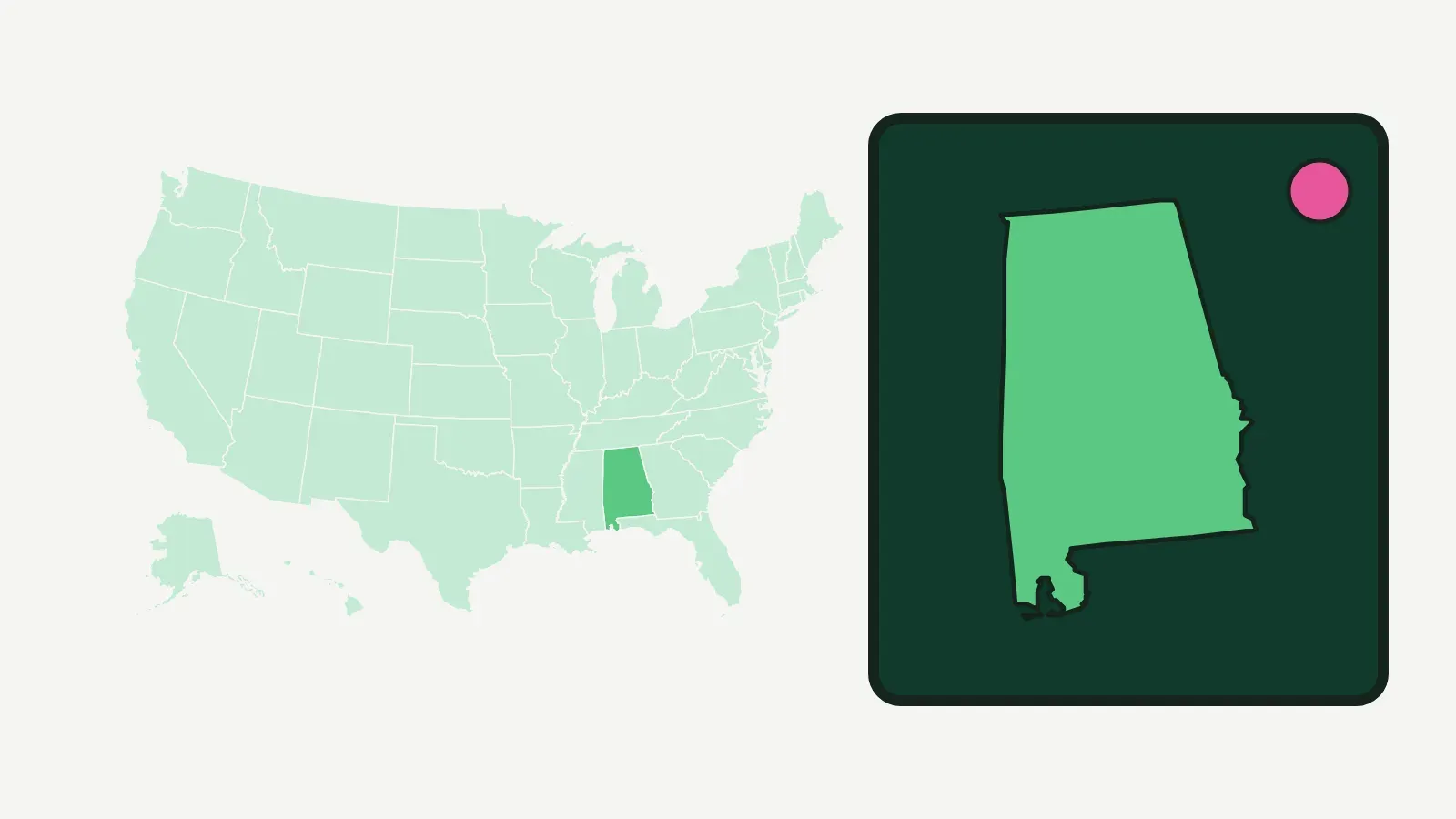
In brief
Alabama owner households paid a median of $946 in property tax in 2025 on a median home value of $246,500, about 0.38% of value, which puts the state in the "low" tier on the map. Homestead exemptions come off the assessed value, and homeowners 65 or older are exempt from the state portion of the tax. If you disagree with your value, you have 30 days from the written notice to protest to the County Board of Equalization.
Alabama at a glance
How the bill is built
The typical figures above come from the Census Bureau's 2025 American Community Survey: the median real estate tax paid by Alabama homeowners divided by the median home value. It is a survey estimate for the whole state, not a tax rate, and your own bill depends on where the home sits.
The Alabama Department of Revenue says all property tax other than public utility property is assessed and collected through the 67 county tax offices. The appraised value is multiplied by an assessment rate to get the assessed value, and each taxing authority's tax rate, stated in mills, is applied to that. A mill is one-tenth of one cent. The department's own example: $100,000 of appraised value at a 10% assessment rate is $10,000 of assessed value, and at a county rate of 0.0325 that is a $325 tax. Your county's actual rates are on your bill.
Every Alabama county is on an annual reappraisal program. The assessing official reviews one quarter of the county each year, so a full review of the county takes four years. Property taxes are due October 1 and are delinquent after December 31. Rates change only when voters or the taxing authority, such as the county commission, change them; values change with the market or a court-ordered reappraisal.
What lowers your bill
A homestead is a single-family, owner-occupied home and its land, up to 160 acres. You may qualify if you own it and live in it as your primary residence on the first day of the tax year. The Department of Revenue lists several types, and all amounts below are in assessed value, not market value.
| Type | Who | What it covers |
|---|---|---|
| H-1 | Under 65 and not disabled | $4,000 of assessed value on state tax, $2,000 on county tax |
| H-2 / H-4 | 65 or older (H-2 under a $12,000 income limit, or disabled at any age) | All state tax; county tax exemption of $5,000 (H-2) or the regular $2,000 (H-4) |
| H-3 | 65 or older with $12,000 or less net taxable income, or permanently and totally disabled | All ad valorem taxes |
The department's 2025 memoranda set out the federal and state income criteria for the 65+ types. Because the income tests differ by type, read the current memo or ask your county office which one fits you. See also homestead exemptions.
Protesting your value
If you think the value is wrong, you may file a written protest with your County Board of Equalization. The Department of Revenue says owners have 30 days to file an appeal after receiving written notice of valuation. The appeals process is set out in Code of Alabama sections 40-3-20, 40-3-24 and 40-3-25.
- Start with the assessor: contact the local assessing official where the property is located; the department lists that office as the contact for questions about your appraised value.
- Report improvements: the department says owners must sign a new assessment at the Revenue Commissioner's office by December 31 for improvements made or removed on or before October 1.
- Count the days: the 30 days run from the notice, so keep the envelope or the date you received it.
The general steps, evidence and tips are in how to appeal your property tax assessment.
Who to call
- Your value and bill: the tax office in the county where the property is located; the department says to contact it for your parcel or tax account.
- Exemptions: your local county office, where you apply.
- Rules: the Alabama Department of Revenue, Property Tax Division.
To try a different rate on your own numbers, use the property tax estimator, or see the map of all states.
Questions people ask
How much is property tax in Alabama?
The Census Bureau's 2025 survey puts the median at $946 a year, or about 0.38% of a median home value of $246,500. Your own bill depends on the county and the taxing units where the home sits.
How much is the Alabama homestead exemption?
For an owner under 65, $4,000 of assessed value on state tax and $2,000 on county tax. Owners 65 or older, or permanently and totally disabled, get larger exemptions. Apply at your local county office.
How long do I have to appeal my Alabama property value?
The Department of Revenue says 30 days after you receive written notice of valuation, with a written protest to the County Board of Equalization.
When are Alabama property taxes due?
October 1, and they are delinquent after December 31, according to the Department of Revenue.
Sources
- U.S. Census Bureau — American Community Survey 2025 1-year, table B25103 (median real estate taxes paid)
- U.S. Census Bureau — American Community Survey 2025 1-year, table B25077 (median home value)
- Alabama Department of Revenue — Homestead Exemptions
- Alabama Department of Revenue — Real Property FAQs
- Alabama Department of Revenue — What can I do if I do not agree with the value on my property?
The typical rate is the Census median tax divided by the median value, a survey estimate. Exemption amounts are the ones the Department of Revenue lists in assessed value. Facts on this page were checked against these sources on November 20, 2026; confirm the current year's amounts and deadline with your county.
Next to read
-
Owning guide
 Appeal your property tax assessment
Check the deadline, gather sales of similar homes and file on time. A worked savings example.
-
Owning guide
 Homestead exemptions
Relief for owners who live in the home: what it saves, how to apply and what is changing.
-
Owning guide
 Escrow accounts explained
How your lender collects tax and insurance, why the payment changes and what a shortage means.