Low tier
Property tax in Arizona: the typical bill, the 5% limit on taxable value and the 60-day appeal
Arizona sends two values on every notice, and only one of them is taxed. Here is how they differ, what exemptions exist and when to challenge them.
By AbodePine Editorial Team Updated 5 min read
- Typical rate
- 0.44% of home value
- Median annual bill
- $1,894
- Homeowner relief
- 5% a year value cap
- Appeal deadline
- 60 days after notice
In brief
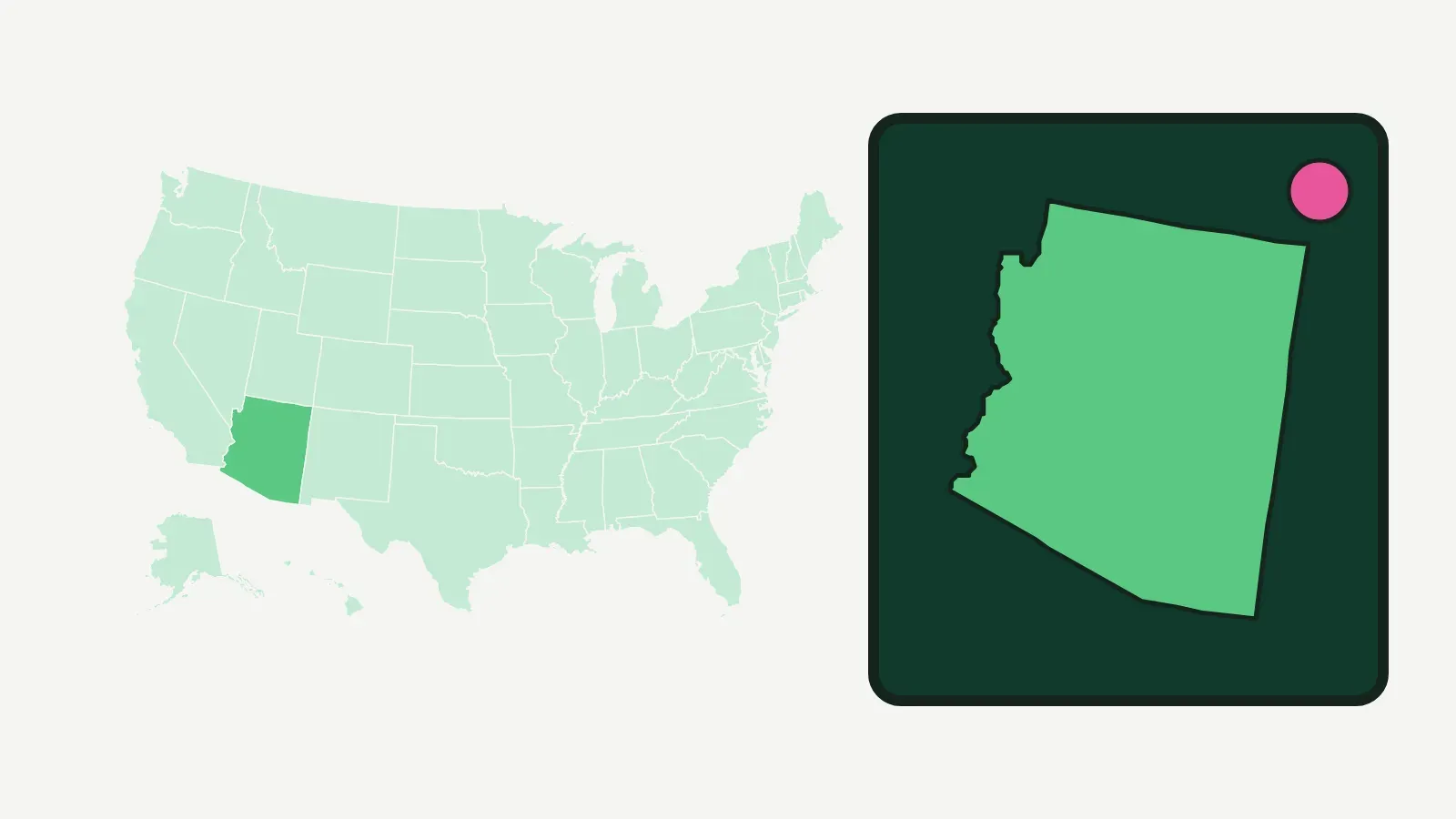
Arizona owner households paid a median of $1,894 in property tax in 2025 on a median home value of $427,600, about 0.44% of value, which puts the state in the "low" tier on the map. The value your tax is based on, the limited property value, can rise by only 5% a year. Appeals of the notice of value go to the county assessor within 60 days after the notice was mailed.
Arizona at a glance
How the bill is built
The typical figures above come from the Census Bureau's 2025 American Community Survey: the median real estate tax paid by Arizona homeowners divided by the median home value. It is a survey estimate for the whole state, not a tax rate, and your own bill depends on the taxing units where the home sits.
The county assessor mails a Notice of Value before March 1 each year. It shows two numbers. The full cash value is the assessor's opinion of the property's market value. The limited property value is the one used for the tax. By statute (A.R.S. 42-13301) it is the prior year's limited value plus five percent, and it may not exceed the full cash value. The notice also shows the property class; owner-occupied homes are class three, the primary residence class.
The assessed value is a share of that limited value. For class three property, A.R.S. 42-15003 sets it at ten percent of full cash value or limited value, as applicable. Each taxing unit, such as the school district, the county and the city, then applies its own rate to the assessed value. The property tax estimator lets you swap in the rate from your own bill.
What lowers your bill
The 5% growth limit on the limited property value is the main brake on a rising bill. It limits how fast the taxed value climbs, though it does not stop the full cash value from rising faster.
Arizona statute 42-11111 also provides exemptions for specific groups. It says the amounts are adjusted each year, so confirm the current figures with your county assessor.
- Veterans with a 100% service-connected disability: the primary residence is fully exempt, as are the primary residences of surviving spouses of those veterans.
- Other veterans with disabilities: a fixed dollar exemption on property, scaled by the veteran's disability rating.
- Widows, widowers and people with a total and permanent disability: a fixed dollar exemption, if income and total assessment stay under limits that the statute lists.
See also homestead exemptions.
Appealing your value
If you think the full cash value is higher than market value, or the property class is wrong, the State Board of Equalization says you have two paths. In the administrative path you file a Petition for Review of Valuation with the county assessor. The deadline is printed on the Notice of Value card, and it is 60 days after the assessor mailed the card.
- Meeting: the petition form lets you request a meeting with the assessor's office. The assessor must decide on or before August 15.
- If you disagree with the assessor: petition the county board of equalization within 25 days of the date the assessor's decision was mailed. In Maricopa and Pima counties this is the State Board of Equalization. Its schedule lists 20 or 25 calendar days depending on the property type, so use the date in the decision.
- Court: you may skip the board and appeal to Tax Court within 60 days of the assessor's decision. If you filed no administrative appeal at all, you may petition Tax Court directly, no later than December 15.
The State Board of Equalization does not accept appeals by fax or email. For errors of fact, such as the wrong square footage, a separate Notice of Claim process exists; the board describes it on its site. The general steps and evidence are in how to appeal your property tax assessment.
Who to call
- Your value and notice: the county assessor where the home is located; the State Board of Equalization's pages list mailing addresses and phone numbers for the Maricopa and Pima county assessors.
- Appeals beyond the assessor: your county board of equalization, or for Maricopa and Pima the Arizona State Board of Equalization, 602-364-1600.
To compare with other states, see the map of all states.
Questions people ask
How much is property tax in Arizona?
The Census Bureau's 2025 survey puts the median at $1,894 a year, or about 0.44% of a median home value of $427,600. Your own bill depends on your limited property value and the taxing units where the home sits.
What is the limited property value in Arizona?
It is the value your tax is based on. It equals the prior year's limited value plus 5%, and it cannot exceed the full cash value shown on your notice.
How long do I have to appeal my Arizona property value?
You must file a petition with the county assessor within 60 days after the Notice of Value was mailed. The deadline is printed on the card.
What percent of value is Arizona property taxed at?
Owner-occupied homes are class three, assessed at 10 percent of the full cash value or the limited value, as applicable. Local tax rates then apply to that assessed value.
Sources
- U.S. Census Bureau — American Community Survey 2025 1-year, table B25103 (median real estate taxes paid)
- U.S. Census Bureau — American Community Survey 2025 1-year, table B25077 (median home value)
- Arizona Legislature — A.R.S. 42-13301, Limited property value
- Arizona Legislature — A.R.S. 42-15003, Assessed valuation of class three property
- Arizona Legislature — A.R.S. 42-11111, Exemption for widows, widowers, persons with disabilities and veterans
- Arizona State Board of Equalization — How to appeal
- Arizona State Board of Equalization — When is the deadline to file with the SBOE?
The typical rate is the Census median tax divided by the median value, a survey estimate. Exemption dollar amounts under A.R.S. 42-11111 are adjusted each year and are not stated here. Facts on this page were checked against these sources on November 20, 2026; confirm the current year's amounts and deadline with your county assessor.
Next to read
-
Owning guide
 Appeal your property tax assessment
Check the deadline, gather sales of similar homes and file on time. A worked savings example.
-
Owning guide
 Homestead exemptions
Relief for owners who live in the home: what it saves, how to apply and what is changing.
-
Owning guide
 Escrow accounts explained
How your lender collects tax and insurance, why the payment changes and what a shortage means.