Low tier
Property tax in Arkansas: the typical bill, the homestead credit and the third-Monday-in-August appeal date
Arkansas gives homeowners a tax credit rather than an exemption, caps how fast a homestead's taxable value can grow, and freezes it for some owners. Here is how each piece works.
By AbodePine Editorial Team Updated 5 min read
- Typical rate
- 0.50% of home value
- Median annual bill
- $1,142
- Homeowner relief
- Up to $500 credit; 5% cap
- Appeal deadline
- 3rd Monday in August
In brief
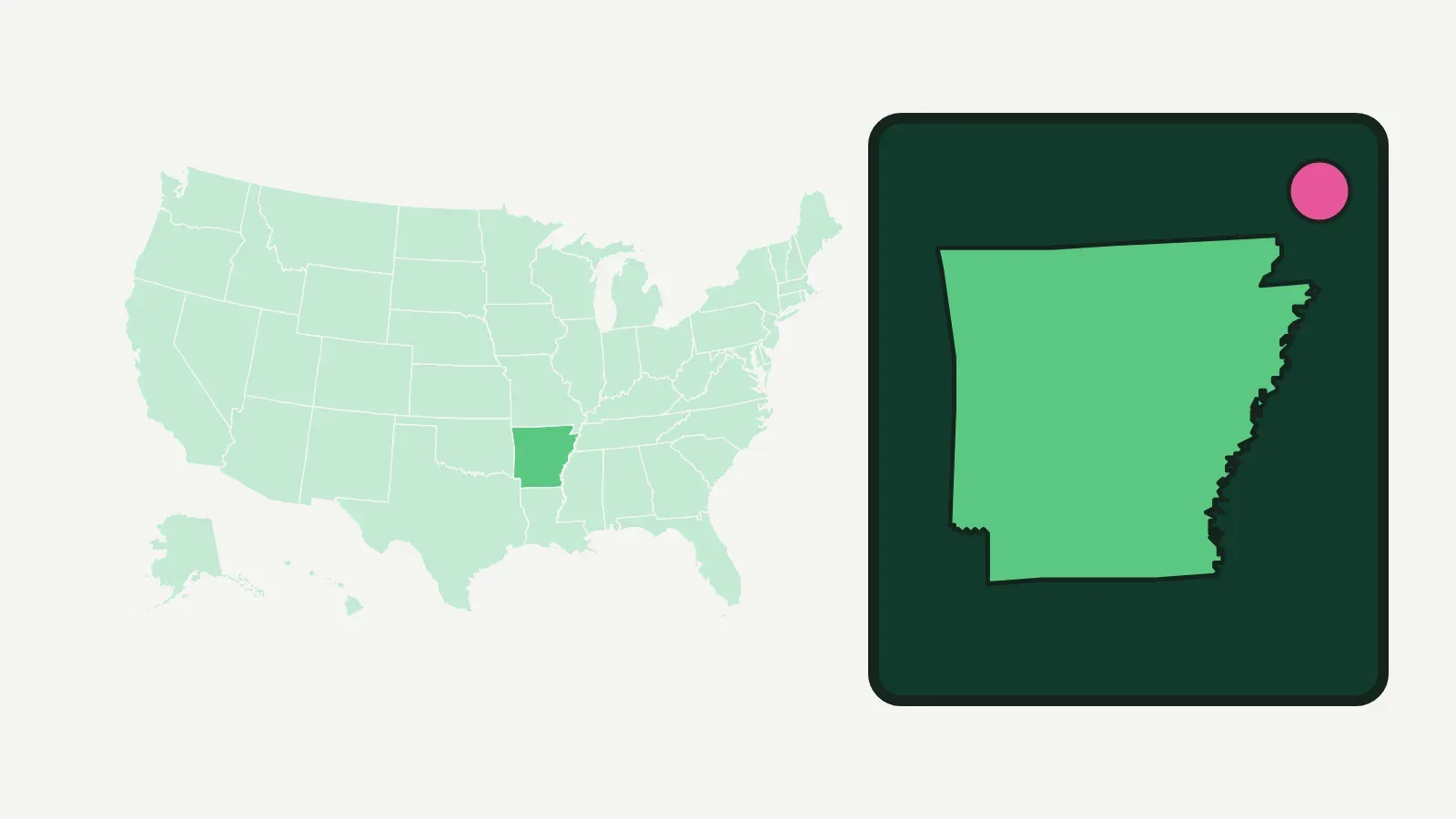
Arkansas owner households paid a median of $1,142 in property tax in 2025 on a median home value of $228,400, about 0.50% of value, which puts the state in the "low" tier on the map. The homestead tax credit is up to $500 a year, and the General Assembly has authorized an increase to up to $600 beginning with 2026 tax bills. The last day to schedule a hearing with the County Board of Equalization is the third Monday in August.
Arkansas at a glance
How the bill is built
The typical figures above come from the Census Bureau's 2025 American Community Survey: the median real estate tax paid by Arkansas homeowners divided by the median home value. It is a survey estimate for the whole state, not a tax rate, and your own bill depends on where the home sits.
The county assessor assesses real property each year to the owner of record. During a reappraisal, which runs on a three-, four- or five-year cycle, the assessor or a representative visits each property, gathers data on the buildings and improvements, and applies one of three approaches to determine market value: sales comparison, cost or income. Local taxing districts then set their millage rates. The Department of Finance and Administration notes that a homestead's tax can still rise or fall when local millage rates change, even if the taxable value is capped or frozen.
Property taxes that are currently due are payable to the county collector by October 15. You do not have to apply for an assessment; you do need to tell the assessor about new buildings, additions or a change in use, such as an owner-occupied house becoming a rental. The property tax estimator lets you swap in the rate from your own bill.
What lowers your bill
Amendment 79 to the Arkansas Constitution is known as the property tax relief amendment. The Assessment Coordination Division describes three benefits.
| Relief | Who | What it does |
|---|---|---|
| Homestead tax credit | Owner-occupants of a principal residence | Up to $500 a year; up to $600 authorized beginning with 2026 tax bills |
| Assessed value freeze | Homestead owners age 65 or older, or disabled | Taxable assessed value frozen at the next assessment date after turning 65 or becoming disabled |
| 5% cap | Homesteads, after a county-wide reappraisal | Taxable value can rise only 5% a year until it reaches full assessed value |
The 5% homestead cap does not apply to newly discovered property, new construction or substantial improvements, which are assessed at full value. The department defines a substantial improvement as renovation, reconstruction or refurbishment that adds 25% or more to the value. Other real property, such as commercial, agricultural and vacant parcels, is capped at 10% a year. See also homestead exemptions.
Appealing your assessment
The department's advice is to check with your county assessor first if you disagree with your assessment or see inaccuracies in your record. Errors in property details can often be fixed without a further appeal. For more substantial appeals, the last day to schedule an appeal hearing with the County Board of Equalization is the third Monday in August.
- Fix the facts first: square footage, number of bathrooms or a building that is gone are record errors the assessor can correct.
- Bring comparable sales: the assessor's value rests on sales, cost or income data, so evidence of similar nearby sales is the natural counter.
- Mind the date: the deadline is to schedule the hearing, so contact your county's equalization board early in the summer.
The general steps, evidence and tips are in how to appeal your property tax assessment.
Who to call
- Your value and the credit: your county assessor's office.
- The bill and payment: your county collector.
- Rules: the Arkansas Department of Finance and Administration, Assessment Coordination Division.
To compare with other states, see the map of all states.
Questions people ask
How much is property tax in Arkansas?
The Census Bureau's 2025 survey puts the median at $1,142 a year, or about 0.50% of a median home value of $228,400. Your own bill depends on your assessed value and local millage.
How much is the Arkansas homestead tax credit?
Up to $500 a year, according to the Department of Finance and Administration. The General Assembly has authorized an increase to up to $600 beginning with 2026 tax bills. Apply with your county assessor.
Is there a cap on how much my Arkansas property value can rise?
Yes. After a county-wide reappraisal, a homestead's taxable value can rise only 5% a year until it reaches full assessed value. New construction and substantial improvements are not covered.
When is the deadline to appeal my Arkansas assessment?
The last day to schedule a hearing with the County Board of Equalization is the third Monday in August.
Sources
- U.S. Census Bureau — American Community Survey 2025 1-year, table B25103 (median real estate taxes paid)
- U.S. Census Bureau — American Community Survey 2025 1-year, table B25077 (median home value)
- Arkansas Department of Finance and Administration — Property Tax Relief
- Arkansas Department of Finance and Administration — Residential Real Estate
The typical rate is the Census median tax divided by the median value, a survey estimate. The Department's page says the increase of the homestead credit to up to $600 is authorized beginning with 2026 tax bills. Facts on this page were checked against these sources on November 20, 2026; confirm the current year's amounts and deadline with your county assessor.
Next to read
-
Owning guide
 Appeal your property tax assessment
Check the deadline, gather sales of similar homes and file on time. A worked savings example.
-
Owning guide
 Homestead exemptions
Relief for owners who live in the home: what it saves, how to apply and what is changing.
-
Owning guide
 Escrow accounts explained
How your lender collects tax and insurance, why the payment changes and what a shortage means.