Moderate tier
Property tax in Georgia: the typical bill, the homestead exemptions and the 45-day appeal
Georgia taxes 40% of a home's fair market value, and a lot of the relief comes from your own county. Here is how the bill is built and when to challenge it.
By AbodePine Editorial Team Updated 5 min read
- Typical rate
- 0.77% of home value
- Median annual bill
- $2,680
- Homeowner relief
- $2,000 state; local extra
- Appeal deadline
- 45 days after notice
In brief
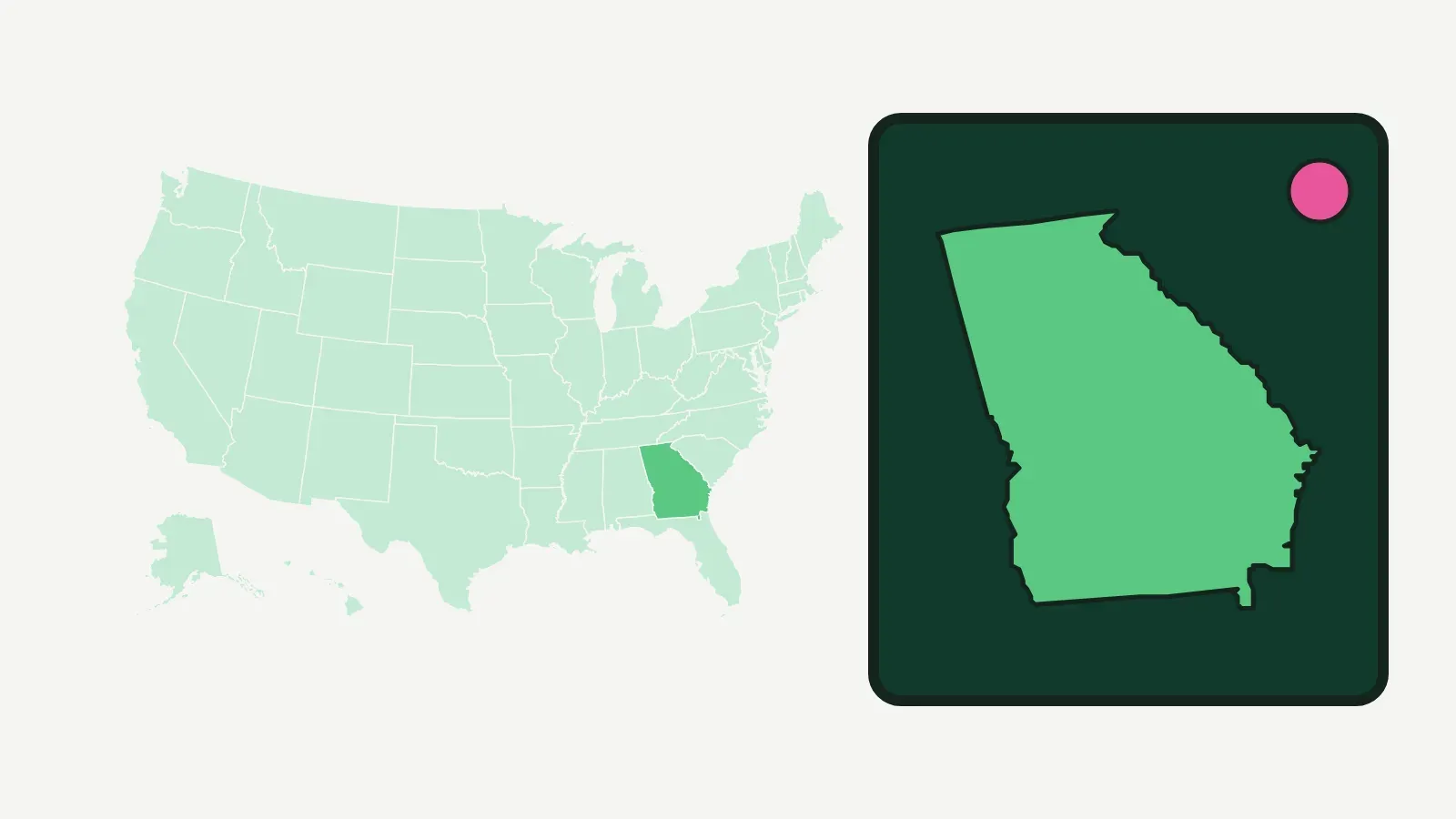
Georgia owner households paid a median of $2,680 in property tax in 2025 on a median home value of $346,500, about 0.77% of value, which puts the state in the "moderate" tier on the map. The state's standard homestead exemption is $2,000 off the 40% assessed value, but many counties add larger exemptions or valuation freezes. An appeal is due within 45 days of the date the assessment notice was mailed.
Georgia at a glance
How the bill is built
The typical figures above come from the Census Bureau's 2025 American Community Survey: the median real estate tax paid by Georgia homeowners divided by the median home value. It is a survey estimate for the whole state, not a tax rate, and your own bill depends on where the home sits.
In Georgia, the county board of tax assessors sends an annual assessment notice for each property. The taxable base is 40% of fair market value, called the assessed value. The tax rate, called the millage rate, is set each year by the county's board of commissioners or other governing authority and by the board of education. Your bill is the millage applied to your assessed value after exemptions. The property tax estimator lets you swap in the rate from your own bill.
What lowers your bill
You must own the home and live in it as your legal residence on January 1 to claim a homestead exemption. The state offers these to all qualifying homeowners, and the Department of Revenue says counties often go further.
| Exemption | Who qualifies | Amount |
|---|---|---|
| Standard | Owner-occupied primary residence | $2,000 off the 40% assessed value, county and school taxes |
| Age 65 or older | Income of you and your spouse of $10,000 or less (with exclusions) | $4,000 off county taxes |
| Age 62 or older, education | Income of $10,000 or less (with exclusions) | Up to $10,000 of assessed value |
| Disabled veteran | Qualifying disabled veteran who lives in the home | $121,812 for 2025, from all taxes |
House Bill 581 (2024) authorized a statewide floating homestead exemption for all local governments. Unless a local governing authority opts out, it exempts the amount by which your assessed value rises above an adjusted base-year value. The Department of Revenue set the inflation index for the 2026 digest year at 2.7%, and says it is used only to set that threshold. Because a county, city or school district can opt out, how it affects your bill depends on each of them, so ask your tax assessor which apply to your home. You file for the exemption with the county tax commissioner, or the tax assessor in some counties. The old April 1 deadline is no longer the last chance: you can apply until the end of your 45-day appeal window. See also homestead exemptions.
Appealing your assessment
You have 45 days from the date the assessment notice was mailed to file a written appeal with the county board of tax assessors. You can appeal the value, uniformity, taxability or the denial of an exemption. The Department of Revenue does not decide individual appeals, so do not send your appeal form to it.
- Choose a path on the appeal form: the county board of equalization, or an arbitrator. A hearing officer is limited to non-homestead property worth more than $500,000.
- What to bring: recent sales of similar homes nearby, photos or repair estimates, and the assessor's record of your home's size and features.
- If you lose: you have 30 days from the decision to appeal to superior court, and you must pay taxes equal to the last year's amount first.
The general steps, evidence and tips are in how to appeal your property tax assessment.
Who to call
- Your value and appeal: the county board of tax assessors, which files and hears appeals at the local level.
- Your bill and homestead filing: the county tax commissioner, or the tax assessor in some counties.
- Rules and county contacts: the Georgia Department of Revenue, Local Government Services Division.
Questions people ask
How much is property tax in Georgia?
The Census Bureau's 2025 survey puts the median at $2,680 a year, or about 0.77% of a median home value of $346,500. Your own bill depends on your assessed value and your county, school and city millage rates.
What is the Georgia homestead exemption?
The state's standard exemption is $2,000, deducted from the 40% assessed value, for county and school taxes. Many counties add larger exemptions or freezes, so check with your county.
When is the deadline to appeal my Georgia property assessment?
Within 45 days of the date the assessment notice was mailed. File the written appeal with your county board of tax assessors.
When are Georgia property taxes due?
Normally December 20 in most counties, but some counties use a different date. Check your bill or ask your county tax commissioner.
Sources
- U.S. Census Bureau — American Community Survey 2025 1-year, table B25103 (median real estate taxes paid)
- U.S. Census Bureau — American Community Survey 2025 1-year, table B25077 (median home value)
- Georgia Department of Revenue — Property Tax Homestead Exemptions
- Georgia Department of Revenue — Filing a Property Tax Appeal
- Georgia Department of Revenue — Property Tax, Real and Personal Property FAQ
- Georgia Department of Revenue — 2026 Annual Inflationary Index bulletin (January 13, 2026)
- Georgia Department of Revenue — Overview of Floating Homestead Exemption and Annual Inflationary Index Rate
The typical rate is the Census median tax divided by the median value, a survey estimate. Income limits and the disabled veteran amount are the Department of Revenue's figures for 2025, and the department's page states no year for the other amounts; confirm the current year's amounts and any local opt-out of the floating exemption with your county. Facts on this page were checked against these sources on November 20, 2026.
Next to read
-
Owning guide
 Appeal your property tax assessment
Check the deadline, gather sales of similar homes and file on time. A worked savings example.
-
Owning guide
 Homestead exemptions
Relief for owners who live in the home: what it saves, how to apply and what is changing.
-
Owning guide
 Escrow accounts explained
How your lender collects tax and insurance, why the payment changes and what a shortage means.