Low tier
Property tax in Hawaii: the typical bill, the home exemption and the January 15 appeal
Hawaii's tax rate on a typical home is low, but the homes are expensive. Property tax is run county by county, and this page uses Honolulu's published rules.
By AbodePine Editorial Team Updated 5 min read
- Typical rate
- 0.26% of home value
- Median annual bill
- $2,387
- Homeowner relief
- Honolulu: $120,000 exempt
- Appeal deadline
- January 15 (Honolulu)
In brief
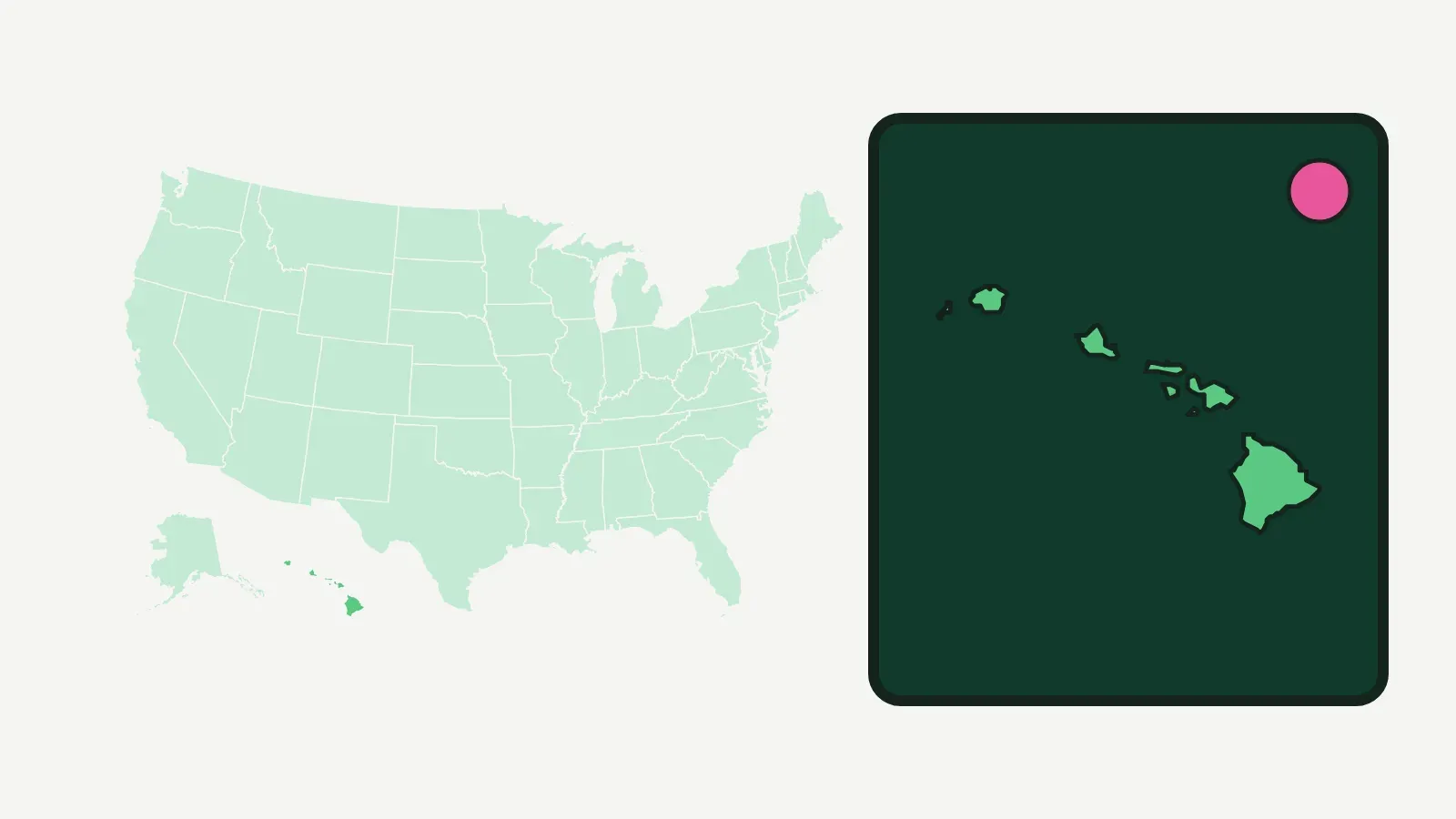
Hawaii owner households paid a median of $2,387 in property tax in 2025 on a median home value of $901,500, about 0.26% of value, which puts the state in the "low" tier on the map. In the City and County of Honolulu the home exemption is $120,000 of value for tax year 2026-27 ($160,000 if you are 65 or older), rising by $20,000 for 2027-28. A Board of Review appeal is due January 15.
Hawaii at a glance
How the bill is built
The typical figures above come from the Census Bureau's 2025 American Community Survey: the median real estate tax paid by Hawaii homeowners divided by the median home value. It is a survey estimate for the whole state, not a tax rate, and your own bill depends on where the home sits. The tier is "low" because the median tax is small next to a median home value of $901,500.
Each county assesses its own property, so the details differ by island. The rules below are the City and County of Honolulu's, which covers Oahu. If your home is on Maui, Hawaii Island or Kauai, use that county's real property office. In Honolulu, the Real Property Assessment Division values every property as of October 1 for the tax year that begins the next July 1 and ends June 30. It values the whole property at fee simple market value, even if you lease the land under your home. The City Council sets the tax rates each June. The property tax estimator lets you swap in the rate from your own bill.
What lowers your bill
Honolulu's home exemption reduces the taxable value of a home you own and live in as your principal residence on October 1. The amount depends on your age. The City Council passed higher amounts for tax years beginning July 1, 2027 and after (Ordinance 25-43, Bill 50 (2025), for the under-65 amount, and Ordinance 25-42, Bill 49 (2025), for the 65-and-older amount; both passed final reading on September 3, 2025). The Real Property Assessment Division says the higher amounts will appear on the Notice of Assessment distributed by December 15, 2026, and your current tax bill is not affected.
| Claimant's age | July 1, 2026 to June 30, 2027 | July 1, 2027 to June 30, 2028 |
|---|---|---|
| Under 65 | $120,000 | $140,000 |
| 65 or older | $160,000 | $180,000 |
The exemption comes off taxable value, so your savings depend on the tax rate. On a home assessed at $1,000,000, a $140,000 exemption leaves $860,000 taxable. To get the higher 65-and-older amount, you must be 65 by June 30 before the tax year, and your date of birth must be on record by September 30.
Appealing your assessment
Honolulu mails the Notice of Assessment on or before December 15. If you disagree with the assessed value, the classification or the exemption amount, you can appeal to the city's Board of Review by January 15, online or on the paper form. Fax and email filings are not accepted, and a mailed appeal counts as filed on the postmark date. Call the Real Property Assessment Division first, since many questions clear up in a short conversation.
- Grounds: the assessment exceeds market value by more than 10%, the methods were applied unevenly or illegally, an exemption was denied, or another illegality.
- What to bring: sales of comparable properties, contractor estimates for repairs, and other evidence that the value is more than 10% over market value.
- Burden of proof: the city's assessment is presumed correct, so you must show it is wrong.
- Keep paying: an appeal does not pause your bill. If you win, any overpayment is adjusted.
If the Board of Review rules against you, you have 30 days from the posted decision date to appeal to the Tax Appeal Court. The general steps are in how to appeal your property tax assessment.
Who to call
- Your value and exemption in Honolulu: the Real Property Assessment Division, which runs the online Property Records Search; (808) 768-3799.
- Other islands: the real property office of your own county.
Questions people ask
How much is property tax in Hawaii?
The Census Bureau's 2025 survey puts the median at $2,387 a year, or about 0.26% of a median home value of $901,500. Your own bill depends on your assessed value, your county's rates and your exemptions.
How much is the home exemption in Honolulu?
For the tax year ending June 30, 2027, it is $120,000 under age 65 and $160,000 at 65 or older. For the following tax year the amounts are $140,000 and $180,000.
When is the deadline to appeal my Honolulu assessment?
January 15, to the Board of Review. The Notice of Assessment goes out by December 15, and appeals can be filed online, by mail or in person but not by fax or email.
When do I apply for the home exemption in Honolulu?
By September 30 for the tax year that begins the following July 1. You do not reapply every year once approved.
Sources
- U.S. Census Bureau — American Community Survey 2025 1-year, table B25103 (median real estate taxes paid)
- U.S. Census Bureau — American Community Survey 2025 1-year, table B25077 (median home value)
- City and County of Honolulu Real Property Assessment Division — Home Exemption
- City and County of Honolulu — Ordinance 25-43 (Bill 50 (2025)), home exemption $140,000 from July 1, 2027
- City and County of Honolulu — Ordinance 25-42 (Bill 49 (2025)), home exemption $180,000 at 65 or older from July 1, 2027
- City and County of Honolulu Real Property Assessment Division — Appeal Information
- City and County of Honolulu Real Property Assessment Division — Appeals FAQ
- City and County of Honolulu Real Property Assessment Division — Homepage (important dates)
The typical rate is the Census median tax divided by the median value, a survey estimate. Exemption amounts and deadlines are the City and County of Honolulu's; other Hawaii counties have their own. The ordinance copies we read do not show a legible mayoral approval date, so we cite the September 3, 2025 final reading. Facts on this page were checked against these sources on November 20, 2026.
Next to read
-
Owning guide
 Appeal your property tax assessment
Check the deadline, gather sales of similar homes and file on time. A worked savings example.
-
Owning guide
 Homestead exemptions
Relief for owners who live in the home: what it saves, how to apply and what is changing.
-
Owning guide
 Escrow accounts explained
How your lender collects tax and insurance, why the payment changes and what a shortage means.