Low tier
Property tax in Idaho: the typical bill, the homeowner's exemption and the June appeal
Idaho counties value your home at market price and have no cap on how much the value can rise. The homeowner's exemption and a state reduction program soften the bill.
By AbodePine Editorial Team Updated 5 min read
- Typical rate
- 0.42% of home value
- Median annual bill
- $1,924
- Homeowner relief
- 50% exempt, max $125,000
- Appeal deadline
- 4th Monday in June
In brief
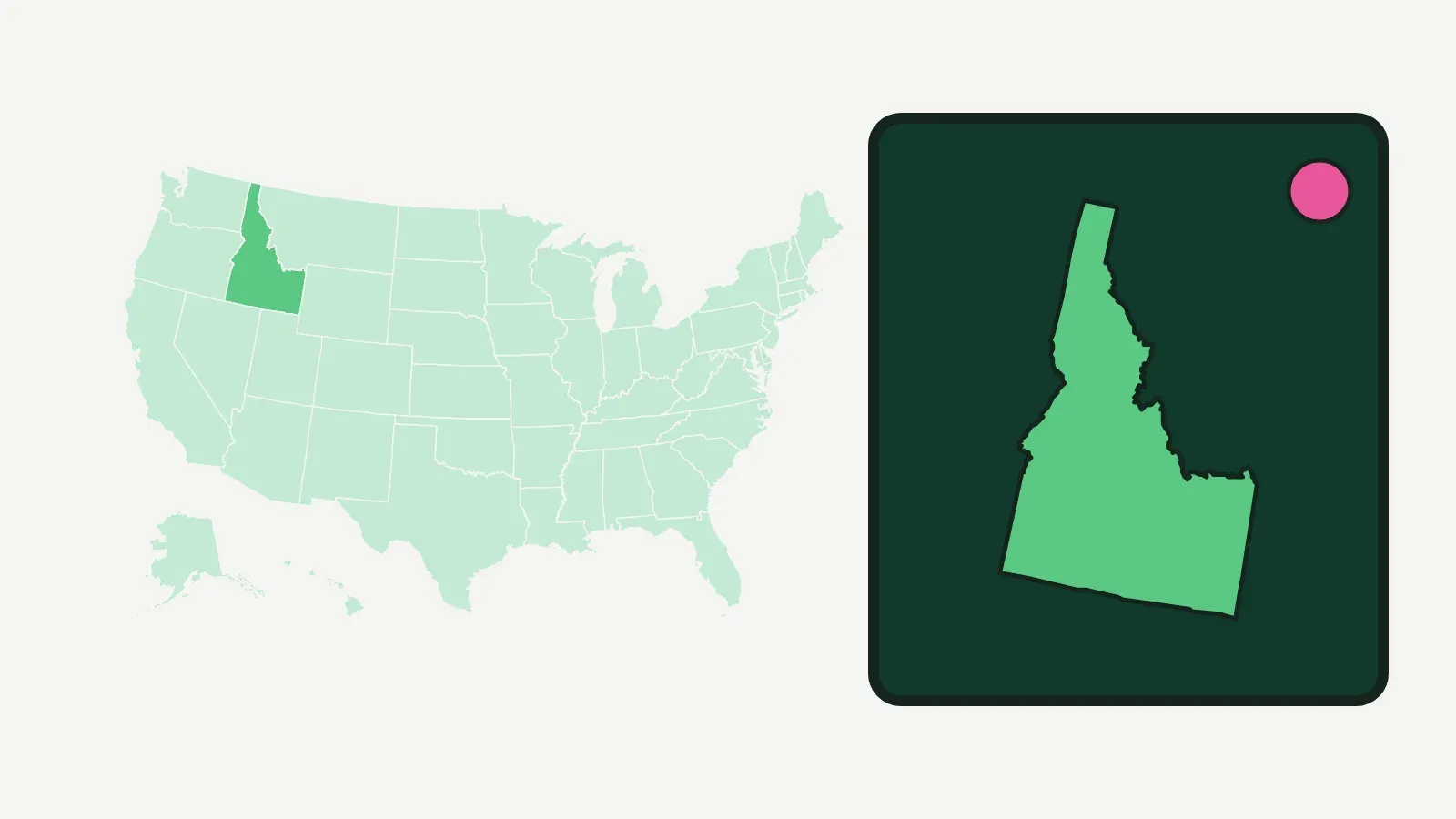
Idaho owner households paid a median of $1,924 in property tax in 2025 on a median home value of $457,800, about 0.42% of value, which puts the state in the "low" tier on the map. The homeowner's exemption removes 50% of the value of your home and up to one acre from taxation, to a maximum of $125,000. An appeal goes to the county Board of Equalization by the fourth Monday in June.
Idaho at a glance
How the bill is built
The typical figures above come from the Census Bureau's 2025 American Community Survey: the median real estate tax paid by Idaho homeowners divided by the median home value. It is a survey estimate for the whole state, not a tax rate, and your own bill depends on where the home sits.
Each year the county assessor estimates what a typical buyer would pay for your property as of January 1. It is assessed at 100% of market value, less any exemptions. Every property sits in several taxing districts, such as the county, city, school district and fire district. Each district divides the part of its budget funded by property tax by the total taxable value in the district, and the rates add up to your total rate. The state itself does not receive any property tax. Counties mail bills each November, and payments are due December 20, or half by December 20 and the balance by June 20. The property tax estimator lets you swap in the rate from your own bill.
Idaho law does not limit how much a property's value can rise or fall from year to year, and there is no legal limit on how much a tax bill can change. Each taxing district can raise the property tax part of its budget by no more than 3% unless voters approve more or the district adds new construction or annexations.
What lowers your bill
If you own your home and live in it as your primary residence, you can claim the homeowner's exemption. It covers manufactured homes too. It removes 50% of the value of the home and up to one acre of land from taxation, with a maximum of $125,000. You apply once with your county assessor. It lasts until the ownership changes or you stop using the home as your primary residence.
| Program | Who qualifies | Benefit |
|---|---|---|
| Homeowner's exemption | Owner-occupied primary residence | 50% of value, up to $125,000 |
| Property tax reduction | Income of $40,030 or less; 65 or older, blind, widowed, disabled, and certain others | $250 to $1,500 off the bill |
| Disabled veterans benefit | 100% service-connected disability, no income limit | Up to $1,500 off the bill |
| Property tax deferral | Income of $63,400 or less | Postpone paying; interest applies |
A 2026 law, House Bill 843, eliminated proration of the homestead exemption retroactive to January 1, 2026. The Tax Commission's page lists $125,000 as the maximum through 2025 and still shows that figure, so confirm the 2026 amount with your county assessor. See also homestead exemptions.
Appealing your assessment
The Tax Commission lists three steps, in order. Call your county assessor's office and talk to your appraiser. If that does not settle it, contact the county clerk to file an appeal with the Board of Equalization by the fourth Monday in June. The board typically hears appeals between the fourth Monday in June and the second Monday in July. If you disagree with the board's decision, ask the county clerk how to appeal within 30 days to the State Board of Tax Appeals or the district court.
- What to bring: recent sales of similar homes nearby, photos or repair estimates for condition problems, and the assessor's record of your home's size and features.
- Who collects: counties collect property tax. The Tax Commission only oversees the system, so it is not where you file an appeal.
The general steps, evidence and tips are in how to appeal your property tax assessment.
Who to call
- Your value, exemptions and applications: your county assessor's office.
- An appeal: your county clerk, for the Board of Equalization.
- Rules and questions about the programs: the Idaho State Tax Commission, Property Tax Division, (208) 334-7736.
Questions people ask
How much is property tax in Idaho?
The Census Bureau's 2025 survey puts the median at $1,924 a year, or about 0.42% of a median home value of $457,800. Your own bill depends on your assessed value and the taxing districts where the home sits.
What is the Idaho homeowner's exemption?
It exempts 50% of the value of your primary home and up to one acre, to a maximum of $125,000. You apply once with your county assessor.
When is the deadline to appeal my Idaho property value?
File with the Board of Equalization through your county clerk by the fourth Monday in June. Contact your assessor first.
Is there a limit on how much my Idaho property value can go up?
No. Idaho law does not limit year-to-year changes in a property's value. Taxing districts can raise the property tax part of their budgets by no more than 3%, with exceptions for voter-approved increases and new construction.
Sources
- U.S. Census Bureau — American Community Survey 2025 1-year, table B25103 (median real estate taxes paid)
- U.S. Census Bureau — American Community Survey 2025 1-year, table B25077 (median home value)
- Idaho State Tax Commission — Homeowner and Additional Property Tax Relief
- Idaho State Tax Commission — Understanding Property Taxes
- Idaho Legislature — House Bill 843 (2026), homestead exemption proration
The typical rate is the Census median tax divided by the median value, a survey estimate. The Tax Commission's page lists the homeowner's exemption maximum through 2025; the 2026 amount was not confirmed. Facts on this page were checked against these sources on November 20, 2026.
Next to read
-
Owning guide
 Appeal your property tax assessment
Check the deadline, gather sales of similar homes and file on time. A worked savings example.
-
Owning guide
 Homestead exemptions
Relief for owners who live in the home: what it saves, how to apply and what is changing.
-
Owning guide
 Escrow accounts explained
How your lender collects tax and insurance, why the payment changes and what a shortage means.