Highest tier
Property tax in Illinois: the typical bill, the homestead exemptions and the 30-day appeal
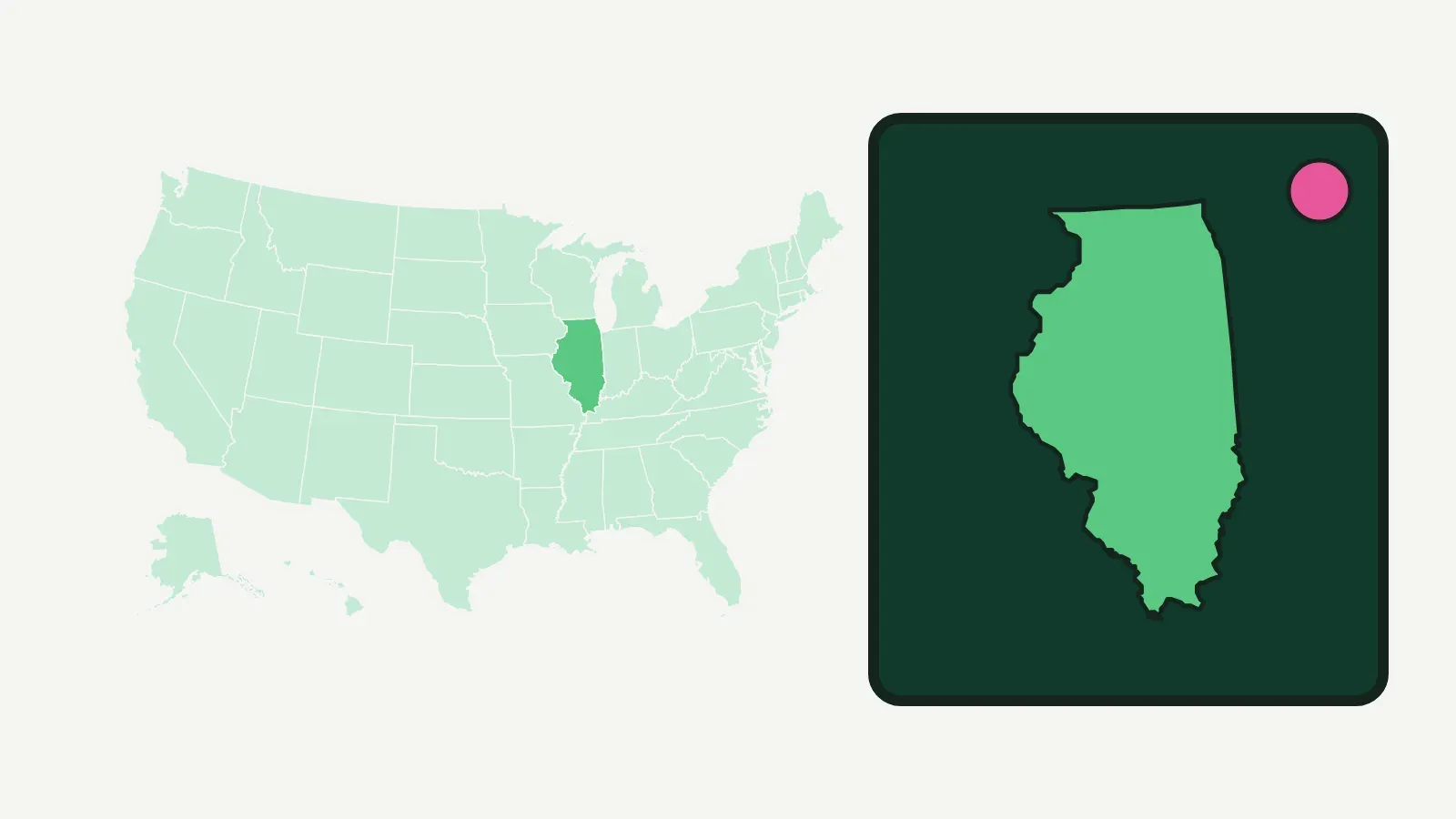
Illinois is in the highest tier on the map. Here is how the tax is figured on one-third of market value, what knocks it down, and the short window to challenge it.
By AbodePine Editorial Team Updated 5 min read
- Typical rate
- 1.92% of home value
- Median annual bill
- $5,655
- Homeowner relief
- $6,000-$10,000 off EAV
- Appeal deadline
- 30 days from publication
In brief
Illinois owner households paid a median of $5,655 in property tax in 2025 on a median home value of $294,400, about 1.92% of value, which puts the state in the "highest" tier on the map. Property is generally assessed at 33 1/3% of fair cash value, and the general homestead exemption takes $6,000, $8,000 or $10,000 off the equalized assessed value depending on the county. A complaint to the county board of review is due 30 days after the assessment list is published.
Illinois at a glance
How the bill is built
The typical figures above come from the Census Bureau's 2025 American Community Survey: the median real estate tax paid by Illinois homeowners divided by the median home value. It is a survey estimate for the whole state, not a tax rate, and your own bill depends on where the home sits.
Under state law, each property is generally valued at 33 1/3% of its fair cash value. Counties with more than 200,000 residents that classify property for taxation are an exception, so ask your assessor whether your county does. The assessed value, adjusted ("equalized") by the Illinois Department of Revenue, is called the equalized assessed value, or EAV. Exemptions come off the EAV, and local taxing districts' rates are then applied to what is left. The property tax estimator lets you swap in the rate from your own bill.
What lowers your bill
Illinois exemptions reduce EAV, and the main one depends on the size of your county. The general homestead exemption applies to a home you occupy as your principal residence. For tax years 2023 and later, the most it can take off is:
| County | Maximum reduction |
|---|---|
| 3,000,000 or more inhabitants | $10,000 |
| Contiguous to a county of 3,000,000 or more | $8,000 |
| All other counties | $6,000 |
The exemption is limited to the increase in your EAV over the property's 1977 EAV, up to those maximums. In counties with fewer than 3,000,000 inhabitants you receive it automatically when that increase exists. Owners 65 and older also qualify for a separate senior homestead exemption, so ask your assessor for this year's amount.
The low-income senior assessment freeze works differently. It freezes the EAV used for your bill at a base-year amount for owners who are 65 or older and whose household income is under a limit. The limit was $65,000 through tax year 2025, is $75,000 for tax year 2026, rises to $77,000 for 2027 and to $79,000 for 2028 and later, under Public Act 104-0452 (Senate Bill 642), which the Governor signed on December 12, 2025.
Appealing your assessment
You challenge an Illinois assessment first with your county board of review. Your written complaint must be filed within 30 calendar days after the assessment list is published. A complaint sent by U.S. mail counts as filed on the postmark date. The board follows its own rules on what a complaint must include, so read them before you file. If the board's rules are not met, it gives you at least 10 business days to fix the complaint.
- Where to start: the date your county publishes its assessment list, then your county board of review's complaint form.
- What to bring: sales of similar homes nearby, including compulsory sales (foreclosures) with the same characteristics, plus photos or repair estimates.
- If you lose: in counties with fewer than 3,000,000 inhabitants you have 30 days from the date of written notice of the board's decision to appeal to the Property Tax Appeal Board, or you can go to court instead.
The general steps are in how to appeal your property tax assessment.
Who to call
- Your value, exemptions and the freeze: your county assessor or supervisor of assessments (the chief county assessment officer).
- A complaint: your county board of review.
- An appeal after the board: the Property Tax Appeal Board.
Questions people ask
How much is property tax in Illinois?
The Census Bureau's 2025 survey puts the median at $5,655 a year, or about 1.92% of a median home value of $294,400. Your own bill depends on your EAV and the taxing districts where the home sits.
What is the Illinois general homestead exemption?
It reduces your EAV by up to $10,000 in a county of 3,000,000 or more, $8,000 in contiguous counties and $6,000 elsewhere, limited to the increase over the property's 1977 EAV.
How long do I have to appeal my Illinois assessment?
30 calendar days after your county publishes the assessment list, by written complaint to the county board of review. A later appeal to the Property Tax Appeal Board is due 30 days after the board's written notice.
What is the senior assessment freeze in Illinois?
For owners 65 or older with household income at or under $75,000 for tax year 2026, it freezes the EAV at a base year. Apply with your county assessor or supervisor of assessments.
Sources
- U.S. Census Bureau — American Community Survey 2025 1-year, table B25103 (median real estate taxes paid)
- U.S. Census Bureau — American Community Survey 2025 1-year, table B25077 (median home value)
- Illinois General Assembly — 35 ILCS 200/9-145 (statutory level of assessment)
- Illinois General Assembly — 35 ILCS 200/15-175 (general homestead exemption)
- Illinois General Assembly — 35 ILCS 200/15-172 (low-income senior citizens assessment freeze homestead exemption)
- Illinois General Assembly — Senate Bill 642 (104th General Assembly) bill status, Public Act 104-0452
- Illinois General Assembly — 35 ILCS 200/16-55 (board of review complaints)
- Illinois General Assembly — 35 ILCS 200/16-160 (Property Tax Appeal Board)
The typical rate is the Census median tax divided by the median value, a survey estimate. Exemption amounts and deadlines are from the Property Tax Code as published by the Illinois General Assembly; the senior freeze limits ($75,000 for 2026, $77,000 for 2027, $79,000 for 2028) are from the General Assembly's bill status record for Senate Bill 642 (Public Act 104-0452, signed December 12, 2025). The statute page itself could not be opened for this check, so confirm the current limit and your county's application date with your assessor. Facts on this page were checked against these sources on November 20, 2026.
Next to read
-
Owning guide
 Appeal your property tax assessment
Check the deadline, gather sales of similar homes and file on time. A worked savings example.
-
Owning guide
 Homestead exemptions
Relief for owners who live in the home: what it saves, how to apply and what is changing.
-
Owning guide
 Escrow accounts explained
How your lender collects tax and insurance, why the payment changes and what a shortage means.