Moderate tier
Property tax in Indiana: the typical bill, the homestead deduction and the Form 130 appeal
Indiana caps a homestead's tax at 1% of assessed value, and a 2025 law is changing the deductions in steps through 2031. Here is what applies to your bill and when to appeal.
By AbodePine Editorial Team Updated 5 min read
- Typical rate
- 0.74% of home value
- Median annual bill
- $1,884
- Homeowner relief
- 1% homestead tax cap
- Appeal deadline
- Date on your Form 11
In brief
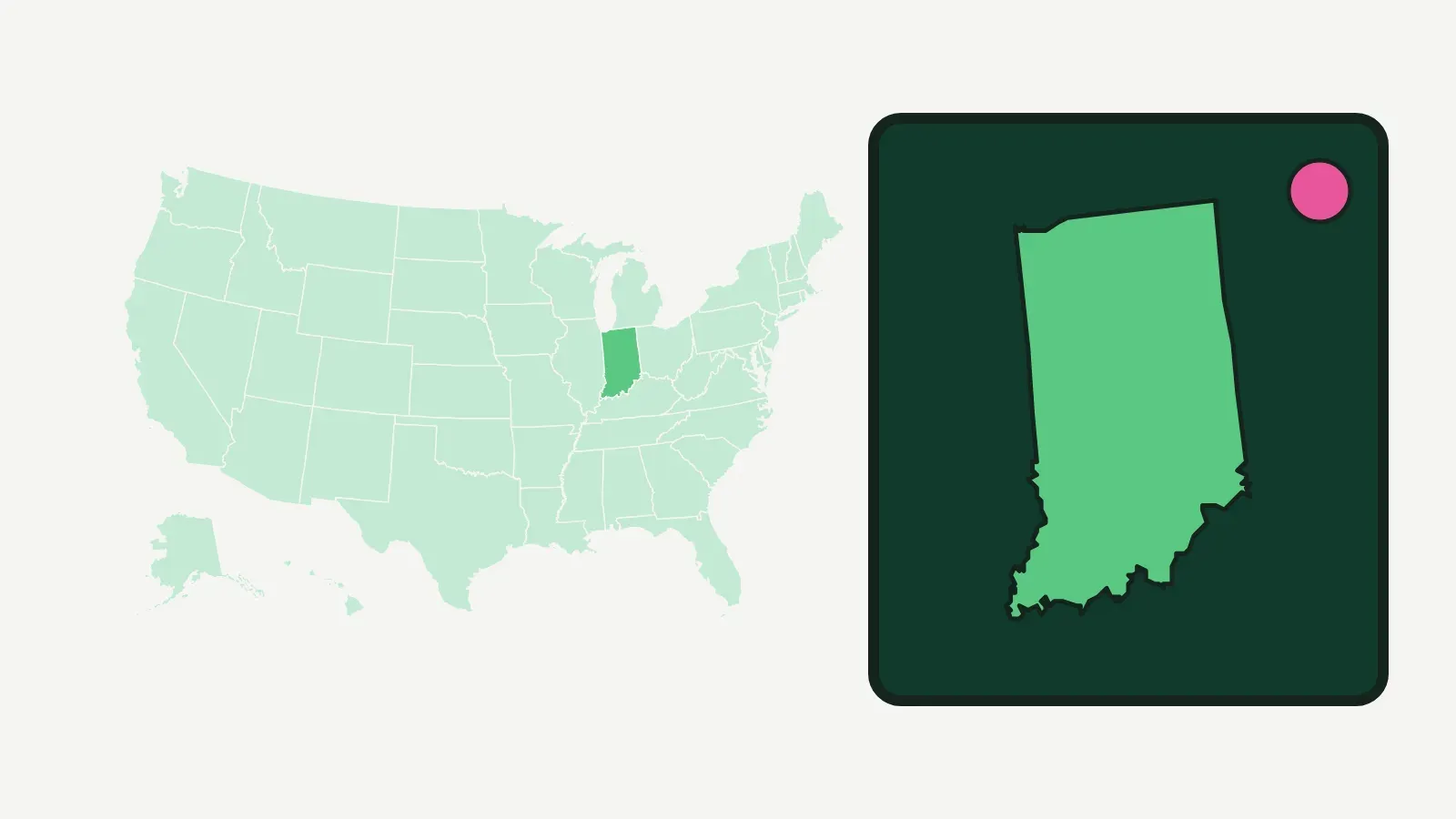
Indiana owner households paid a median of $1,884 in property tax in 2025 on a median home value of $255,200, about 0.74% of value, which puts the state in the "moderate" tier on the map. A homestead has a 1% cap on its tax bill, plus a homestead deduction and, since 2026, a supplemental credit. You appeal with a Form 130 filed with your county assessor by the deadline printed on your Form 11 assessment notice.
Indiana at a glance
How the bill is built
The typical figures above come from the Census Bureau's 2025 American Community Survey: the median real estate tax paid by Indiana homeowners divided by the median home value. It is a survey estimate for the whole state, not a tax rate, and your own bill depends on where the home sits.
In Indiana, the county or township assessor sends a Notice of Assessment of Land and Improvements, called a Form 11. The assessed value on the form is the starting point for your bill. Values change when there is new construction, additions, remodeling or a change in land use. Deductions then reduce the assessed value, local tax rates are applied, and credits are subtracted from the result. The property tax estimator lets you swap in the rate from your own bill.
What lowers your bill
You apply for deductions and credits with the county auditor, and you do not reapply each year unless the property is sold or the title changes. A homeowner who applies by January 15, 2026, for example, sees the deduction on the bill for taxes payable in 2026. Indiana's Department of Local Government Finance (DLGF) lists forms for the homestead deduction, an over-65 credit, disabled veteran deductions and a credit for blind or disabled owners.
Senate Enrolled Act 1 (2025) is phasing in changes through 2031. DLGF's June 2025 legislative memo gives the homestead standard deduction as $48,000 for the 2025 assessment date, then $40,000 for 2026, $30,000 for 2027, $20,000 for 2028, $10,000 for 2029 and nothing from 2030. A supplemental deduction applies to the assessed value left after the standard deduction: 40% for taxes first due and payable in 2026, then 46% in 2027, 52% in 2028, 57% in 2029, 62% in 2030 and 66.7% from 2031 on. A supplemental homestead credit for taxes first due after 2025 equals 10% of the homestead's tax liability, up to $300; the auditor applies it without an application, and taxes approved by voters in a referendum do not count toward it.
| Property type | Cap |
|---|---|
| Homestead (your owner-occupied home) | 1% |
| Other residential property and farmland | 2% |
| All other property | 3% |
Appealing your assessment
An appeal starts with a Form 130, the Taxpayer's Notice to Initiate an Appeal, filed with the local assessing official. The deadline is printed on your Form 11. DLGF's county list shows June 15, 2026 for counties that mailed forms this year. After an informal conference, the assessor recommends approving or denying the appeal. If it is denied, the case goes to the county Property Tax Assessment Board of Appeals (PTABOA), then the Indiana Board of Tax Review, then the Indiana Tax Court.
- Value appeals: a taxpayer may request review of the current year's assessed value only.
- Factual errors: mistakes such as wrong square footage, a wrong owner, or a denied deduction go on page 2 of the Form 130, and can cover up to three years of assessments.
- What to bring: recent sales of similar homes nearby, photos or repair estimates, and the property record card.
The general steps are in how to appeal your property tax assessment.
Who to call
- Your value, Form 11 and Form 130: your county or township assessor. DLGF lists each county's phone number.
- Deductions and credits: your county auditor.
- Rules and forms: the Indiana Department of Local Government Finance.
Questions people ask
How much is property tax in Indiana?
The Census Bureau's 2025 survey puts the median at $1,884 a year, or about 0.74% of a median home value of $255,200. Your own bill depends on your assessed value, your deductions and the taxing units where the home sits.
What is the Indiana homestead cap?
Property taxes on a homestead are limited to 1% of its assessed value, with a credit for the excess. You need a homestead deduction on file with your county auditor, and voter-approved referendum taxes fall outside the cap.
How do I appeal my Indiana property assessment?
File a Form 130 with your county assessor by the deadline printed on your Form 11 notice. If the assessor and then the county PTABOA deny it, you can go to the Indiana Board of Tax Review.
Do I have to reapply for the Indiana homestead deduction every year?
No. DLGF says you reapply only if the property is sold or the title changes.
Sources
- U.S. Census Bureau — American Community Survey 2025 1-year, table B25103 (median real estate taxes paid)
- U.S. Census Bureau — American Community Survey 2025 1-year, table B25077 (median home value)
- Indiana Department of Local Government Finance — Deductions and Credits
- Indiana Department of Local Government Finance — Appeals Property Tax
- Indiana Department of Local Government Finance — Home page (Form 11 status and appeal deadlines by county)
- Indiana DLGF — Fact Sheet: Circuit Breaker Caps (April 2024)
- Indiana DLGF — Memo: Legislation Affecting Deductions, Exemptions and Credits (June 12, 2025)
The typical rate is the Census median tax divided by the median value, a survey estimate. The deduction schedule and the credit come from a DLGF memo on the 2025 law, and the 1% cap from a DLGF fact sheet; the legislature can change them, so confirm this year's amounts with your county auditor. Facts on this page were checked against these sources on November 20, 2026.
Next to read
-
Owning guide
 Appeal your property tax assessment
Check the deadline, gather sales of similar homes and file on time. A worked savings example.
-
Owning guide
 Homestead exemptions
Relief for owners who live in the home: what it saves, how to apply and what is changing.
-
Owning guide
 Escrow accounts explained
How your lender collects tax and insurance, why the payment changes and what a shortage means.