High tier
Property tax in Iowa: the typical bill, the new homestead exemption and the April protest
Iowa replaced its homestead credit with an exemption in 2026, and the change reaches your bill in 2027. Here is how the tax works, what lowers it, and when to protest.
By AbodePine Editorial Team Updated 5 min read
- Typical rate
- 1.27% of home value
- Median annual bill
- $3,014
- Homeowner relief
- 10% of value, max $20,000
- Appeal deadline
- April 2 to April 30
In brief
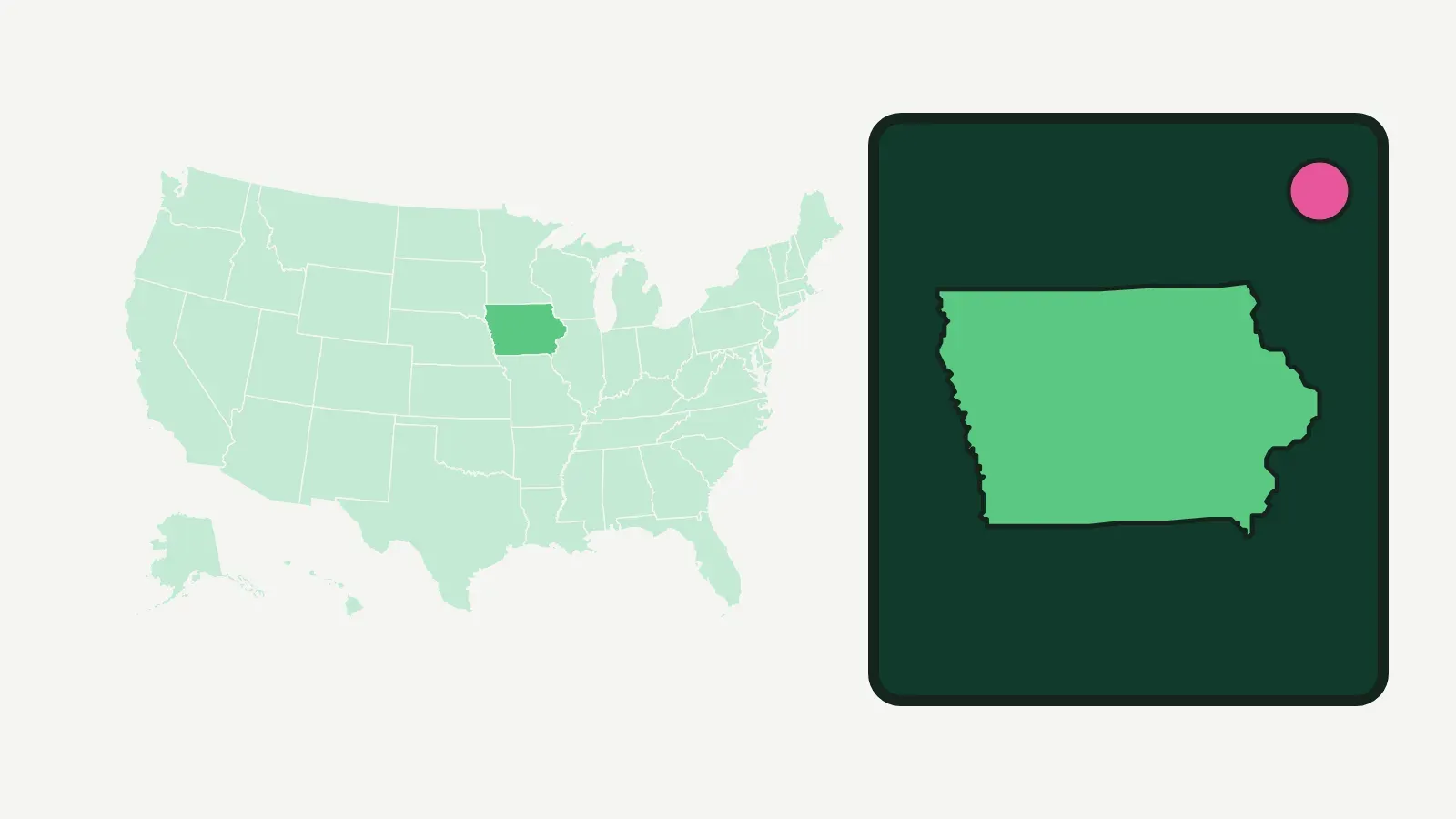
Iowa owner households paid a median of $3,014 in property tax in 2025 on a median home value of $237,000, about 1.27% of value, which puts the state in the "high" tier on the map. A 2026 law replaces the homestead tax credit with an exemption of 10% of taxable value, from $5,500 to $20,000, starting with the 2026 assessment year. Protests go to the local board of review between April 2 and April 30.
Iowa at a glance
How the bill is built
The typical figures above come from the Census Bureau's 2025 American Community Survey: the median real estate tax paid by Iowa homeowners divided by the median home value. It is a survey estimate for the whole state, not a tax rate, and your own bill depends on where the home sits.
In Iowa, the local assessor values your home as of January 1 of the assessment year. All real property is assessed every odd-numbered year, and residential property is to be valued at actual (market) value. The county auditor then applies an assessment limitation, often called the rollback, to turn the assessed value into taxable value. For residential and agricultural property the limitation is set each year to hold growth in total statewide taxable value to 3%. It is not a cap on your own home's value. Local levy rates, expressed in mills, come from the budgets of the taxing authorities that cover your address, and the county treasurer collects. The property tax estimator lets you swap in the rate from your own bill.
The cycle takes about 18 months. A January 2026 assessment produces taxes due in the fall of 2027 and the spring of 2028.
What lowers your bill
A 2026 law, Senate File 2472, signed on May 18, 2026, replaces the homestead tax credit with a homestead exemption. An exemption reduces the value you are taxed on, where the old credit reduced the tax itself. The change is retroactive to assessment year 2026, so it first shows up in taxes paid in September 2027 and March 2028.
| Feature | Old homestead credit | New homestead exemption |
|---|---|---|
| How it works | Credit equal to the tax on $4,850 of value | Exemption of 10% of taxable value |
| Limits | A fixed $4,850 of value | Minimum $5,500 and maximum $20,000 of taxable value |
| After 2026 | Replaced | Maximum adjusted for inflation from assessment year 2027 |
The Department of Revenue says the tax benefit to a homeowner is greater under the new law, and that owners who currently receive the credit do not need to refile. The disabled veteran homestead credit remains. Separately, the state expanded its property tax credit for people 70 or older with household income under 250% of the federal poverty level, with claims filed between January 1 and June 1. See also homestead exemptions.
Protesting your assessment
If you think your assessed value is not actual or market value, start by asking your assessor for an informal review. You can then protest in writing to the local board of review between April 2 and April 30. If April 30 falls on a weekend, the deadline moves to the next business day. One county assessor's page says its board meets in May to hear protests, and that you need a separate form for each parcel.
- Reasons to protest: the assessment is not comparable to similar properties, it is more than the law allows, the property is exempt, or there is an error.
- If you disagree with the board: you can appeal to the Property Assessment Appeal Board or to district court. Ask your assessor for the deadline.
- Equalization protests: if the Department of Revenue orders values changed, a special-session protest window runs October 9 through October 31, and the only ground is that the order pushed your value above what the law allows.
The general steps, evidence and tips are in how to appeal your property tax assessment.
Who to call
- Your value, exemption and protest forms: your county assessor.
- Your bill: the county auditor figures levy rates and bills, and the county treasurer collects.
- Rules and questions: the Iowa Department of Revenue, Property Tax, [email protected].
Questions people ask
How much is property tax in Iowa?
The Census Bureau's 2025 survey puts the median at $3,014 a year, or about 1.27% of a median home value of $237,000. Your own bill depends on your taxable value and the levy rates where the home sits.
What is the Iowa homestead exemption?
Starting with assessment year 2026, it is 10% of the home's taxable value, at least $5,500 and at most $20,000. It replaced the homestead tax credit, which equaled the tax on $4,850 of value.
When is the deadline to protest my Iowa assessment?
Between April 2 and April 30, in writing, to your local board of review. The deadline moves to the next business day if April 30 falls on a weekend.
Is there a cap on how much my Iowa value can go up?
The rollback holds growth in total statewide taxable value for residential property to 3%. It is not a limit on one home's assessed value, so your own value can move more.
Sources
- U.S. Census Bureau — American Community Survey 2025 1-year, table B25103 (median real estate taxes paid)
- U.S. Census Bureau — American Community Survey 2025 1-year, table B25077 (median home value)
- Iowa Department of Revenue — Homestead Tax Credit and Exemption
- Iowa Department of Revenue — Iowa Property Tax Overview
- Iowa Department of Revenue — Equalization and Assessment Limitations
- Iowa Department of Revenue — Property Tax (expanded property tax credit)
- Iowa County Assessor — Board of Review (April 2 to April 30 protest window)
The typical rate is the Census median tax divided by the median value, a survey estimate. The exemption amounts are for assessment year 2026 under Senate File 2472. The April protest window comes from a county assessor's page; confirm the dates with your own assessor. Facts on this page were checked against these sources on November 20, 2026.
Next to read
-
Owning guide
 Appeal your property tax assessment
Check the deadline, gather sales of similar homes and file on time. A worked savings example.
-
Owning guide
 Homestead exemptions
Relief for owners who live in the home: what it saves, how to apply and what is changing.
-
Owning guide
 Escrow accounts explained
How your lender collects tax and insurance, why the payment changes and what a shortage means.