High tier
Property tax in Kansas: the typical bill, the refund programs and the 30-day value appeal
The state relief programs we found are income-tested refunds, not a fixed amount off your assessed value, so the appeal window matters. Here is how the bill is built.
By AbodePine Editorial Team Updated 5 min read
- Typical rate
- 1.24% of home value
- Median annual bill
- $3,144
- Homeowner relief
- Income-tested refunds
- Appeal deadline
- 30 days from value notice
In brief
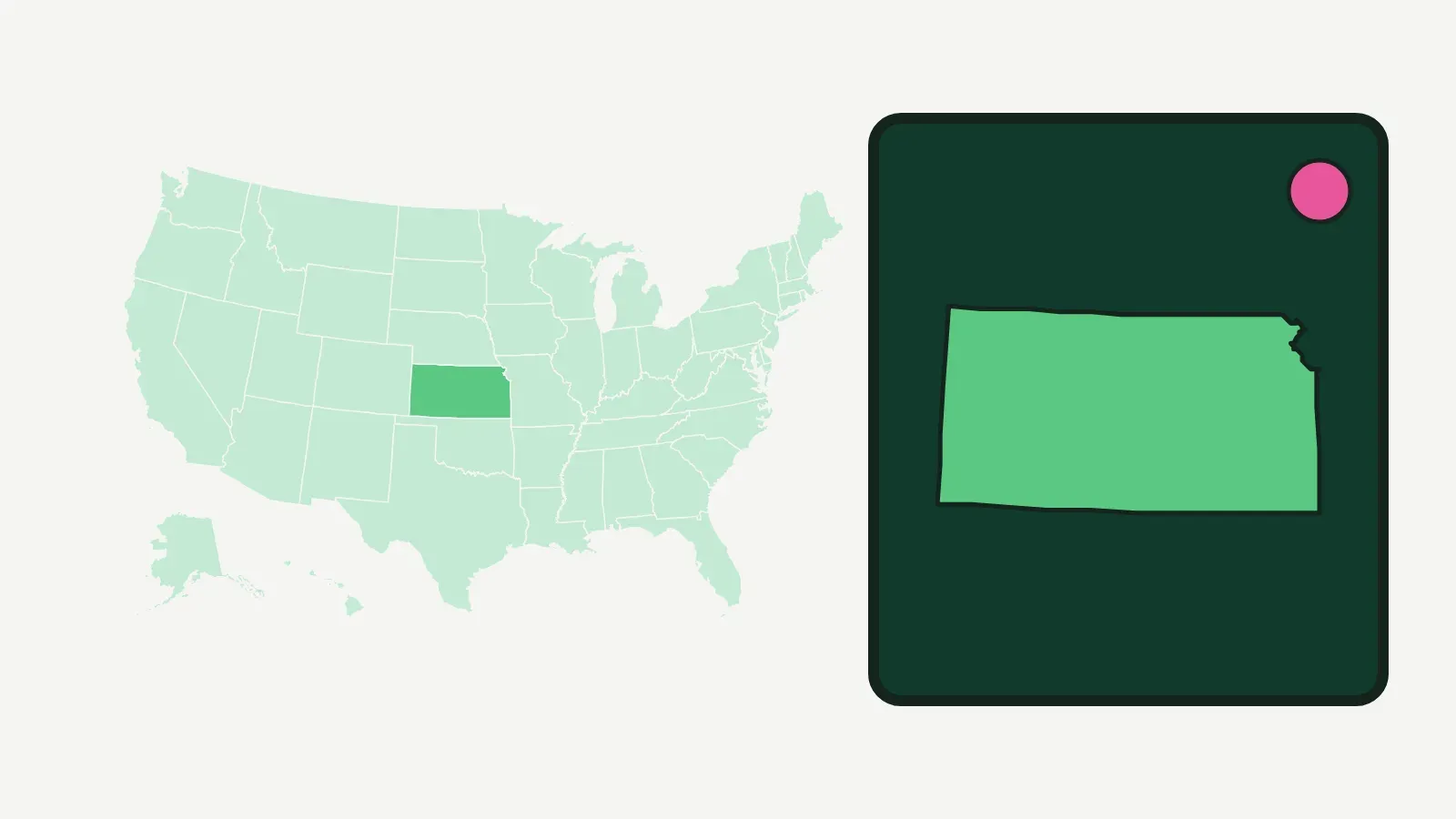
Kansas owner households paid a median of $3,144 in property tax in 2025 on a median home value of $252,600, about 1.24% of value, which puts the state in the "high" tier on the map. Homes are appraised at market value and assessed at 11.5% of that. Relief comes through income-tested refund programs rather than an exemption. The valuation notice starts a 30-day window for an informal appeal with the county appraiser.
Kansas at a glance
How the bill is built
The typical figures above come from the Census Bureau's 2025 American Community Survey: the median real estate tax paid by Kansas homeowners divided by the median home value. It is a survey estimate for the whole state, not a tax rate, and your own bill depends on where the home sits.
In Kansas, your county appraiser values your home at fair market value as of January 1. The state constitution then assesses residential property at 11.5% of that appraised value. Each taxing district, such as the school district, county, city and township, certifies a budget, and its rate is the money it needs divided by its assessed valuation, expressed in mills. One mill is $1 of tax per $1,000 of assessed value. The property tax estimator lets you swap in the rate from your own bill.
As an arithmetic example only, not a Kansas rate: a home appraised at $200,000 has an assessed value of $23,000 (200,000 x 0.115). At a combined 100 mills, the tax would be 23 x $100 = $2,300.
What lowers your bill
The Kansas Department of Revenue lists three refund programs for some homeowners, and the Legislative Research Department describes the same three. Neither source mentions a homestead exemption that takes a fixed amount off a home's value; ask your county appraiser if you think one applies. The Department of Revenue's 2025 figures, for claims filed from January 1 to April 15, 2026, are below. Limits change each year, so check the forms for the year you are claiming.
| Program | Who qualifies | Benefit |
|---|---|---|
| Homestead Property Tax Refund | Household income of $43,389 or less for 2025; born before January 1, 1970, a dependent under 18, or blind, totally and permanently disabled or a disabled veteran | Refund of part of the tax on a sliding scale, up to $700 |
| SAFESR | Age 65 or older all of 2025, with household income of $25,380 or less | Refund of 75% of the tax |
| Tax freeze option | Age 65 or older or a disabled veteran, with household income of $58,041 or less for 2025 | Refund of tax above the base-year amount |
Appealing your value
If your value changes, the county must mail a valuation notice by March 1. The mailing starts a 30-day window to appeal the valuation. In Sedgwick County, for example, the appeal form is on the back of the notice and is typically due March 31. The first step is an informal meeting with the county appraiser. The appeal covers value, not the amount of tax.
- If you still disagree: you can appeal to the state Board of Tax Appeals (BOTA) within 30 days of the date the informal results were mailed. Sedgwick County says a small claims division handles single-family homes.
- Another route: payment under protest. You pay the disputed tax and file a protest form with the county treasurer, generally at or before the first-half payment, due December 20. A taxpayer who made an equalization appeal usually cannot also protest the value for the same year.
- What to bring: recent sales of similar homes, a private appraisal or purchase contract, photos of damage, and signed repair estimates.
The general steps are in how to appeal your property tax assessment.
Who to call
- Your value and an informal appeal: your county appraiser's office.
- Your bill and a payment under protest: the county treasurer. Bills go out by December 15; the first half is due December 20 and the second half May 10.
- Refund programs: start with your county appraiser's office, which can point you to the current forms and limits.
Questions people ask
How much is property tax in Kansas?
The Census Bureau's 2025 survey puts the median at $3,144 a year, or about 1.24% of a median home value of $252,600. Your own bill depends on your appraised value and the mill levies where the home sits.
How is Kansas residential property assessed?
The county appraises it at fair market value as of January 1, and residential property is assessed at 11.5% of that appraised value. Mill levies are applied to the assessed value.
Is there a homestead exemption in Kansas?
The state agencies we checked describe refund programs rather than an exemption that lowers a home's assessed value: the Homestead Property Tax Refund, SAFESR and a tax freeze option, all with income limits. Ask your county appraiser whether any local exemption applies.
When is the deadline to appeal my Kansas valuation?
30 days after the county mails the valuation notice. Counties mail notices by March 1, so the deadline is typically around March 31. Read the date on your own notice.
Sources
- U.S. Census Bureau — American Community Survey 2025 1-year, table B25103 (median real estate taxes paid)
- U.S. Census Bureau — American Community Survey 2025 1-year, table B25077 (median home value)
- Kansas Legislative Research Department — Kansas Property Tax Cycle
- Kansas Legislative Research Department — Residential Property Tax Relief Programs (December 2024)
- Kansas Department of Revenue — Kansas Homestead Refund Programs
- Kansas Department of Revenue — 2025 Homestead or Property Tax Refund for Homeowners (K-40H booklet)
- Sedgwick County Appraiser — Appeals
The typical rate is the Census median tax divided by the median value, a survey estimate. The assessment ratio is from a 2021 Legislative Research Department briefing. The refund limits are the Department of Revenue's for tax year 2025 claims, filed by April 15, 2026; the limits for 2026 claims were not checked, so confirm them and local dates with the Department of Revenue and your county appraiser. Facts on this page were checked against these sources on November 20, 2026.
Next to read
-
Owning guide
 Appeal your property tax assessment
Check the deadline, gather sales of similar homes and file on time. A worked savings example.
-
Owning guide
 Homestead exemptions
Relief for owners who live in the home: what it saves, how to apply and what is changing.
-
Owning guide
 Escrow accounts explained
How your lender collects tax and insurance, why the payment changes and what a shortage means.