Low tier
Property tax in Louisiana: the typical bill, the homestead exemption and the parish appeal
Louisiana assesses homes at 10% of market value and lets a homestead skip part of the bill. Here is how the pieces fit, who can freeze an assessment, and where an appeal starts.
By AbodePine Editorial Team Updated 5 min read
- Typical rate
- 0.55% of home value
- Median annual bill
- $1,268
- Homeowner relief
- $75,000 of value exempt
In brief
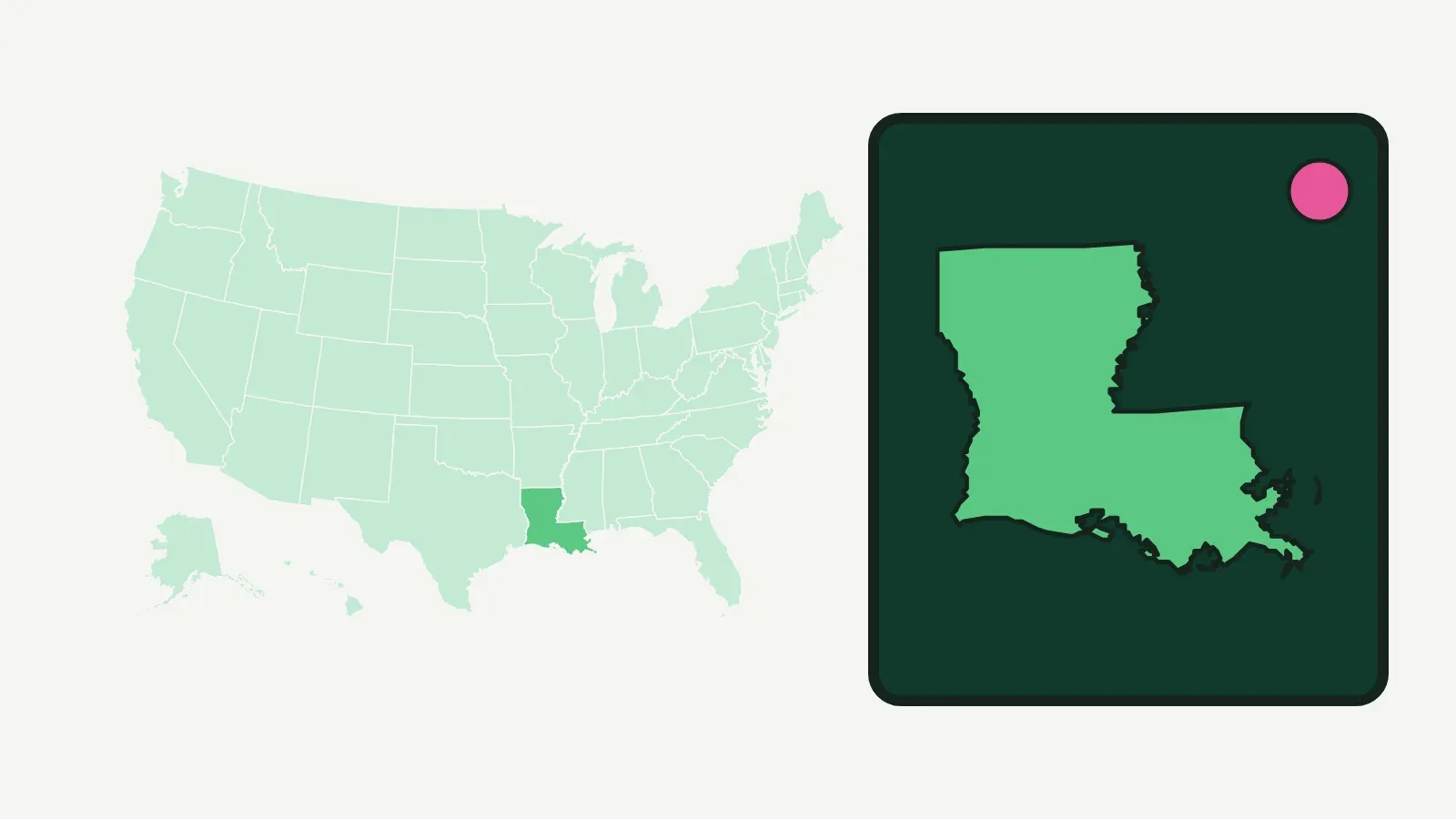
Louisiana owner households paid a median of $1,268 in property tax in 2025 on a median home value of $231,800, about 0.55% of value, which puts the state in the "low" tier on the map. Homes are assessed at 10% of fair market value, and the homestead exemption removes $7,500 of assessed value (about $75,000 of market value) from state, parish and special taxes. Appeal dates are set parish by parish, so read the notice from your assessor.
Louisiana at a glance
How the bill is built
The typical figures above come from the Census Bureau's 2025 American Community Survey: the median real estate tax paid by Louisiana homeowners divided by the median home value. It is a survey estimate for the whole state, not a tax rate, and your own bill depends on the taxing units where the home sits.
Under the Louisiana Constitution, a parish assessor determines the fair market value of property in the parish. The tax rolls list each property at its assessed value, which for land and residential improvements is 10% of fair market value. A home with a market value of $250,000 is therefore assessed at $25,000. All property must be reappraised at least every four years.
Rates are quoted in mills (a mill is $1 of tax per $1,000 of assessed value). Your bill is your taxable assessed value times the combined millage for where you live, so check the millage on your bill. The property tax estimator lets you try your own numbers.
What lowers your bill
A bona fide homestead that you own and occupy is exempt from state, parish and special ad valorem taxes up to $7,500 of assessed valuation. At the 10% ratio, that is about $75,000 of market value. The exemption does not extend to municipal taxes, except in Orleans Parish, where it applies to state, general city, school, levee and levee district taxes, and to municipal taxes levied for school purposes. Only one homestead exemption may apply to any person in the state.
| Relief | What it does |
|---|---|
| Homestead exemption | $7,500 of assessed value exempt from state, parish and special taxes |
| Special assessment level | Freezes the assessment for qualifying owners |
| Four-year phase-in | Spreads a reappraisal jump of more than 50% over four years |
The special assessment level is the closest thing to a cap. If you receive the homestead exemption and are 65 or older, have a service-connected disability rating of 50% or more from the Department of Veterans Affairs, or are permanently and totally disabled, your assessment cannot go above its level in the first year you qualify. It ends when the property is sold, and a new owner must apply. An income limit applies. The Constitution as published by the Legislature sets it at $100,000 of prior-year federal adjusted gross income, adjusted for inflation starting in tax year 2026, and says it rises to $150,000 on January 1, 2027 upon ratification of the amendment proposed by Act 220 of 2025. The Legislature's digest says that amendment went to voters at the November 3, 2026 statewide election. We could not read the Secretary of State's official result, so ask your assessor which limit applies to you and from what date.
Separately, for a homestead whose assessed value rises more than 50% in a reappraisal year, the added tax is phased in over four years. That phase-in ends when the home is sold, and it does not cover increases from new construction. See homestead exemptions for how these programs compare across states.
Appealing your assessment
The Constitution sets the order of review: first the parish governing authority, then the Louisiana Tax Commission, and finally the courts. Under R.S. 47:1992, a taxpayer who is dissatisfied with the board of review's decision may appeal to the Tax Commission under the Commission's own rules, and the statute does not itself give a statewide filing date. The dates are therefore set by the parish and the Commission's rules. They vary, so use the dates on your own notice and ask your assessor's office.
- Look first: the assessor opens the tax lists for public inspection before appeals are due. In Orleans Parish this year that was July 15 to August 17, 2026, and informal disputes with the assessor were encouraged then.
- File the appeal: in Orleans Parish this year, the deadline to file with the assessor was August 20, 2026, followed by Board of Review hearings in September. Other parishes use their own schedule.
- Next level: in Orleans, a taxpayer may appeal the Board of Review's decision to the Louisiana Tax Commission in writing within 10 business days after delivery of the notice.
The general steps, evidence and tips are in how to appeal your property tax assessment.
Who to call
- Your value, exemption and special assessment: the assessor for the parish where the home is located (in Orleans Parish, the assessor for your district).
- Appeals above the parish: the Louisiana Tax Commission.
Questions people ask
How much is property tax in Louisiana?
The Census Bureau's 2025 survey puts the median at $1,268 a year, or about 0.55% of a median home value of $231,800. Your own bill depends on your assessed value and the millage where the home sits.
What is the Louisiana homestead exemption?
$7,500 of assessed value is exempt from state, parish and special taxes on a home you own and live in. At the 10% assessment ratio, that is about $75,000 of market value. You apply with your parish assessor.
At what percentage does Louisiana assess homes?
Residential improvements and land are assessed at 10% of fair market value. A $250,000 home is assessed at $25,000 before any exemption.
Is there a cap on my Louisiana assessment?
For homesteads of owners who are 65 or older, 50%-plus disabled veterans and certain others, the assessment can be frozen at its first-year level, subject to an income limit ($100,000 now; $150,000 from January 1, 2027 if the Act 220 amendment was ratified, so confirm with your assessor). Otherwise, property must be reappraised at least every four years.
Sources
- U.S. Census Bureau — American Community Survey 2025 1-year, table B25103 (median real estate taxes paid)
- U.S. Census Bureau — American Community Survey 2025 1-year, table B25077 (median home value)
- Louisiana State Legislature — Constitution Article VII, Section 18 (ad valorem taxes)
- Louisiana State Legislature — Constitution Article VII, Section 20 (homestead exemption)
- Louisiana State Legislature — Act 220 of 2025 (HB 300) digest, special assessment level amendment
- Louisiana State Legislature — R.S. 47:1992 (assessment lists, board of review, appeal to Tax Commission)
- New Orleans City Council — Property Tax Assessments and Appeals
The typical rate is the Census median tax divided by the median value, a survey estimate. Dollar amounts are from the Louisiana Constitution as published by the Legislature, which still reads "upon ratification" for the $150,000 limit; we did not confirm the November 3, 2026 result on an official page. The Orleans Parish dates are for the 2026 appeal cycle and other parishes differ. Facts on this page were checked against these sources on November 20, 2026; confirm the current year's dates and the income limit with your parish assessor.
Next to read
-
Owning guide
 Appeal your property tax assessment
Check the deadline, gather sales of similar homes and file on time. A worked savings example.
-
Owning guide
 Homestead exemptions
Relief for owners who live in the home: what it saves, how to apply and what is changing.
-
Owning guide
 Escrow accounts explained
How your lender collects tax and insurance, why the payment changes and what a shortage means.