Moderate tier
Property tax in Maryland: the typical bill, the Homestead Credit and the 45-day appeal
Maryland's state assessors value every home on a three-year cycle, and a credit limits how fast your taxable value can climb. Here is how it works and how to appeal.
By AbodePine Editorial Team Updated 5 min read
- Typical rate
- 0.98% of home value
- Median annual bill
- $4,368
- Homeowner relief
- 10% cap, or lower locally
In brief
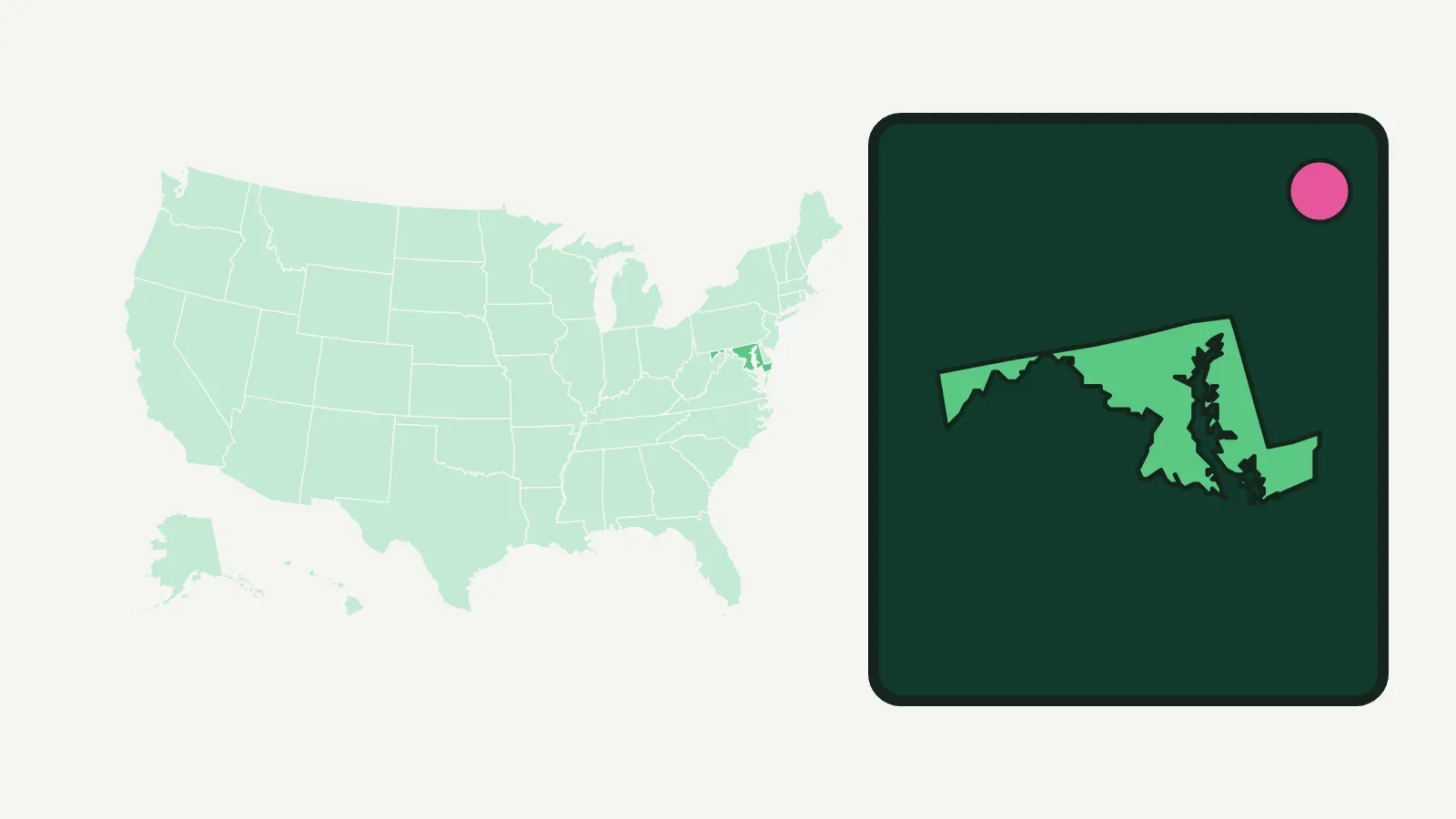
Maryland owner households paid a median of $4,368 in property tax in 2025 on a median home value of $445,800, about 0.98% of value, which puts the state in the "moderate" tier on the map. The Homestead Property Tax Credit limits yearly increases in taxable assessment on your main home to 10% or less, depending on your county or municipality, once you file a one-time application. An appeal of a new assessment must be filed within 45 days of the notice date.
Maryland at a glance
How the bill is built
The typical figures above come from the Census Bureau's 2025 American Community Survey: the median real estate tax paid by Maryland homeowners divided by the median home value. It is a survey estimate for the whole state, not a tax rate, and your own bill depends on the county and any municipality where the home sits.
Unlike most states, Maryland assessments come from a state agency, the State Department of Assessments and Taxation (SDAT), working through local assessment offices. Owners normally receive a Notice of Assessment every three years, showing the old and new market value. Your bill is the taxable assessment times the state and local rates, and the local rates depend on where the home is. SDAT publishes a way to view the property tax rates in your area. The property tax estimator lets you try the rate from your own bill.
What lowers your bill
The Homestead Property Tax Credit is Maryland's assessment cap. State law requires every county and municipality to limit increases in taxable assessment on a principal residence to 10% a year or less. Many local governments set a lower cap, and SDAT keeps a listing of the cap for each one.
Technically the credit does not limit the market value that SDAT assigns. It is a credit on any assessment increase above the cap, so you pay no property tax on the part of the increase over the limit. SDAT's example: if a $100,000 assessment becomes $120,000 and the cap is 10%, the credit applies to taxes on the $10,000 above $110,000. You may not see the credit on your bill every year, only in years when the increase exceeds the cap.
To qualify, the home must be your principal residence, and you must have lived in it at least six months of the year, including July 1. The credit is available on one property only. It is not granted if the property changed ownership in the previous tax year, among other conditions. A final denial can be appealed to the Property Tax Assessment Appeal Board within 30 days. See homestead exemptions for how caps and exemptions work in other states.
Appealing your assessment
You can appeal on receipt of an assessment notice, by petition for review in the years your property is not revalued, or within 60 days of a purchase transferred between January 1 and June 30. For the usual case, the appeal of a new three-year assessment, the rule is to file within 45 days of the notice date, online with the control number on your notice or on the paper form returned to your local assessment office.
- First appeal: an informal hearing at the Supervisor of Assessments' level, by written appeal, phone, video or in person. SDAT gives you a property worksheet and an area sales listing.
- Second appeal: the Property Tax Assessment Appeal Board in your jurisdiction, within 30 days of the final notice from the first level. No fee is required.
- Third appeal: the Maryland Tax Court, within 30 days of the board's order. You must be present; there are no written hearings.
SDAT advises focusing on the market value: show sales of comparable properties and point out errors in the property record. The size of the increase and the tax bill itself are not relevant to the value under appeal. The general steps are in how to appeal your property tax assessment.
Who to call
- Your value and Homestead status: SDAT's Real Property Search, or your local assessment office.
- Homestead Credit questions: the SDAT Homestead unit, by email at [email protected] or at 1-866-650-8783 toll free in Maryland.
- Your tax bill: your county or municipality; the assessment is SDAT's, the bill is local.
Questions people ask
How much is property tax in Maryland?
The Census Bureau's 2025 survey puts the median at $4,368 a year, or about 0.98% of a median home value of $445,800. Your own bill depends on your assessment and the local rates where the home sits.
What is the Maryland Homestead Tax Credit?
A credit that limits yearly increases in the taxable assessment of your principal residence to 10% or less, as set by your local government. You file a one-time application with SDAT.
How long do I have to appeal my Maryland assessment?
45 days from the date on the Notice of Assessment. Appeals are filed online or on the paper form with your local assessment office.
How often does Maryland reassess homes?
SDAT normally sends a Notice of Assessment every three years. In the other two years you can still file a petition for review.
Sources
- U.S. Census Bureau — American Community Survey 2025 1-year, table B25103 (median real estate taxes paid)
- U.S. Census Bureau — American Community Survey 2025 1-year, table B25077 (median home value)
- Maryland State Department of Assessments and Taxation — Homestead Property Tax Credit Program
- Maryland State Department of Assessments and Taxation — Assessment Appeal Process
- Maryland State Department of Assessments and Taxation — Real Property
The typical rate is the Census median tax divided by the median value, a survey estimate. The Homestead Credit cap is 10% or lower as set by each local government. Facts on this page were checked against these sources on November 20, 2026; confirm the cap for your county or municipality and the dates on your notice.
Next to read
-
Owning guide
 Appeal your property tax assessment
Check the deadline, gather sales of similar homes and file on time. A worked savings example.
-
Owning guide
 Homestead exemptions
Relief for owners who live in the home: what it saves, how to apply and what is changing.
-
Owning guide
 Escrow accounts explained
How your lender collects tax and insurance, why the payment changes and what a shortage means.