Moderate tier
Property tax in Massachusetts: the typical bill, the local exemptions and the abatement deadline
Massachusetts has no statewide homestead exemption, and every city and town runs its own assessing office. Here is how the bill is built, what relief to ask about, and the deadline to dispute a value.
By AbodePine Editorial Team Updated 5 min read
- Typical rate
- 1.01% of home value
- Median annual bill
- $6,345
- Homeowner relief
- No statewide exemption
In brief
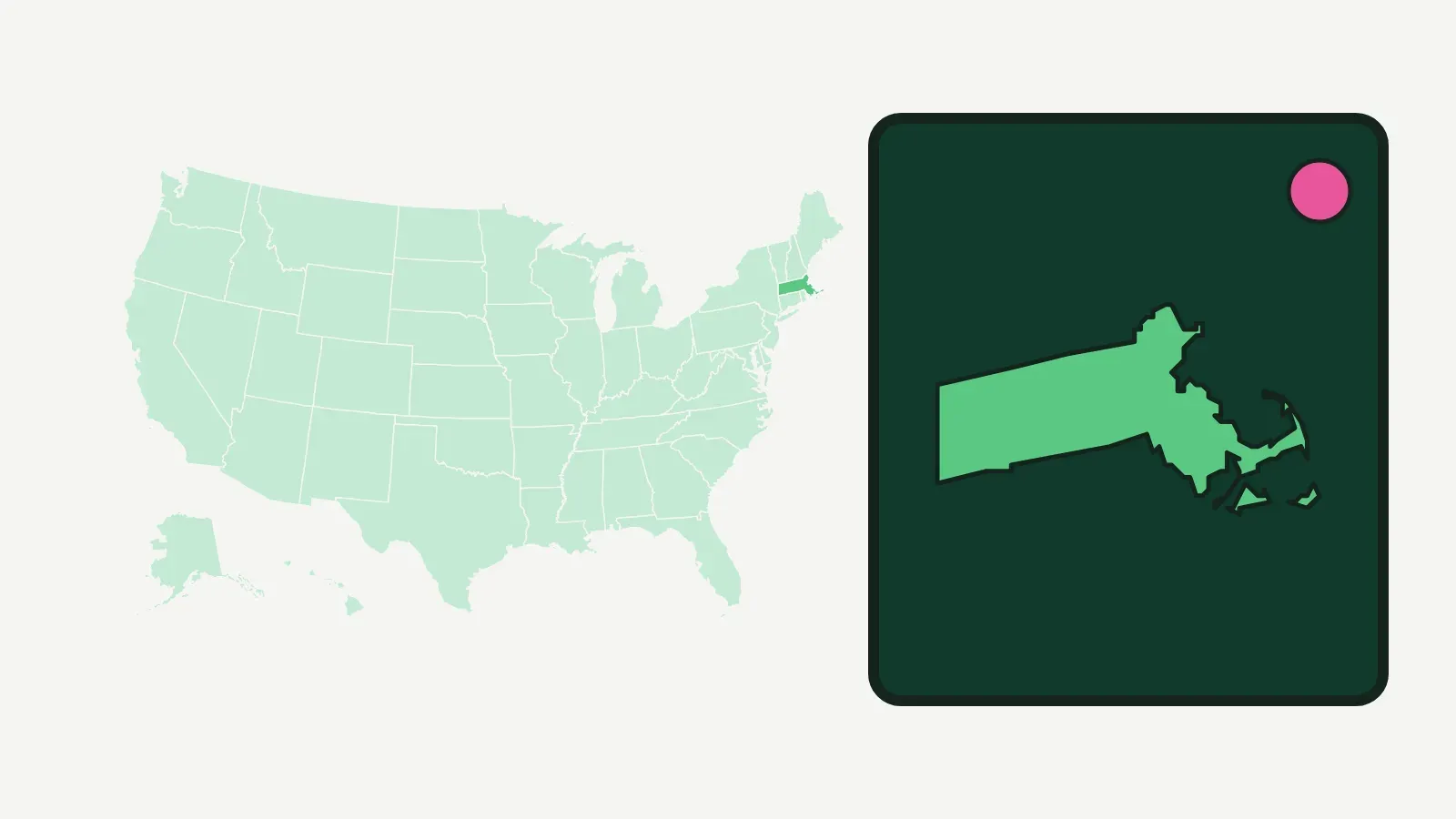
Massachusetts owner households paid a median of $6,345 in property tax in 2025 on a median home value of $626,900, about 1.01% of value, which puts the state in the "moderate" tier on the map. There is no statewide homestead exemption; relief for seniors, veterans and others is offered by city or town. To dispute your value, you file an abatement application with your local assessors by the due date of your first actual tax bill.
Massachusetts at a glance
How the bill is built
The typical figures above come from the Census Bureau's 2025 American Community Survey: the median real estate tax paid by Massachusetts homeowners divided by the median home value. It is a survey estimate for the whole state, not a tax rate, and your own bill depends on the city or town where the home sits.
Local assessors in every Massachusetts city and town must assess property at its full and fair cash value, as of January 1 each year, and classify each parcel as residential, open space, commercial or industrial. Your bill is the assessed value times your community's tax rate. The rate comes from the levy, the total the community raises through property tax, divided by the total assessed value of all property. Depending on the community, the tax burden can be shifted from homes toward commercial, industrial and personal property.
Proposition 2 1/2 limits the property tax. It caps the levy a community can raise, not your individual assessment, so your own bill can still move when your value rises faster than your neighbors'. The Department of Revenue reviews each community's assessing practices every five years. The property tax estimator lets you try the rate from your own bill.
What lowers your bill
The Department of Revenue's guides do not list a statewide homestead exemption. What the state has is a menu of exemptions in state law, listed by the Department of Revenue for blind persons, qualifying senior citizens, qualifying surviving spouses, minor children and elderly persons, and qualifying veterans, plus deferrals for qualifying persons. Many communities offer these, and some veterans' exemptions apply only if the municipality has voted to accept them. Amounts and income limits differ by town.
Separately, the state offers a Senior Circuit Breaker income tax credit for owners 65 or older who pay more than 10% of their income in property tax. It is claimed on the state income tax return, not on the tax bill. See homestead exemptions for how relief differs across states.
Disputing your assessment
In Massachusetts a request to reduce your tax is an abatement. The statutory abatement procedure is the only remedy for contesting an assessed tax liability, and the Department of Revenue lists four grounds: overvaluation, disproportionate assessment, misclassification and a statutory exemption. A late application loses the right to any abatement, because the assessors have no authority to grant one.
- The deadline: typically the due date of the first actual (not preliminary) bill for the year. A bill is actual if it shows an assessed value and a tax rate. With quarterly billing, the application is due with the third-quarter payment, usually by February 1.
- The form: State Tax Form 128, or your community's own form. Mail it postmarked by the deadline, or deliver it in person to the assessor's office.
- Pay anyway: filing does not stop collection. Pay the full bill on time or you may lose the right to appeal.
- The decision: assessors have three months from receipt to act. If they deny or do not act, you have three months to appeal to the Appellate Tax Board. If your bill is more than $5,000, the Secretary of the Commonwealth says the payment must reach the collector by the due date.
The general steps are in how to appeal your property tax assessment.
Who to call
- Your value, exemptions and abatement form: the board of assessors in the city or town where the home is located. The Secretary of the Commonwealth links to a directory of local assessor offices.
- Appeals after an abatement is denied: the Massachusetts Appellate Tax Board.
- Rules and forms: the Department of Revenue, Division of Local Services. It does not handle individual bills, so contact your city or town for those.
Questions people ask
How much is property tax in Massachusetts?
The Census Bureau's 2025 survey puts the median at $6,345 a year, or about 1.01% of a median home value of $626,900. Your own bill depends on your assessed value and your community's rate.
Does Massachusetts have a homestead exemption?
Not a statewide one. Exemptions for seniors, veterans, blind persons and others are administered by each city or town, and amounts differ. Ask your local assessor.
What is the deadline for a Massachusetts property tax abatement?
Typically the due date of the first actual tax bill. For quarterly billing that is usually the third-quarter payment date, around February 1. Check with your assessor.
Does filing an abatement stop my tax bill?
No. Pay the bill on time even if you file, or you may lose your appeal rights. If the abatement is granted, you get a refund.
Sources
- U.S. Census Bureau — American Community Survey 2025 1-year, table B25103 (median real estate taxes paid)
- U.S. Census Bureau — American Community Survey 2025 1-year, table B25077 (median home value)
- Massachusetts Department of Revenue, Division of Local Services — Massachusetts Municipal Property Taxes
- Massachusetts Division of Local Services — DLS Training Highlight: Property Tax Abatements
- Massachusetts Secretary of the Commonwealth — Property Tax Information (abatements)
- Massachusetts Trial Court Law Libraries — Massachusetts law about property taxes
The typical rate is the Census median tax divided by the median value, a survey estimate. Exemption amounts and abatement dates are set by city and town, so none are listed here. Facts on this page were checked against these sources on November 20, 2026; confirm the deadline and any exemption with your local assessors.
Next to read
-
Owning guide
 Appeal your property tax assessment
Check the deadline, gather sales of similar homes and file on time. A worked savings example.
-
Owning guide
 Homestead exemptions
Relief for owners who live in the home: what it saves, how to apply and what is changing.
-
Owning guide
 Escrow accounts explained
How your lender collects tax and insurance, why the payment changes and what a shortage means.