High tier
Property tax in Michigan: the typical bill, the principal residence exemption and the March board of review
Michigan bills you on a taxable value that grows more slowly than market value, and your main home skips part of the school tax. Here is how those pieces work and where to dispute a value.
By AbodePine Editorial Team Updated 5 min read
- Typical rate
- 1.17% of home value
- Median annual bill
- $3,163
- Homeowner relief
- PRE: up to 18 school mills
In brief
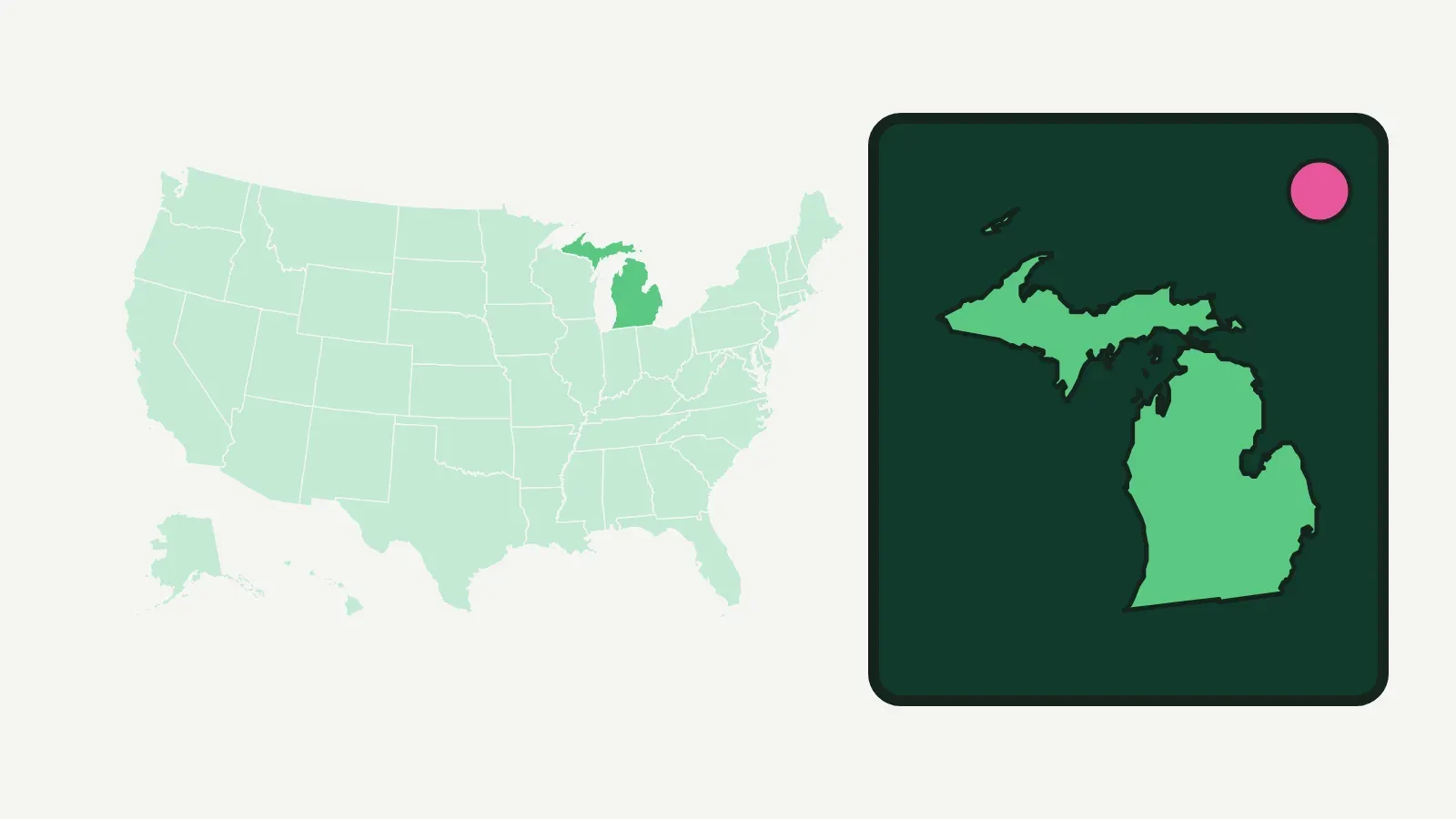
Michigan owner households paid a median of $3,163 in property tax in 2025 on a median home value of $269,500, about 1.17% of value, which puts the state in the "high" tier on the map. The principal residence exemption removes your main home from the local school operating tax, up to 18 mills. Disputes start at your city or township board of review in March, and a residential case can go on to the Michigan Tax Tribunal.
Michigan at a glance
How the bill is built
The typical figures above come from the Census Bureau's 2025 American Community Survey: the median real estate tax paid by Michigan homeowners divided by the median home value. It is a survey estimate for the whole state, not a tax rate, and your own bill depends on the taxing units where the home sits.
In Michigan, a local assessor tracks three numbers for each property: true cash value, assessed value and taxable value. Property taxes are quoted in mills, where one mill is $1 per $1,000 of taxable value, and the Treasury posts millage rate information along with a property tax estimator. Michigan sets tax day as December 31, so the value for a given tax year is determined on the December 31 before it. The property tax estimator lets you try the rate from your own bill.
Taxable value is the number your tax is based on. Under section 27a of the General Property Tax Act (MCL 211.27a), a property's taxable value for a year is the lesser of its state equalized valuation or its capped value, and the capped value is last year's taxable value (less losses, plus additions) multiplied by the lesser of 1.05 or the inflation rate. In plain terms, a given property's taxable value cannot rise by more than 5% or inflation, whichever is lower, in a year. The State Tax Commission publishes the yearly inflation rate multiplier, built from the consumer price index. After a transfer of ownership, taxable value resets to the state equalized valuation for the following year and is capped again from there. Treasury has a page on changes in ownership issues. Ask your assessor how the cap applies to your parcel.
What lowers your bill
The principal residence exemption (PRE) exempts an owner's principal residence from the local school operating millage, up to 18 mills. A principal residence is the one place where you have your true, fixed and permanent home. It also covers adjoining unoccupied residential property you own. You claim it with your local assessor, and the Treasury Department posts the forms and guidelines.
| Program | What it does |
|---|---|
| Principal residence exemption | Exempts the home from local school operating millage, up to 18 mills |
| Capped taxable value | Limits yearly growth through an inflation-based formula |
| Homestead Property Tax Credit | Income tax credit for qualified homeowners and renters |
Michigan's tax tribunal also hears appeals of principal residence exemption denials and disabled veteran exemption denials. See homestead exemptions for how these programs work across states.
Appealing your assessment
The State Treasury's 2026 appeal table sends a dispute over assessed value or taxable value to the board of review in March. Its note says to contact your city or township for the board's dates. From there, the Michigan Tax Tribunal's deadline for residential property was July 31, 2026, by petition. Industrial, commercial and utility personal property has an earlier deadline of May 31.
- Step one: check your assessment notice, then ask your assessor's office about the board of review dates. The board is a local body.
- Step two: if the board does not fix it, file a petition with the Michigan Tax Tribunal. The statute says an assessment must generally be protested to the board of review before the Tribunal has jurisdiction, and it lists exceptions for commercial, industrial and some other property classes, not residential. For tax year 2026, the residential petition date was July 31, 2026. Check Treasury's appeal bulletin for the year you are appealing.
- What to expect: the Tribunal's Small Claims Division uses an informal hearing, typically 30 minutes by telephone, and it says a case may take 12 to 18 months from filing to decision.
The Tribunal is independent of the Department of Treasury and local governments. The general steps are in how to appeal your property tax assessment.
Who to call
- Your value, exemption and board of review dates: the assessor for the city or township where the home is located.
- Rules, bulletins and the estimator: the Michigan Department of Treasury and its State Tax Commission.
- Appeals beyond the board of review: the Michigan Tax Tribunal, 517-335-9760.
Questions people ask
How much is property tax in Michigan?
The Census Bureau's 2025 survey puts the median at $3,163 a year, or about 1.17% of a median home value of $269,500. Your own bill depends on your taxable value and the millage where the home sits.
What is Michigan's principal residence exemption?
It exempts your principal residence from the local school operating millage, up to 18 mills. It is separate from the Homestead Property Tax Credit, which is claimed on the income tax return.
When is the Michigan board of review?
In March. The dates are set by your city or township, so ask your assessor or check your assessment notice.
Where do I appeal after the board of review?
To the Michigan Tax Tribunal, by petition. For residential property in tax year 2026 the deadline was July 31, 2026. Treasury publishes a new appeal bulletin each year.
Sources
- U.S. Census Bureau — American Community Survey 2025 1-year, table B25103 (median real estate taxes paid)
- U.S. Census Bureau — American Community Survey 2025 1-year, table B25077 (median home value)
- Michigan Department of Treasury — Property Tax
- Michigan Department of Treasury — Principal Residence Exemption
- Michigan State Tax Commission — Bulletin 10 of 2025, 2026 Property Tax Appeal Procedures
- Michigan State Tax Commission — Bulletin 16 of 2023, Inflation Rate Multiplier for 2024
- Michigan Legislature — MCL 211.27a (taxable value; capped value)
- Michigan Legislature — MCL 205.735a (Tax Tribunal jurisdiction; protest before board of review; July 31 residential petition)
- Michigan Tax Tribunal — Small Claims Division
The typical rate is the Census median tax divided by the median value, a survey estimate. Appeal dates are from the State Tax Commission's 2026 appeal table; the board of review dates are set locally and the 2027 table may differ. Facts on this page were checked against these sources on November 20, 2026; confirm dates with your assessor.
Next to read
-
Owning guide
 Appeal your property tax assessment
Check the deadline, gather sales of similar homes and file on time. A worked savings example.
-
Owning guide
 Homestead exemptions
Relief for owners who live in the home: what it saves, how to apply and what is changing.
-
Owning guide
 Escrow accounts explained
How your lender collects tax and insurance, why the payment changes and what a shortage means.