Moderate tier
Property tax in Minnesota: the typical bill, the homestead exclusion and the spring appeal boards
Minnesota trims the taxable value of a homestead instead of subtracting a flat exemption, and the value on your notice shapes next year's bill. Here is how it works and where to appeal.
By AbodePine Editorial Team Updated 5 min read
- Typical rate
- 1.04% of home value
- Median annual bill
- $3,682
- Homeowner relief
- Up to $38,000 excluded
In brief
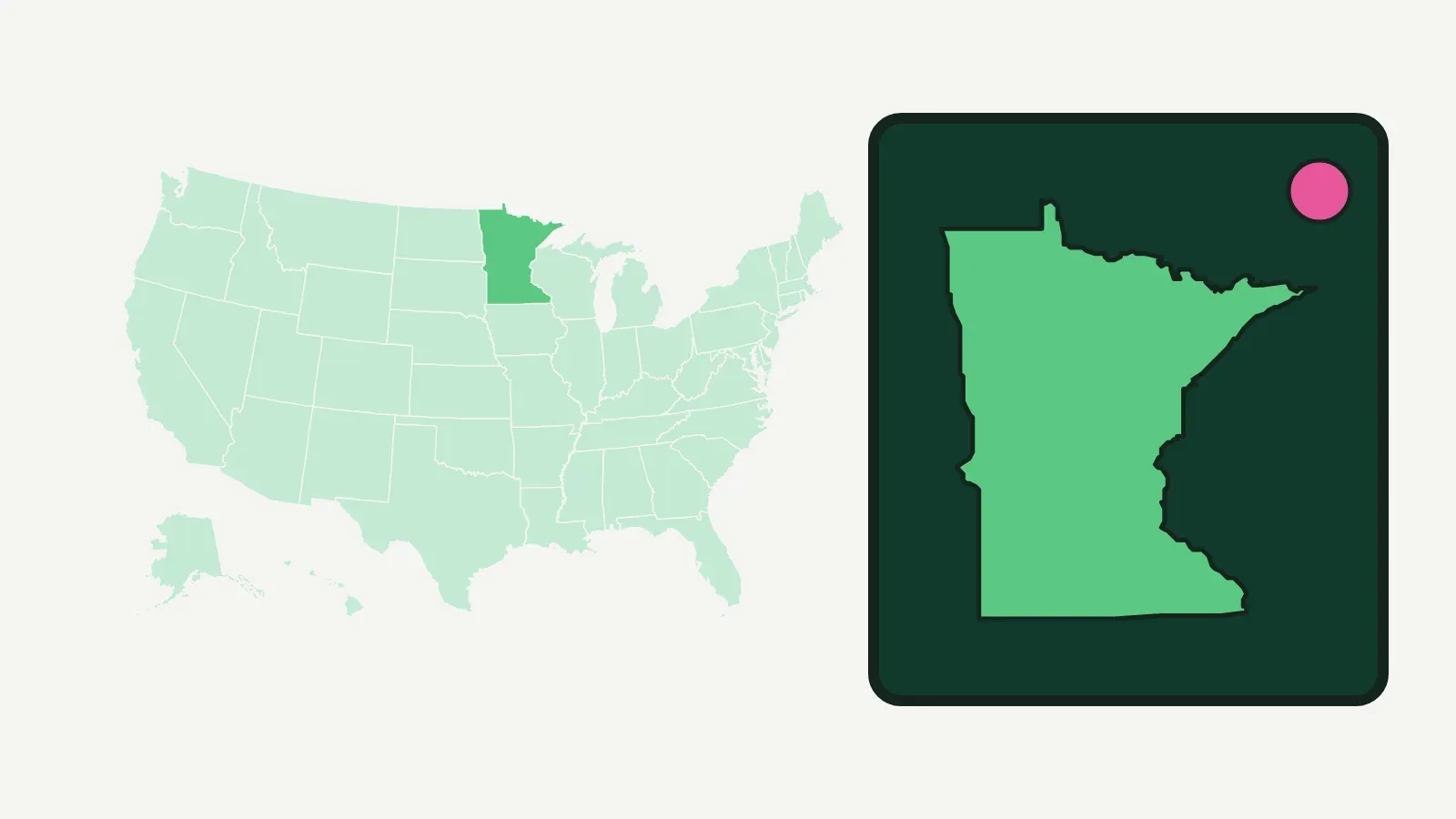
Minnesota owner households paid a median of $3,682 in property tax in 2025 on a median home value of $353,800, about 1.04% of value, which puts the state in the "moderate" tier on the map. The homestead market value exclusion removes up to $38,000 from a home's taxable market value, less as the value rises. You can appeal your value to the local board, usually between April 1 and May 31.
Minnesota at a glance
How the bill is built
The typical figures above come from the Census Bureau's 2025 American Community Survey: the median real estate tax paid by Minnesota homeowners divided by the median home value. It is a survey estimate for the whole state, not a tax rate, and your own bill depends on the taxing units where the home sits.
In Minnesota, your assessor estimates the market value of your property and its classification, such as homestead. Both appear on the Valuation Notice, and the Department of Revenue says the value and classification on that notice are used to calculate the following year's property taxes. A notice you receive in spring 2026, for example, sets up the taxes you pay in 2027. Local governments then set levies and your bill depends on where the home sits. The property tax estimator lets you try the rate from your own bill.
What lowers your bill
The homestead market value exclusion reduces the taxable market value of property classified as homestead, which lowers the net tax. According to the Department of Revenue's page, last updated November 24, 2025, a homestead valued at $95,000 or less gets an exclusion of 40% of its value, a maximum of $38,000. The exclusion shrinks as value rises and phases out for homesteads valued at $517,200 or more. A partial homestead, for example when only one of two owners lives there, gets a reduced exclusion.
| Estimated market value | Exclusion | Taxable market value |
|---|---|---|
| $280,000 | $21,350 | $258,650 |
| $350,000 | $15,050 | $334,950 |
The arithmetic, from Revenue's examples: the exclusion starts at $38,000 and falls by 9% of the value above $95,000. For a $280,000 home, 9% of $185,000 is $16,650, so the exclusion is $38,000 minus $16,650, or $21,350. Confirm the figures that apply to your assessment year with your assessor, because the amounts on the page may be updated.
Revenue also runs a property tax refund and a deferral program for senior citizens, which are separate from the exclusion; ask the Department of Revenue about current eligibility. See homestead exemptions for how relief differs across states.
Appealing your value
Before you appeal, the Department of Revenue suggests calling your assessor. A phone call resolves most questions, and you can ask the assessor to inspect the property if it has not been inspected recently, inside and out. If you still disagree, you can appeal formally.
- Local Board of Appeal and Equalization: meetings are scheduled between April 1 and May 31, and the details are on your Valuation Notice. The board is usually your city council or town board. Some cities transfer this power to the county and hold open book meetings.
- County Board of Appeal and Equalization: meets in June. You must go to the local board first, unless your city or town transferred its powers to the county.
- Minnesota Tax Court: you may go there directly or after the county board, but you must appeal by April 30 of the following year.
Dates vary by city. Minneapolis, for example, set April 3, 2026 as the last day to request an informal review and April 14, 2026 for its Local Board meeting. Use the dates printed on your own notice. The general steps are in how to appeal your property tax assessment.
Who to call
- Your value, classification and board dates: the assessor for the county where the home is located (or your city assessor, where there is one).
- Rules and homestead questions: the Minnesota Department of Revenue, 651-556-6922.
Questions people ask
How much is property tax in Minnesota?
The Census Bureau's 2025 survey puts the median at $3,682 a year, or about 1.04% of a median home value of $353,800. Your own bill depends on your market value, classification and the taxing units where the home sits.
What is the Minnesota homestead market value exclusion?
It reduces the taxable market value of a homestead. Revenue's page says a home valued at $95,000 or less gets 40% of its value excluded, up to $38,000, and the exclusion phases out at $517,200.
When can I appeal my Minnesota property value?
Local Board of Appeal and Equalization meetings are usually scheduled between April 1 and May 31, and the county board meets in June. You can appeal to the Minnesota Tax Court by April 30 of the following year.
Can I appeal the amount of my property tax in Minnesota?
No. You can appeal the estimated market value or the classification of the property, not the tax amount due.
Sources
- U.S. Census Bureau — American Community Survey 2025 1-year, table B25103 (median real estate taxes paid)
- U.S. Census Bureau — American Community Survey 2025 1-year, table B25077 (median home value)
- Minnesota Department of Revenue — Homestead Market Value Exclusion
- Minnesota Department of Revenue — Appealing Property Value and Classification
- City of Minneapolis — Process to appeal your property assessment
The typical rate is the Census median tax divided by the median value, a survey estimate. Exclusion figures are as posted on the Department of Revenue's page, last updated November 24, 2025. Facts on this page were checked against these sources on November 20, 2026; confirm dates and amounts with your assessor.
Next to read
-
Owning guide
 Appeal your property tax assessment
Check the deadline, gather sales of similar homes and file on time. A worked savings example.
-
Owning guide
 Homestead exemptions
Relief for owners who live in the home: what it saves, how to apply and what is changing.
-
Owning guide
 Escrow accounts explained
How your lender collects tax and insurance, why the payment changes and what a shortage means.