Low tier
Property tax in Mississippi: the typical bill, the homestead exemptions and the August appeal deadline
Mississippi assesses an owner-occupied home at 10% of its true value, and the homestead exemption is worth very different amounts depending on your age. Here is how it works and how to appeal.
By AbodePine Editorial Team Updated 5 min read
- Typical rate
- 0.65% of home value
- Median annual bill
- $1,248
- Homeowner relief
- $300 credit; 65+: $75,000
In brief
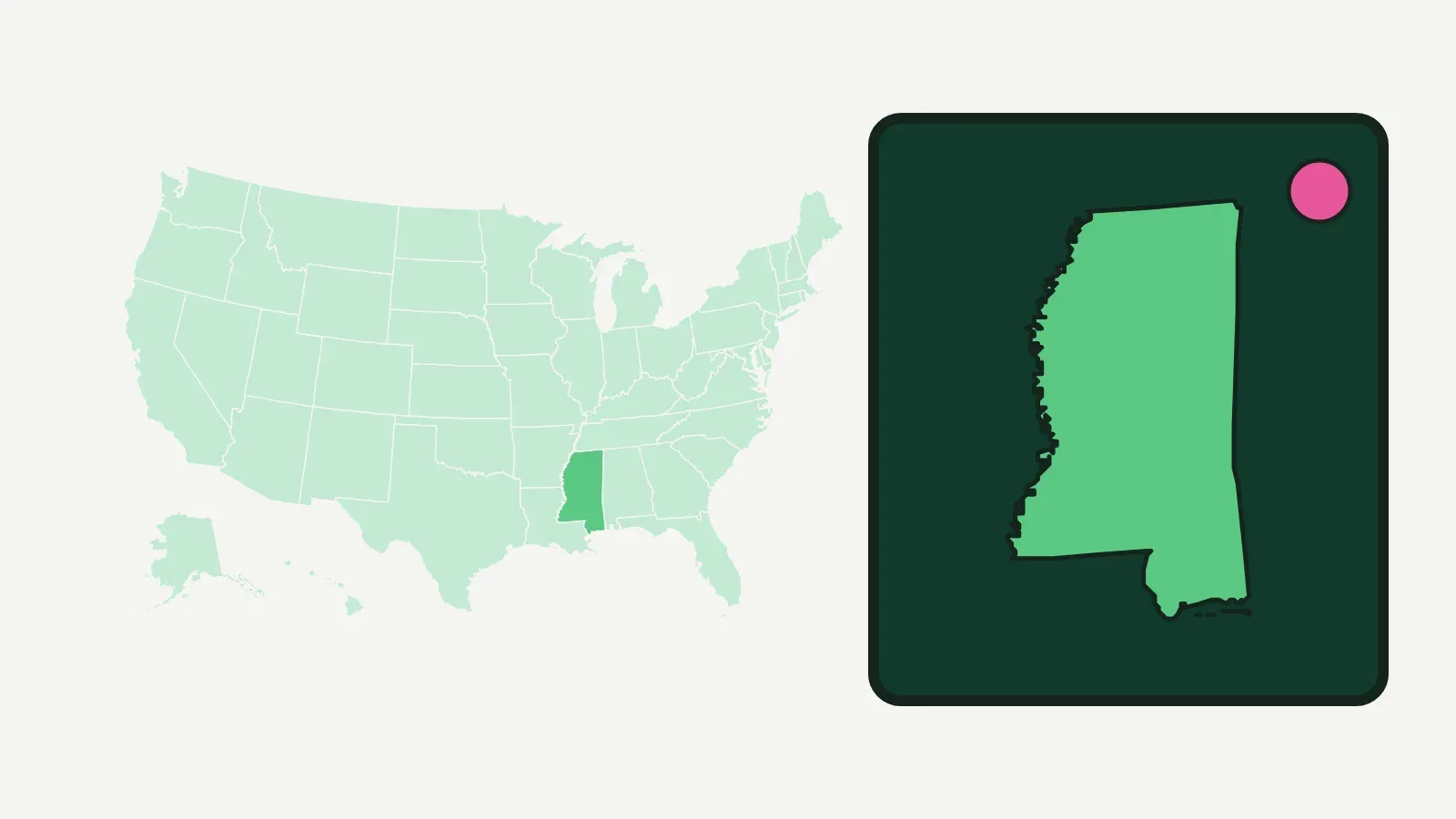
Mississippi owner households paid a median of $1,248 in property tax in 2025 on a median home value of $192,700, about 0.65% of value, which puts the state in the "low" tier on the map. Owner-occupied homes are assessed at 10% of true value. Homeowners under 65 get a homestead credit capped at $300; owners 65 or older or totally disabled are exempt on the first $75,000 of true value.
Mississippi at a glance
How the bill is built
The typical figures above come from the Census Bureau's 2025 American Community Survey: the median real estate tax paid by Mississippi homeowners divided by the median home value. It is a survey estimate for the whole state, not a tax rate, and your own bill depends on the taxing units where the home sits.
State law requires the county tax assessor to appraise your property at its true value, and assessors must revalue real property at least once every four years. The Mississippi Constitution sets the assessment ratio: single-family, owner-occupied residential property is Class I, assessed at 10% of true value. Other real property, such as rentals, is Class II, at 15%.
The Department of Revenue gives the formula as true value times the assessment ratio times the millage rate. A mill is one-thousandth of a dollar. The county, municipality and school districts each levy their own rate. So a Class I home with a true value of $200,000 has an assessed value of $20,000 before any exemption. The property tax estimator lets you try the millage from your own bill.
What lowers your bill
The homestead exemption works in two different ways. According to Mississippi State University Extension's September 2026 publication, homeowners who are younger than 65 on January 1 and are not totally disabled get a credit on a sliding scale based on assessed value, capped at $300. Half comes off school district taxes and half off the county general fund.
| Homeowner | Exemption |
|---|---|
| Under 65 and not totally disabled | Sliding credit, maximum $300 |
| 65 or older, or totally disabled | First $75,000 of true value ($7,500 assessed) exempt |
| Service-connected, totally disabled veteran | All ad valorem taxes on the homestead's assessed value |
For owners 65 or older or totally disabled, the first $7,500 of assessed value is exempt from municipal, school and county taxes. At the 10% ratio, a home with a true value of $75,000 or less owes no property tax. A $100,000 home owing $1,250 before exemption, in the Extension example, owes $312.50. Extension also says these owners are not taxed on value increases from county reappraisals while they own the home. The Extension publication adds that, as of January 1, 2026, honorably discharged veterans who have reached 85, and their surviving spouses, are exempt from ad valorem taxes on the assessed value of the homestead.
See homestead exemptions for how these programs compare across states.
Appealing your assessment
The Department of Revenue says that if you disagree with an assessment, you should request a hearing with your county Board of Supervisors. Normally an appeal must be filed by the first Monday in August preceding the due date of the taxes. The county's chancery clerk can tell you how to file.
- Where to start: your county tax assessor's office, to see how the value was set and to correct errors in your home's record.
- What to bring: sales of similar homes, photos or estimates for condition problems, and the assessor's own measurements.
- Who to ask about filing: your county's chancery clerk, for the hearing with the Board of Supervisors.
The general steps are in how to appeal your property tax assessment.
Who to call
- Your value and homestead exemption: the tax assessor for the county where the home is located.
- Appeal hearings: the county Board of Supervisors, through the chancery clerk.
- Rules and guidance: the Mississippi Department of Revenue, which supports county assessors.
Questions people ask
How much is property tax in Mississippi?
The Census Bureau's 2025 survey puts the median at $1,248 a year, or about 0.65% of a median home value of $192,700. Your own bill depends on your home's true value and the millage where it sits.
What is the Mississippi homestead exemption?
Under 65 and not disabled, you get a credit of up to $300. At 65 or older, or if totally disabled, the first $75,000 of true value is exempt. Apply with your county tax assessor between January 1 and April 1.
What is the deadline to appeal my Mississippi assessment?
Normally the first Monday in August before the taxes are due. Request a hearing with the county Board of Supervisors and contact the chancery clerk.
At what percentage does Mississippi assess homes?
Single-family, owner-occupied homes are Class I property, assessed at 10% of true value.
Sources
- U.S. Census Bureau — American Community Survey 2025 1-year, table B25103 (median real estate taxes paid)
- U.S. Census Bureau — American Community Survey 2025 1-year, table B25077 (median home value)
- Mississippi Department of Revenue — Property Tax Frequently Asked Questions
- Mississippi State University Extension Service — Understanding Mississippi Property Taxes (P2833)
The typical rate is the Census median tax divided by the median value, a survey estimate. The Department of Revenue FAQ says it is an informal interpretation of the law. Facts on this page were checked against these sources on November 20, 2026; confirm amounts and dates with your county tax assessor.
Next to read
-
Owning guide
 Appeal your property tax assessment
Check the deadline, gather sales of similar homes and file on time. A worked savings example.
-
Owning guide
 Homestead exemptions
Relief for owners who live in the home: what it saves, how to apply and what is changing.
-
Owning guide
 Escrow accounts explained
How your lender collects tax and insurance, why the payment changes and what a shortage means.