High tier
Property tax in Nebraska: the typical bill, the homestead exemption and the June 30 protest deadline
Nebraska taxes homes at or near full market value and has one of the higher typical bills on the map. Here is how it is built, who gets relief, and how to protest.
By AbodePine Editorial Team Updated 5 min read
- Typical rate
- 1.31% of home value
- Median annual bill
- $3,665
- Homeowner relief
- Income-based exemption
- Protest deadline
- June 30
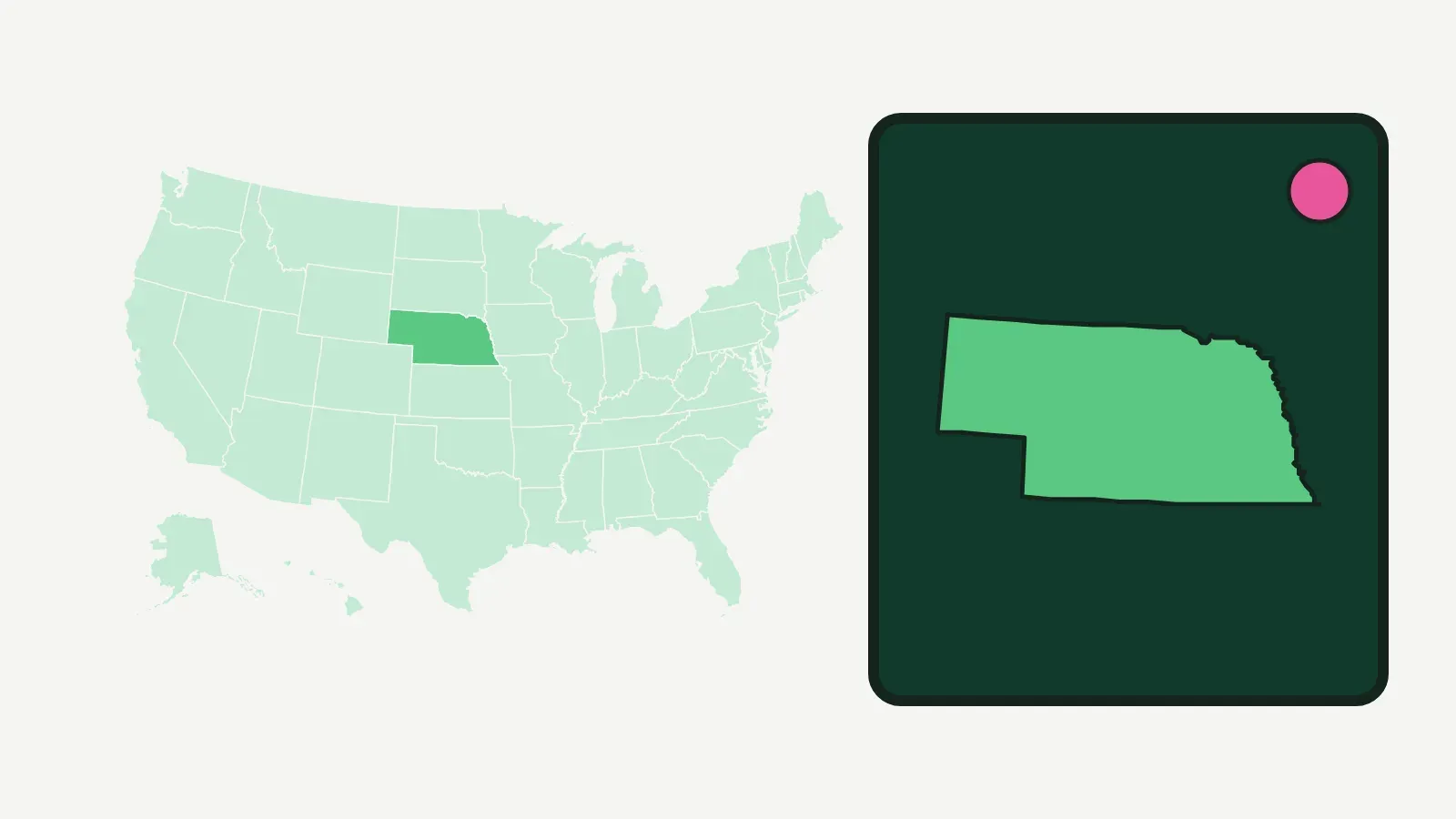
In brief
Nebraska owner households paid a median of $3,665 in property tax in 2025 on a median home value of $279,200, about 1.31% of value, which puts the state in the "high" tier on the map. Real property is assessed at or near 100% of actual value. A homestead exemption exists for owners over 65 and certain disabled owners and veterans, with the amount tied to income. Written protests go to the county board of equalization between June 1 and June 30.
Nebraska at a glance
How the bill is built
The typical figures above come from the Census Bureau's 2025 American Community Survey: the median real estate tax paid by Nebraska homeowners divided by the median home value. It is a survey estimate for the whole state, not a tax rate, and your own bill depends on where the home sits.
The Nebraska Department of Revenue says the county assessor values all real and personal property as of January 1 each year. Residential real property is assessed at or near 100% of actual value, using accepted mass appraisal methods such as comparing sales of similar properties. Agricultural and horticultural land is the exception, at or near 75%.
Each local taxing unit, such as the county, school district, city, community college and natural resource district, divides its budget request by the taxable value inside its borders to get a rate, expressed per $100 of taxable value. Your tax is your property's taxable value times the total consolidated rate for the tax district where the home sits. Taxes are due December 31 and are paid to the county treasurer; the first half becomes delinquent the following May 1 and the second half on September 1, except in Douglas, Lancaster and Sarpy counties (April 1 and August 1). Use the property tax estimator with the rate from your bill.
What lowers your bill
Nebraska's homestead exemption removes all or part of a home's value from taxation, and the state reimburses local governments for the lost taxes. It is not for every owner. The Department of Revenue lists these groups as eligible to file:
- Persons over age 65
- Qualified disabled individuals, and veterans totally disabled by a nonservice-connected accident or illness
- Qualified totally disabled veterans and their widow(er)s, and certain other veterans' and servicemembers' survivors
- Individuals who have a developmental disability
For many of these claimants, Section 77-3507 of the Nebraska statutes ties the percentage of the exempt amount to household income: 100 percent at the lowest incomes, stepping down in 10-point bands to zero at the top of the range, with the income limits adjusted for inflation. The dollar limits change each year, so read the current Homestead Exemption Information Guide or ask your county assessor what applies.
Protesting your value
On or before June 1, the county assessor sends a notice for every parcel assessed at a different value than the year before. If you disagree with the assessor's opinion of actual value, you may file a protest with the county board of equalization between June 1 and June 30. It must be in writing, signed, and filed with the county clerk by June 30, with a statement of why the value should change and a description of the property. Protest forms (Form 422) are at the county clerk's office.
- What to bring: recent sales of similar homes, photos or estimates for condition problems, and the assessor's record of your home's size and features.
- If you lose: the department says decisions of the county board of equalization may be appealed to the Tax Equalization and Review Commission.
The general steps, evidence and tips are in how to appeal your property tax assessment.
Who to call
- Your value and exemption: the county assessor where the home is located; the county clerk takes protests.
- Your bill: the county treasurer.
- Rules and forms: the Nebraska Department of Revenue, Property Assessment Division, at 402-471-5984.
To compare with other states, see the map of all states.
Questions people ask
How much is property tax in Nebraska?
The Census Bureau's 2025 survey puts the median at $3,665 a year, or about 1.31% of a median home value of $279,200. Your own bill depends on your taxable value and the taxing units where the home sits.
Who qualifies for the Nebraska homestead exemption?
Owners over 65, qualified disabled individuals, certain veterans and their survivors, and individuals with a developmental disability can file. For many claimants the percentage of relief depends on household income.
When is the deadline to protest my Nebraska property value?
Between June 1 and June 30, in writing, filed with the county clerk for the county board of equalization. Notices of changed values go out on or before June 1.
When are Nebraska property taxes due?
December 31, paid to the county treasurer. The first half is delinquent after the following May 1 and the second half after September 1, with earlier dates in Douglas, Lancaster and Sarpy counties.
Sources
- U.S. Census Bureau — American Community Survey 2025 1-year, table B25103 (median real estate taxes paid)
- U.S. Census Bureau — American Community Survey 2025 1-year, table B25077 (median home value)
- Nebraska Department of Revenue — Nebraska Property Assessment FAQs
- Nebraska Legislature — Revised Statute 77-3507 (homestead exemption by income)
The typical rate is the Census median tax divided by the median value, a survey estimate. The homestead exemption income limits are set by statute and adjusted each year, so no dollar limit is stated here. Facts on this page were checked against these sources on November 20, 2026; confirm the current year's limits and deadlines with your county assessor.
Next to read
-
Owning guide
 Appeal your property tax assessment
Check the deadline, gather sales of similar homes and file on time. A worked savings example.
-
Owning guide
 Homestead exemptions
Relief for owners who live in the home: what it saves, how to apply and what is changing.
-
Owning guide
 Escrow accounts explained
How your lender collects tax and insurance, why the payment changes and what a shortage means.