Highest tier
Property tax in New Hampshire: the typical bill, town-set exemptions and the March 1 abatement deadline
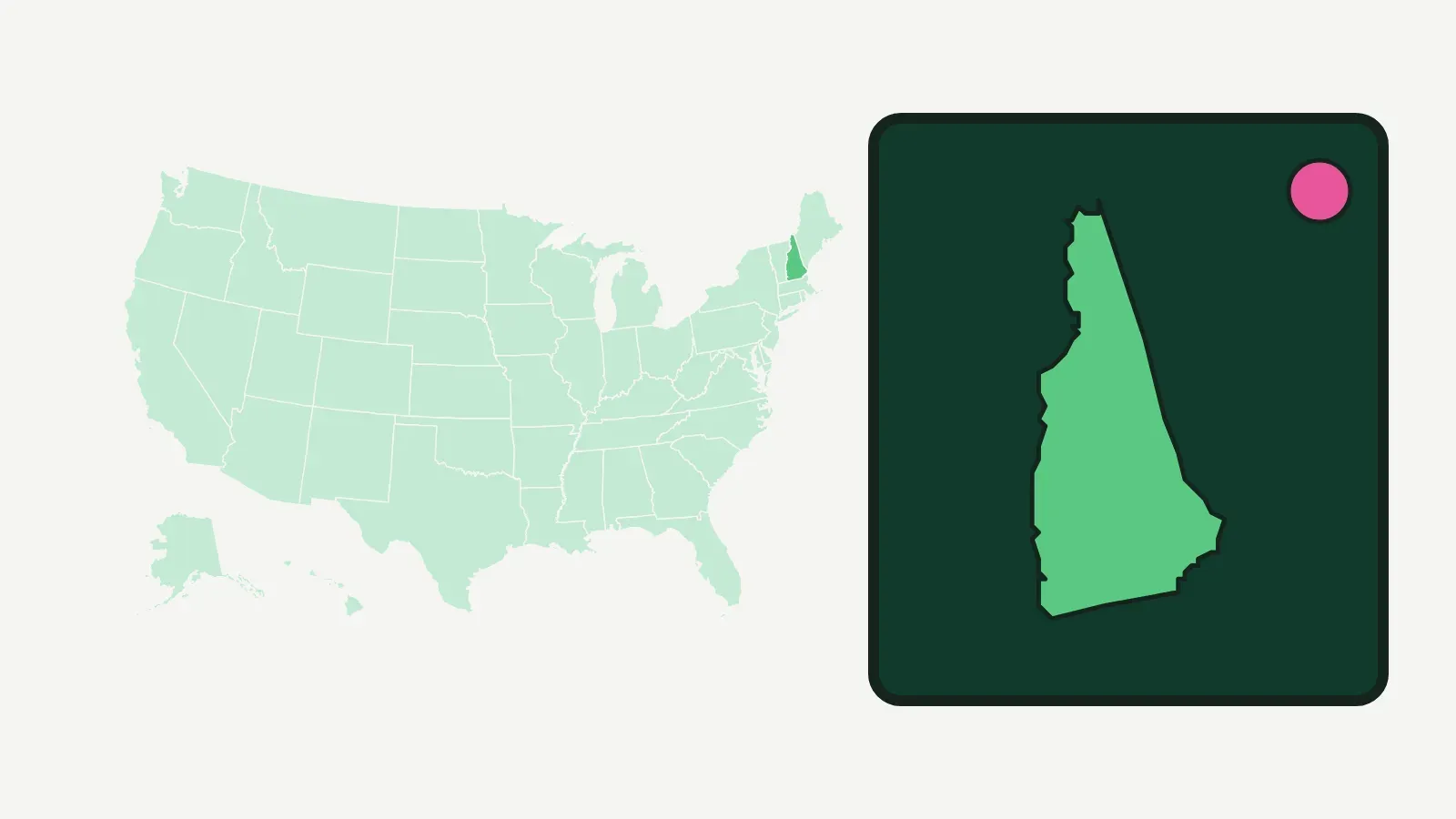
New Hampshire is in the highest tier on the map, and much of the relief is up to your town. Here is how the bill is built, what to ask for, and how to challenge it.
By AbodePine Editorial Team Updated 5 min read
- Typical rate
- 1.43% of home value
- Median annual bill
- $6,983
- Homeowner relief
- Town-set elderly exemption
- Abatement deadline
- March 1
In brief
New Hampshire owner households paid a median of $6,983 in property tax in 2025 on a median home value of $487,100, about 1.43% of value, which puts the state in the "highest" tier on the map. Local assessors value homes at market value, and the main relief, such as the elderly exemption and optional veterans' credit, is adopted and sized by each town or city. To challenge a bill, apply to your municipality for an abatement by March 1.
New Hampshire at a glance
How the bill is built
The typical figures above come from the Census Bureau's 2025 American Community Survey: the median real estate tax paid by New Hampshire homeowners divided by the median home value. It is a survey estimate for the whole state, not a tax rate, and your own bill depends on where the home sits.
In New Hampshire the value is set locally. Under RSA 75:1, the selectmen, or the city's assessing officials, appraise taxable property at its market value, defined as its full and true value as it would be appraised in payment of a just debt due from a solvent debtor. Your bill is your assessed value times the rates on the bill your town or city sends, so the same home can carry a different bill in a different municipality. The property tax estimator lets you try the rate from your own bill.
What lowers your bill
New Hampshire's relief is largely a menu that each municipality chooses from. The state sets the rules and the minimums, and the town or city votes to adopt them and decides the amounts. That means the same retiree or veteran can get different relief in different towns, so ask your assessing office what yours adopted.
- Elderly exemption: a town or city may grant an exemption from assessed value to residents aged 65 to 74, 75 to 79, and 80 or older, in dollar amounts it chooses, though never less than $5,000 in any age group. State law sets minimum limits on the owner's income (at least $13,400 single or $20,400 married) and assets (at least $35,000, excluding the home), 3 years of New Hampshire residency, and ownership of the home.
- Veterans' tax credit: the standard credit in RSA 72:28 is $50 off the tax on a qualifying veteran's residential property. A town may adopt an optional credit from $51 up to $750, which replaces the standard credit. The 2026 legislature raised the maximum for the optional veterans' credit (House Bill 1494, chapter 96, signed May 28, 2026) effective April 1, 2027, but the new figure could not be confirmed from the official pages checked, so ask your town or the Department of Revenue Administration for it.
Seeking an abatement
New Hampshire's challenge is called an abatement. The Board of Tax and Land Appeals (BTLA) says an RSA 76:16 abatement may be granted for good cause, which means disproportionality or hardship. First you file an abatement application with your municipality. If the notice of tax, meaning the final tax bill, was mailed on or before December 31, the deadline is March 1. If it was mailed after December 31, the deadline is two months after the notice.
- Municipal decision: the town or city decides by July 1 for a bill issued by December 31. If it does not decide, the application is deemed denied.
- If you still disagree: you may appeal to the BTLA (or the superior court, but not both) by September 1 for a bill issued by December 31. The deadline is no earlier than the town's decision or July 1. The BTLA filing fee is $65, and it does not accept appeals filed electronically.
- What to bring: recent sales of similar homes, photos or estimates for condition problems, and the town's property record for your home.
The general steps, evidence and tips are in how to appeal your property tax assessment.
Who to call
- Your value, exemptions and abatement: the assessing office of the town or city where the home is located.
- Appeals: the Board of Tax and Land Appeals, 107 Pleasant Street, Johnson Hall, Concord; phone (603) 271-2578.
To compare with other states, see the map of all states.
Questions people ask
How much is property tax in New Hampshire?
The Census Bureau's 2025 survey puts the median at $6,983 a year, or about 1.43% of a median home value of $487,100. Your own bill depends on your assessed value and your town's rate.
Does New Hampshire have a homestead exemption?
Relief is mostly adopted town by town. A town or city decides whether to grant an elderly exemption, which state law sets at no less than $5,000 for each age group, and it sets the amounts.
What is the deadline to apply for a property tax abatement in New Hampshire?
March 1 if your final tax bill was mailed on or before December 31, or two months after the bill if it was mailed later. File with your town or city.
Where do I appeal if my town denies the abatement?
To the Board of Tax and Land Appeals or the superior court, not both. For a bill issued by December 31, the BTLA deadline is September 1, with a $65 fee.
Sources
- U.S. Census Bureau — American Community Survey 2025 1-year, table B25103 (median real estate taxes paid)
- U.S. Census Bureau — American Community Survey 2025 1-year, table B25077 (median home value)
- New Hampshire Board of Tax and Land Appeals — Property Tax
- New Hampshire General Court — RSA 76:16-a, Appeal to the Board of Tax and Land Appeals
- New Hampshire General Court — RSA 75:1, How Appraised
- New Hampshire General Court — RSA 72:39-b, Elderly Exemption
- New Hampshire General Court — RSA 72:28, Standard and Optional Veterans' Tax Credit
- New Hampshire General Court — HB 1494 (2026) bill status, chapter 96
The typical rate is the Census median tax divided by the median value, a survey estimate. Exemption and credit figures are the state-law amounts and minimums as shown in the statute pages checked; each municipality chooses what it adopts. The statute page shows the $50 and $51 to $750 amounts and does not yet show the higher maximum that HB 1494 sets from April 1, 2027. Facts on this page were checked against these sources on November 20, 2026; confirm the current year's amounts and deadlines with your town or city.
Next to read
-
Owning guide
 Appeal your property tax assessment
Check the deadline, gather sales of similar homes and file on time. A worked savings example.
-
Owning guide
 Homestead exemptions
Relief for owners who live in the home: what it saves, how to apply and what is changing.
-
Owning guide
 Escrow accounts explained
How your lender collects tax and insurance, why the payment changes and what a shortage means.