Highest tier
Property tax in New Jersey: the typical bill, the ANCHOR benefit and the April 1 appeal deadline
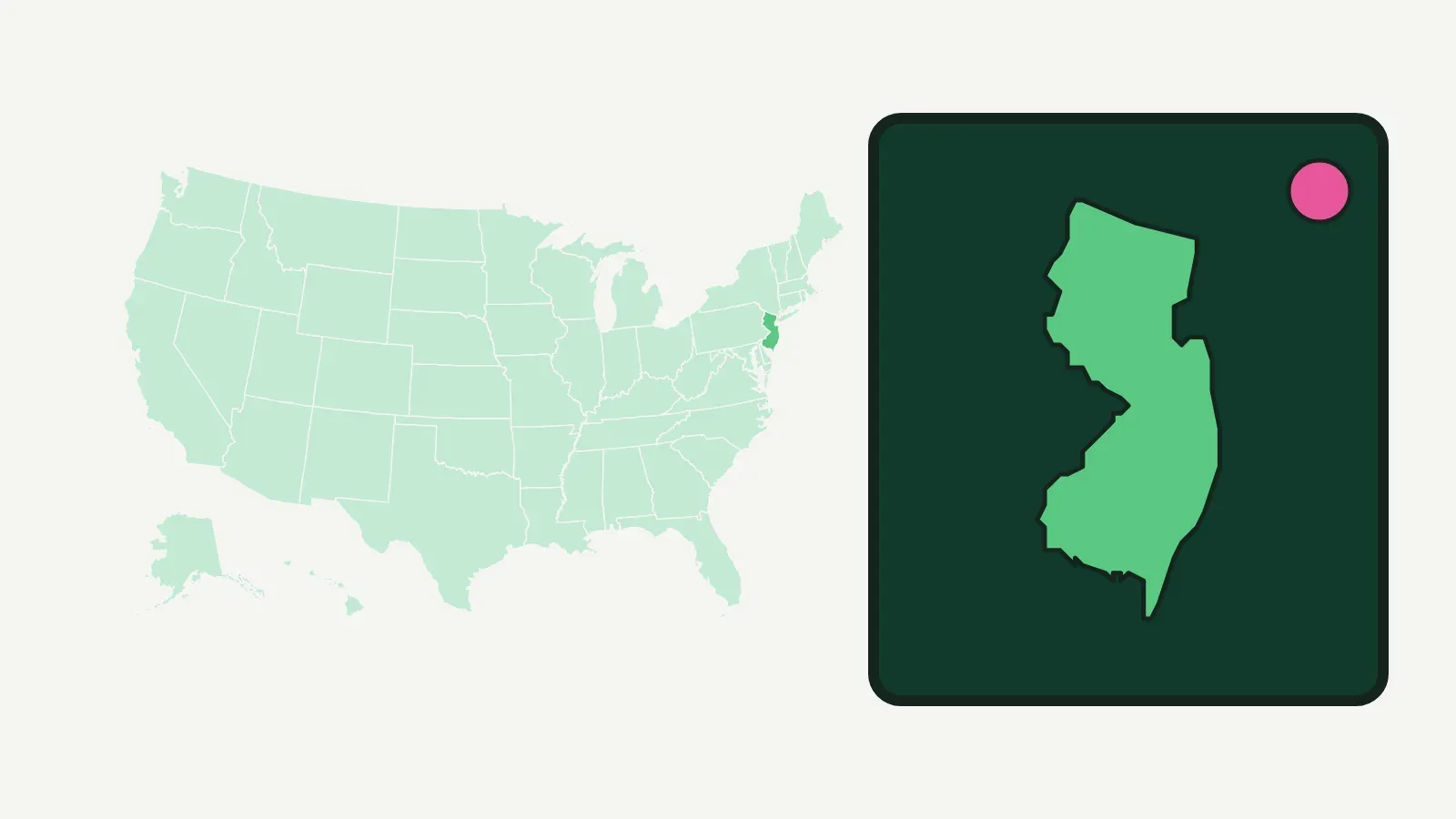
New Jersey is in the highest tier on the map. Here is how the tax is built, which relief programs pay owners, and how to appeal a value.
By AbodePine Editorial Team Updated 5 min read
- Typical rate
- 1.82% of home value
- Median annual bill
- $9,648
- Homeowner relief
- ANCHOR up to $1,500
- Appeal deadline
- April 1
In brief
New Jersey owner households paid a median of $9,648 in property tax in 2025 on a median home value of $530,800, about 1.82% of value, which puts the state in the "highest" tier on the map. The ANCHOR program pays eligible homeowners up to $1,500 based on their 2025 income, and residents 65 or older or disabled may qualify for a $250 deduction. Appeals to the County Board of Taxation are due by April 1, or May 1 after a revaluation.
New Jersey at a glance
How the bill is built
The typical figures above come from the Census Bureau's 2025 American Community Survey: the median real estate tax paid by New Jersey homeowners divided by the median home value. It is a survey estimate for the whole state, not a tax rate, and your own bill depends on where the home sits.
Your municipality's tax assessor sets the assessed value of each property, and the local taxing bodies, such as the municipality, school district and county, set the rates. The Division of Taxation notes that an owner who appeals must prove the assessed value is unreasonable compared with a market value standard, so a comparison with sales of similar homes is the starting point. The property tax estimator lets you try the rate from your own bill.
What lowers your bill
New Jersey's relief mostly arrives as a payment or deduction for owners who meet income or age tests, and all of it is subject to appropriation in the state budget. Per the Division of Taxation:
- ANCHOR: property tax relief for residents who own or rent their main home and meet income limits. For the 2025 benefit year, homeowners with 2025 income of $150,000 or less get $1,500, and those with income from $150,001 to $250,000 get $1,000. Above $250,000 you are not eligible. The deadline to apply for the 2025 benefit was November 2, 2026.
- Senior Freeze: the Property Tax Reimbursement program for eligible seniors. The division's ANCHOR page links to its rules.
- $250 deduction: an annual deduction for residents 65 or older or disabled, and certain surviving spouses and civil union partners, with at least one year of New Jersey residency.
Appealing your value
Every property owner may file an appeal with the County Board of Taxation, whatever the size of the assessment. The Division of Taxation says petitions must be filed and received on or before April 1, or May 1 where the municipality did a revaluation or reassessment. Burlington, Gloucester and Monmouth counties use an alternative assessment calendar with a January 15 deadline. For assessments above $1,000,000, you may file directly with the Tax Court of New Jersey instead.
- What you must show: that the assessment does not fairly represent either the true market value or the common level range, which is plus or minus 15% of the district's average ratio.
- What to bring: recent sales of comparable homes, photos or estimates for condition problems, and the assessor's record of your home.
- Deadline counts as received: the division says petitions must be filed and received by the date, so allow for mail time.
The general steps, evidence and tips are in how to appeal your property tax assessment.
Who to call
- Your value: your municipal tax assessor's office.
- Appeals: the County Board of Taxation for your county; the Division of Taxation lists phone numbers for Burlington (609-265-5056), Gloucester (856-307-6445) and Monmouth (732-431-7404).
- Relief programs: the New Jersey Division of Taxation, Property Tax Relief Programs.
To compare with other states, see the map of all states.
Questions people ask
How much is property tax in New Jersey?
The Census Bureau's 2025 survey puts the median at $9,648 a year, or about 1.82% of a median home value of $530,800. Your own bill depends on your assessed value and your municipality's rates.
How much is the ANCHOR benefit for homeowners?
For the 2025 benefit year, $1,500 for income of $150,000 or less and $1,000 for income from $150,001 to $250,000, per the Division of Taxation. The 2025 application deadline was November 2, 2026.
What is the deadline to appeal my New Jersey property assessment?
April 1 to the County Board of Taxation, or May 1 if the municipality did a revaluation. Burlington, Gloucester and Monmouth counties use January 15.
Can I appeal directly to the Tax Court?
Only for assessments greater than $1,000,000. Other owners file with the County Board of Taxation first.
Sources
- U.S. Census Bureau — American Community Survey 2025 1-year, table B25103 (median real estate taxes paid)
- U.S. Census Bureau — American Community Survey 2025 1-year, table B25077 (median home value)
- NJ Division of Taxation — ANCHOR Program
- NJ Division of Taxation — How ANCHOR Benefits Are Calculated
- NJ Division of Taxation — Assessment and Appeals
- NJ Division of Taxation — $250 Senior Citizens and Disabled Persons Property Tax Deduction
- NJ Division of Taxation — Property Tax Relief Programs FAQs
The typical rate is the Census median tax divided by the median value, a survey estimate. ANCHOR amounts are for the 2025 benefit year; the division says eligibility and benefits are subject to appropriation by the State Budget. Facts on this page were checked against these sources on November 20, 2026; confirm the current year's amounts and deadlines with the Division of Taxation and your County Board of Taxation.
Next to read
-
Owning guide
 Appeal your property tax assessment
Check the deadline, gather sales of similar homes and file on time. A worked savings example.
-
Owning guide
 Homestead exemptions
Relief for owners who live in the home: what it saves, how to apply and what is changing.
-
Owning guide
 Escrow accounts explained
How your lender collects tax and insurance, why the payment changes and what a shortage means.