Highest tier
Property tax in New York: the typical bill, STAR relief and grievance day in May
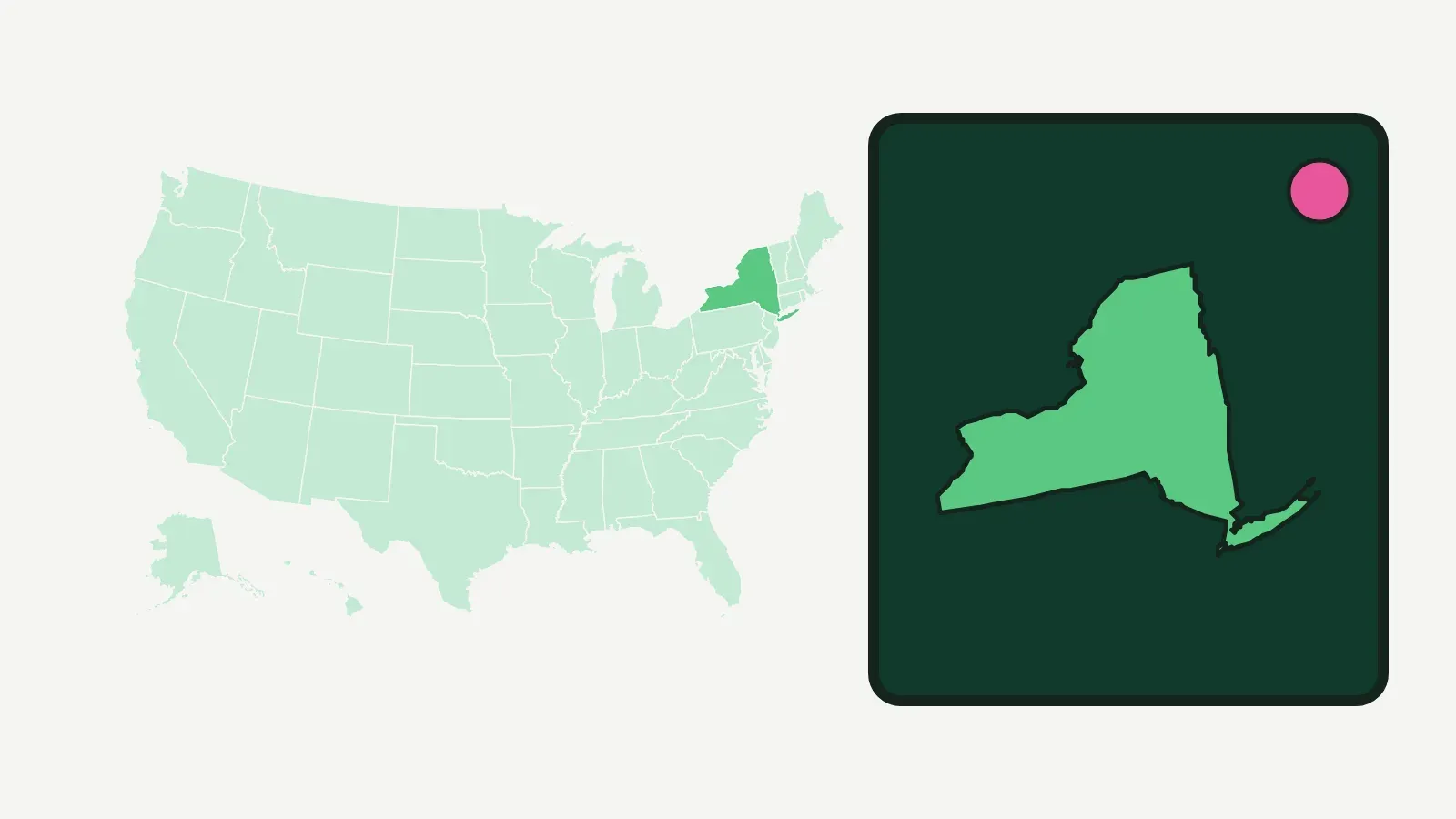
New York is in the highest tier on the map, and the STAR program is the main statewide relief. Here is how it works and how to challenge an assessment.
By AbodePine Editorial Team Updated 5 min read
- Typical rate
- 1.42% of home value
- Median annual bill
- $6,706
- Homeowner relief
- STAR (Basic, Enhanced)
- Complaint date
- 4th Tuesday in May
In brief
New York owner households paid a median of $6,706 in property tax in 2025 on a median home value of $470,900, about 1.42% of value, which puts the state in the "highest" tier on the map. The state's STAR program gives school tax relief to owner-occupants, with Enhanced STAR for homeowners 65 or older with incomes of $110,750 or less for 2026 benefits ($113,550 for 2027). Complaints about an assessment go to your local board of assessment review, which meets starting the fourth Tuesday of May unless local law sets another date.
New York at a glance
How the bill is built
The typical figures above come from the Census Bureau's 2025 American Community Survey: the median real estate tax paid by New York homeowners divided by the median home value. It is a survey estimate for the whole state, not a tax rate, and your own bill depends on where the home sits.
In New York a local assessor, working for a city, town or county, sets the assessed value of each property, and local taxing jurisdictions, including your school district, set the rates that apply to it. Because assessments, rates and school districts vary, the statewide median says little about a single home. The property tax estimator lets you try the rate from your own bill.
What lowers your bill
The School Tax Relief (STAR) program is the main statewide relief for homeowners. The Department of Taxation and Finance says you can receive STAR as either a credit or an exemption, and there are two benefits: Basic STAR, with no age restriction, and Enhanced STAR, an increased benefit for eligible senior citizens aged 65 or older.
| Benefit | Who | Income limit |
|---|---|---|
| Basic STAR credit | Any age | $500,000 or less (no benefit year stated) |
| Basic STAR exemption | Any age | $250,000 or less (no benefit year stated) |
| Enhanced STAR | 65 or older | $110,750 or less for 2026 benefits (2024 income); $113,550 or less for 2027 |
Other exemptions, such as for veterans and for seniors, can be set locally and vary by county, city, town and school district. Ask your assessor's office which ones your area offers, what proof it needs, and when applications are due, since each is filed separately from STAR.
Filing a complaint
In New York the process is called a grievance. Under Real Property Tax Law section 512, your board of assessment review begins hearing complaints on the fourth Tuesday of May, or on another date set by city charter, county charter, county tax act or other special law. A complaint filed on or before the date set for the hearing is timely, under section 524. Grounds are that the assessment is excessive, unequal or unlawful, or that the property is misclassified.
- What to file: a complaint on the state form that says how the assessment is wrong, the reduction you want, and your estimate of the property's value. You can file with the assessor before the hearing or with the board at the hearing.
- What to bring: recent sales of similar homes, photos or estimates for condition problems, and the assessor's record of your home.
- A stipulation: if you and the assessor both sign the statement on the form, it counts as agreement on the assessed value, and no further review is allowed.
Confirm your own grievance day with your assessor, since local law can change it, and file early: a complaint can be filed with the assessor at any time before the hearing. The general steps, evidence and tips are in how to appeal your property tax assessment.
Who to call
- Your value and exemptions: your local assessor's office, for the city, town or county where the home sits.
- STAR: the New York State Department of Taxation and Finance.
- Complaints: your local board of assessment review.
To compare with other states, see the map of all states.
Questions people ask
How much is property tax in New York?
The Census Bureau's 2025 survey puts the median at $6,706 a year, or about 1.42% of a median home value of $470,900. Your own bill depends on your assessed value and your local rates, including your school district.
What is the income limit for Enhanced STAR in 2026?
$110,750 or less for 2026 benefits, based on 2024 income, for homeowners aged 65 or older, according to the Department of Taxation and Finance, which lists $113,550 or less for 2027 benefits. Basic STAR has no age restriction, with higher income limits.
When is grievance day in New York?
Boards of assessment review begin hearing complaints on the fourth Tuesday of May, unless a city charter, county charter or special law sets a different date. Check with your assessor.
What can I grieve on my assessment?
That it is excessive, unequal or unlawful, or that the property is misclassified, per Real Property Tax Law section 524.
Sources
- U.S. Census Bureau — American Community Survey 2025 1-year, table B25103 (median real estate taxes paid)
- U.S. Census Bureau — American Community Survey 2025 1-year, table B25077 (median home value)
- New York State Department of Taxation and Finance — STAR eligibility
- New York State Senate — Real Property Tax Law § 512, Hearing of complaints
- New York State Senate — Real Property Tax Law § 524, Complaints with respect to assessments
The typical rate is the Census median tax divided by the median value, a survey estimate. STAR income limits are the ones the Department of Taxation and Finance lists; it ties the Enhanced figures to 2026 and 2027 benefits but states no benefit year for the Basic figures. Facts on this page were checked against these sources on November 20, 2026; confirm the current year's amounts and your local grievance day with your assessor.
Next to read
-
Owning guide
 Appeal your property tax assessment
Check the deadline, gather sales of similar homes and file on time. A worked savings example.
-
Owning guide
 Homestead exemptions
Relief for owners who live in the home: what it saves, how to apply and what is changing.
-
Owning guide
 Escrow accounts explained
How your lender collects tax and insurance, why the payment changes and what a shortage means.