Low tier
Property tax in North Carolina: the typical bill, the exclusions and how to appeal
Counties value your home on a multi-year cycle and add up county, city and district rates. Here is how the bill is built, who gets relief, and where appeals start.
By AbodePine Editorial Team Updated 5 min read
- Typical rate
- 0.64% of home value
- Median annual bill
- $2,177
- Homeowner relief
- Greater of $25,000 or 50%
In brief
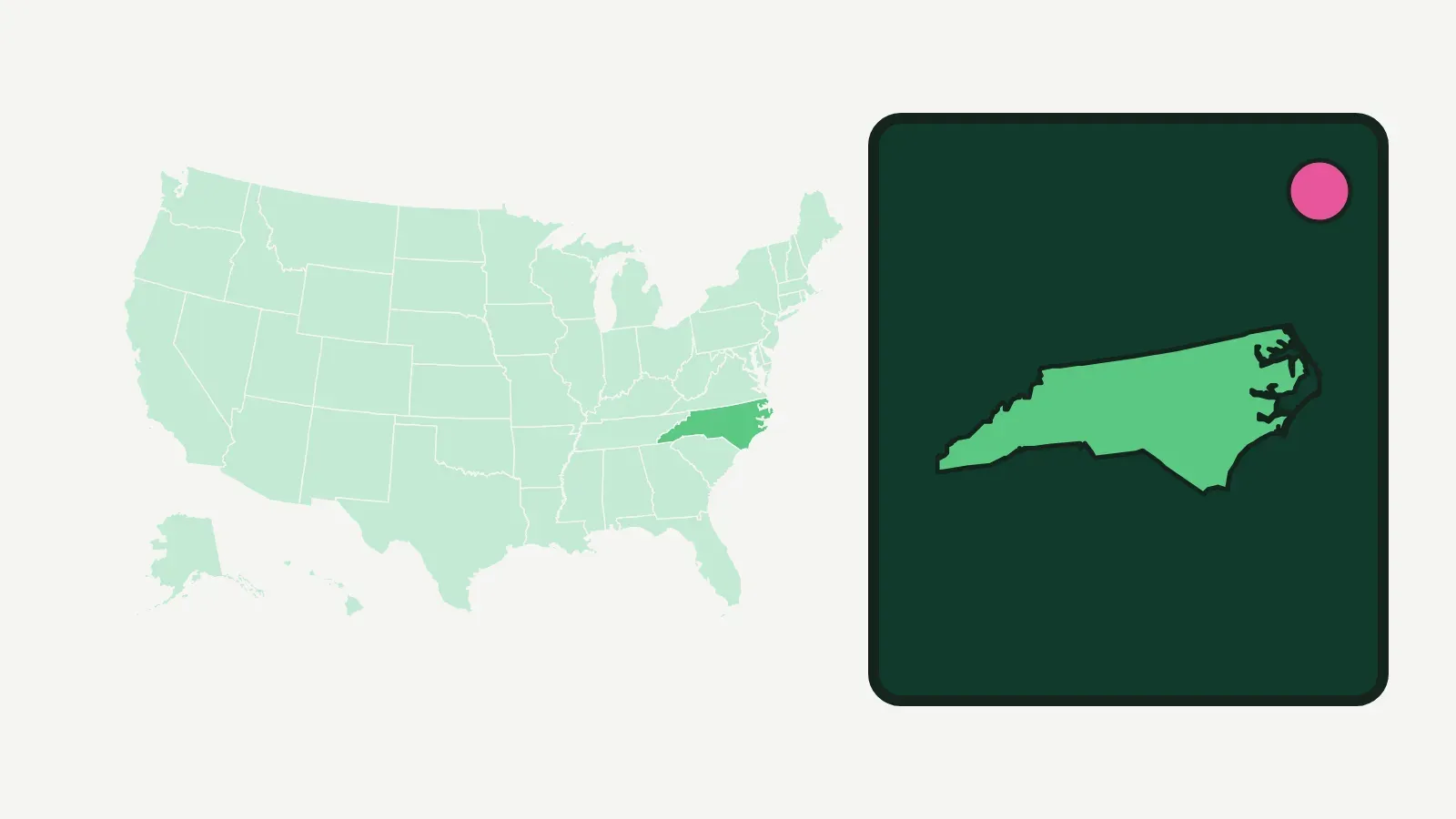
North Carolina owner households paid a median of $2,177 in property tax in 2025 on a median home value of $342,800, about 0.64% of value, which puts the state in the "low" tier on the map. Owners who are 65 or older, or totally and permanently disabled, and who meet an income limit can exclude the greater of $25,000 or 50% of their home's appraised value. Appeals start with your county tax office and then go to the county Board of Equalization and Review.
North Carolina at a glance
How the bill is built
The typical figures above come from the Census Bureau's 2025 American Community Survey: the median real estate tax paid by North Carolina homeowners divided by the median home value. It is a survey estimate for the whole state, not a tax rate, and your own bill depends on the taxing units where the home sits.
In North Carolina, the county tax office appraises your home. According to the Department of Revenue, the county commissioners set the county rate, and cities or special districts can add their own. Your bill is the county appraisal divided by 100 and multiplied by the combined rate per $100 of value. As an example only, not any county's rate: a $200,000 appraisal and a combined rate of $0.90 per $100 gives $200,000 ÷ 100 × 0.90 = $1,800.
State law requires each county to reappraise all real property at least once every eight years, and a county may choose to do it sooner (G.S. 105-286). Between those years your value usually stays put unless you add or remove something. The year a county reappraises is the year a new value can surprise you, so open the notice when it arrives. The property tax estimator lets you try the arithmetic with the rates on your own bill.
What lowers your bill
North Carolina uses "exclusions" that remove part of the appraised value before the rate is applied. The statutes set three programs for a home you own and live in as your permanent residence. A homeowner who takes one of the exclusions cannot also receive the other property tax relief programs.
| Program | Who qualifies | What it does |
|---|---|---|
| Elderly or disabled exclusion (G.S. 105-277.1) | 65 or older, or totally and permanently disabled; North Carolina resident; income at or below a yearly limit | Excludes the greater of $25,000 or 50% of appraised value |
| Disabled veteran exclusion (G.S. 105-277.1C) | Veterans who meet the statute's definition | Excludes the first $45,000 of appraised value |
| Homestead circuit breaker (G.S. 105-277.1B) | 65 or older or disabled; 5 years of ownership and residence; income up to 150% of the limit | Defers tax above 4% or 5% of income |
The income limit for the elderly and disabled programs is not a fixed number: the Department of Revenue sets it each year by adjusting the prior year's limit for Social Security cost-of-living changes. Income counts money from every source except gifts or inheritances from a spouse or direct relatives, and a married applicant's income includes the spouse's. Ask your county tax office for this year's figure.
Applications should be filed during the regular listing period in January, but the counties must accept them through June 1 before the tax year. For a disability, you also need a certificate from a North Carolina physician or a government agency that decides disability benefits. See also homestead exemptions for how these programs compare across states.
Appealing your value
The Department of Revenue describes the order of an appeal. You can appeal the appraised value in a reappraisal year or any year of the cycle. Start with an informal talk with the county tax office, which settles many differences.
- Step one: if you cannot settle it, ask the county Board of Equalization and Review to hear your appeal. State law says the request must be made in writing, or in person, before the board adjourns. The board's schedule is in a notice the county must publish, and the Department of Revenue says it begins its work around the first week of April.
- Step two: if you disagree with the board, you may appeal to the Property Tax Commission, the state board of equalization and review. It meets monthly in Raleigh and works like a trial court.
- Burden of proof: on appeal to the Commission the taxpayer has the burden of proof, and the Department of Revenue encourages individuals to hire an attorney.
In a year when the county reappraises, the law lets the county board keep sitting longer, until December 1. The exact deadline for your county is on the notice you receive and on the county's website. The general steps are in how to appeal your property tax assessment.
Who to call
- Your value, bill and exclusions: the county tax assessor and tax collector. The Department of Revenue's counties page links to each county's assessor and collector web pages.
- Rules and forms: the North Carolina Department of Revenue, Property Tax Division.
Questions people ask
How much is property tax in North Carolina?
The Census Bureau's 2025 survey puts the median at $2,177 a year, or about 0.64% of a median home value of $342,800. Your own bill depends on your appraised value and the county, city and district rates where the home sits.
Who qualifies for the North Carolina homestead exclusion?
Owners who live in the home and are 65 or older, or totally and permanently disabled, with income at or below the yearly limit. The exclusion is the greater of $25,000 or 50% of appraised value. You apply with the county.
How often does North Carolina reappraise homes?
State law requires every county to reappraise real property at least once every eight years. A county can choose an earlier date.
Where do I appeal my North Carolina property value?
Start with your county tax office, then ask the county Board of Equalization and Review for a hearing before it adjourns. After that, the state Property Tax Commission hears appeals.
Sources
- U.S. Census Bureau — American Community Survey 2025 1-year, table B25103 (median real estate taxes paid)
- U.S. Census Bureau — American Community Survey 2025 1-year, table B25077 (median home value)
- North Carolina Department of Revenue — Property Tax Appeal Process
- North Carolina Department of Revenue — Property Tax: Counties
- North Carolina Department of Revenue — How To Calculate A Tax Bill
- North Carolina General Assembly — G.S. 105-277.1 (elderly or disabled homestead exclusion)
- North Carolina General Assembly — G.S. 105-277.1B (homestead circuit breaker)
The typical rate is the Census median tax divided by the median value, a survey estimate. The statutes cited are the versions on the General Assembly website on November 20, 2026; the income limit changes every year, so confirm it with your county. Facts on this page were checked against these sources on November 20, 2026.
Next to read
-
Owning guide
 Appeal your property tax assessment
Check the deadline, gather sales of similar homes and file on time. A worked savings example.
-
Owning guide
 Homestead exemptions
Relief for owners who live in the home: what it saves, how to apply and what is changing.
-
Owning guide
 Escrow accounts explained
How your lender collects tax and insurance, why the payment changes and what a shortage means.