High tier
Property tax in Ohio: the typical bill, the homestead exemption and the March 31 complaint deadline
Your county auditor values the home, and a county board hears complaints. Here is how the bill is built, who gets a homestead credit, and when to file.
By AbodePine Editorial Team Updated 5 min read
- Typical rate
- 1.22% of home value
- Median annual bill
- $3,107
- Homeowner relief
- $29,700 of value (2026)
In brief
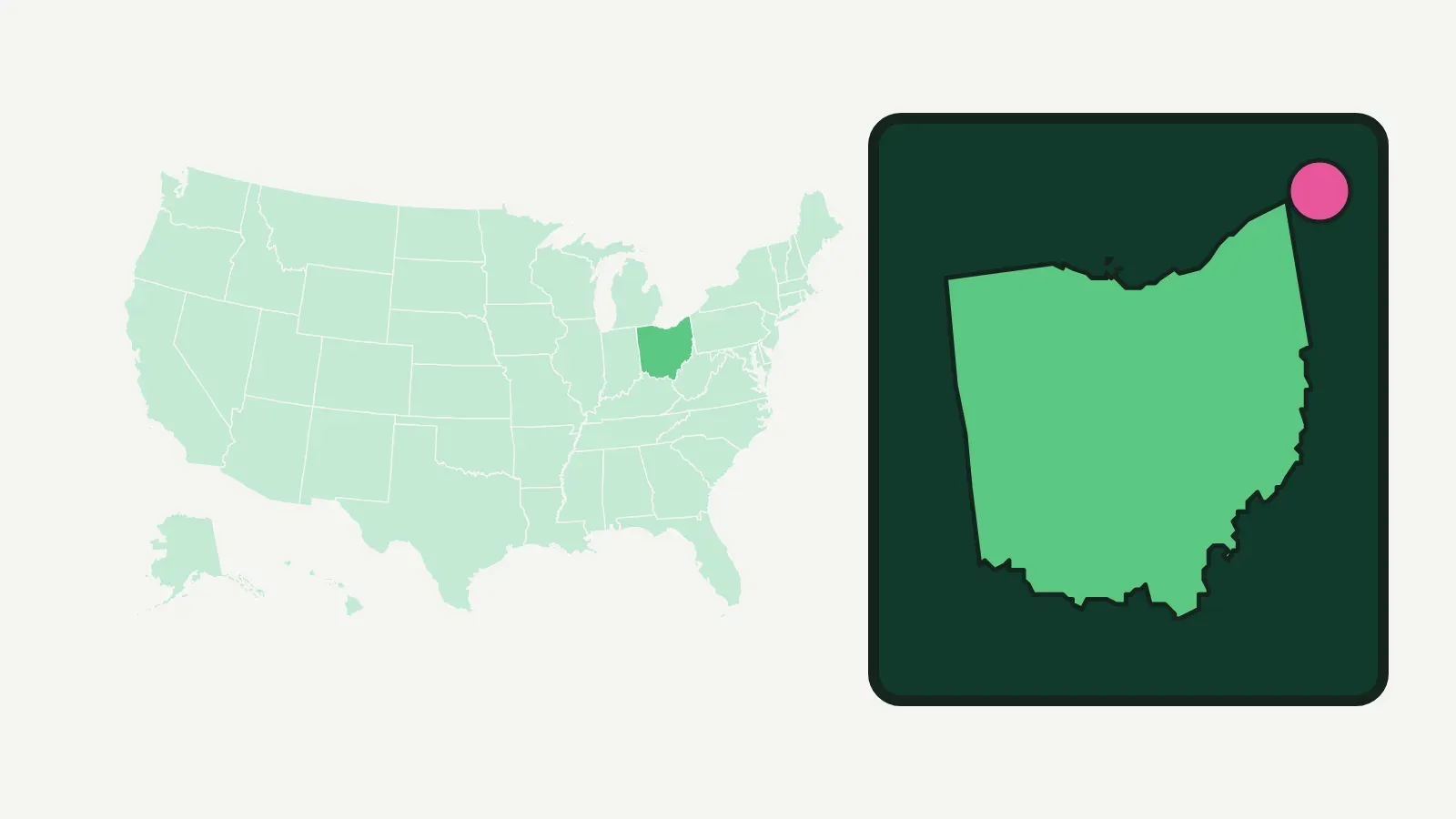
Ohio owner households paid a median of $3,107 in property tax in 2025 on a median home value of $254,100, about 1.22% of value, which puts the state in the "high" tier on the map. Low-income seniors and disabled owners can get a homestead credit equal to the tax on $29,700 of market value for tax year 2026. A complaint about your value is generally due by March 31 of the following year.
Ohio at a glance
How the bill is built
The typical figures above come from the Census Bureau's 2025 American Community Survey: the median real estate tax paid by Ohio homeowners divided by the median home value. It is a survey estimate for the whole state, not a tax rate, and your own bill depends on the taxing units where the home sits.
In Ohio, the county auditor appraises each parcel and keeps the tax records. Under the Revised Code (section 5715.01), the taxable value is a percentage of the home's market value that the Tax Commissioner sets by rule, and it cannot exceed 35%. The local taxing units then apply their rates to that taxable value.
Counties reappraise on a six-year cycle, with an update in the third year (the Revised Code calls the full reappraisal "sexennial"). The auditor's website shows your parcel's value and tax history. To try the arithmetic with the rates on your own bill, use the property tax estimator.
What lowers your bill
Ohio's homestead exemption takes the form of a credit on the property tax bill. It shields part of the home's market value from local taxes. According to the Ohio Department of Taxation, it is for low-income seniors, certain permanently and totally disabled Ohioans, their surviving spouses, and surviving spouses of public service officers killed in the line of duty. Disabled veterans and their surviving spouses have an enhanced version with no income test. The amounts are adjusted for inflation each year.
| Who | Tax year 2025 | Tax year 2026 |
|---|---|---|
| Low-income senior or disabled owner: value shielded | $29,000 | $29,700 |
| Income limit (modified adjusted gross income) | $40,000 | $41,000 |
| Disabled veteran or surviving spouse of a public service officer killed in the line of duty: value shielded | $58,000 | $59,400 |
The credit equals the taxes charged on that much of your home's value, so it depends on your local tax rate: the higher the rate, the bigger the credit. To qualify you generally must own and live in the home as your principal residence on January 1 of the year you apply. A senior must be 65 by December 31 of the year the application is filed. For the means-tested exemption, the department uses modified adjusted gross income, which is Ohio adjusted gross income plus any business income deducted in computing it.
See homestead exemptions for how these programs work across states.
Filing a complaint about your value
Ohio's appeal is called a complaint. Under section 5715.19 of the Revised Code, a complaint about the valuation of a property for the current tax year is filed with the county auditor on or before March 31 of the following tax year, or the date the county closes collection of the first-half taxes for the current year, whichever is later. For example, a complaint about tax year 2026 would be due by March 31, 2027 or the first-half closing date, whichever is later.
- Where to file: the county auditor's office, on the complaint form the auditor provides. The complaint is then heard by the county board of revision.
- What to bring: a recent appraisal, sales of similar homes, or evidence of condition problems, plus the auditor's record of your home's size and features.
The general steps and evidence are in how to appeal your property tax assessment.
Who to call
- Your value, bill and homestead application: the county auditor where the home is located; the Department of Taxation has a directory of county auditors.
- Rules and forms: the Ohio Department of Taxation, Division of Tax Equalization.
Questions people ask
How much is property tax in Ohio?
The Census Bureau's 2025 survey puts the median at $3,107 a year, or about 1.22% of a median home value of $254,100. Your own bill depends on your parcel's value and the local levies where the home sits.
What is the Ohio homestead exemption for 2026?
Low-income seniors and disabled owners get a credit equal to the tax on $29,700 of market value in tax year 2026, if modified adjusted gross income is $41,000 or less. Disabled veterans get $59,400 with no income test.
When is the deadline to file an Ohio property tax complaint?
On or before March 31 of the year after the tax year, or the date the county closes first-half collection if that is later. File with your county auditor.
How do I apply for the Ohio homestead exemption?
File the application with your county auditor on or before December 31 of the year you want the exemption for. Every auditor takes paper applications, and some take them online.
Sources
- U.S. Census Bureau — American Community Survey 2025 1-year, table B25103 (median real estate taxes paid)
- U.S. Census Bureau — American Community Survey 2025 1-year, table B25077 (median home value)
- Ohio Department of Taxation — Real Property Tax: Homestead Means Testing (FAQ)
- Ohio Laws — Revised Code section 5715.19 (complaints against valuation)
- Ohio Laws — Revised Code section 5715.01 (Tax Commissioner supervision; taxable value)
- Ohio Laws — Revised Code section 5715.24 (valuation adjustments; sexennial reappraisal)
The typical rate is the Census median tax divided by the median value, a survey estimate. Homestead amounts are the Department of Taxation's figures for tax years 2025 and 2026 and are adjusted for inflation each year. Facts on this page were checked against these sources on November 20, 2026; confirm dates and amounts with your county auditor.
Next to read
-
Owning guide
 Appeal your property tax assessment
Check the deadline, gather sales of similar homes and file on time. A worked savings example.
-
Owning guide
 Homestead exemptions
Relief for owners who live in the home: what it saves, how to apply and what is changing.
-
Owning guide
 Escrow accounts explained
How your lender collects tax and insurance, why the payment changes and what a shortage means.