Low tier
Property tax in South Carolina: the typical bill, the 4% ratio and the 90-day objection window
Owner-occupied homes are assessed at a low ratio, and reappraisal increases are capped. Here is how the bill is built, who gets the exemption, and how to object.
By AbodePine Editorial Team Updated 5 min read
- Typical rate
- 0.45% of home value
- Median annual bill
- $1,367
- Homeowner relief
- $50,000 exempt, age 65+
In brief
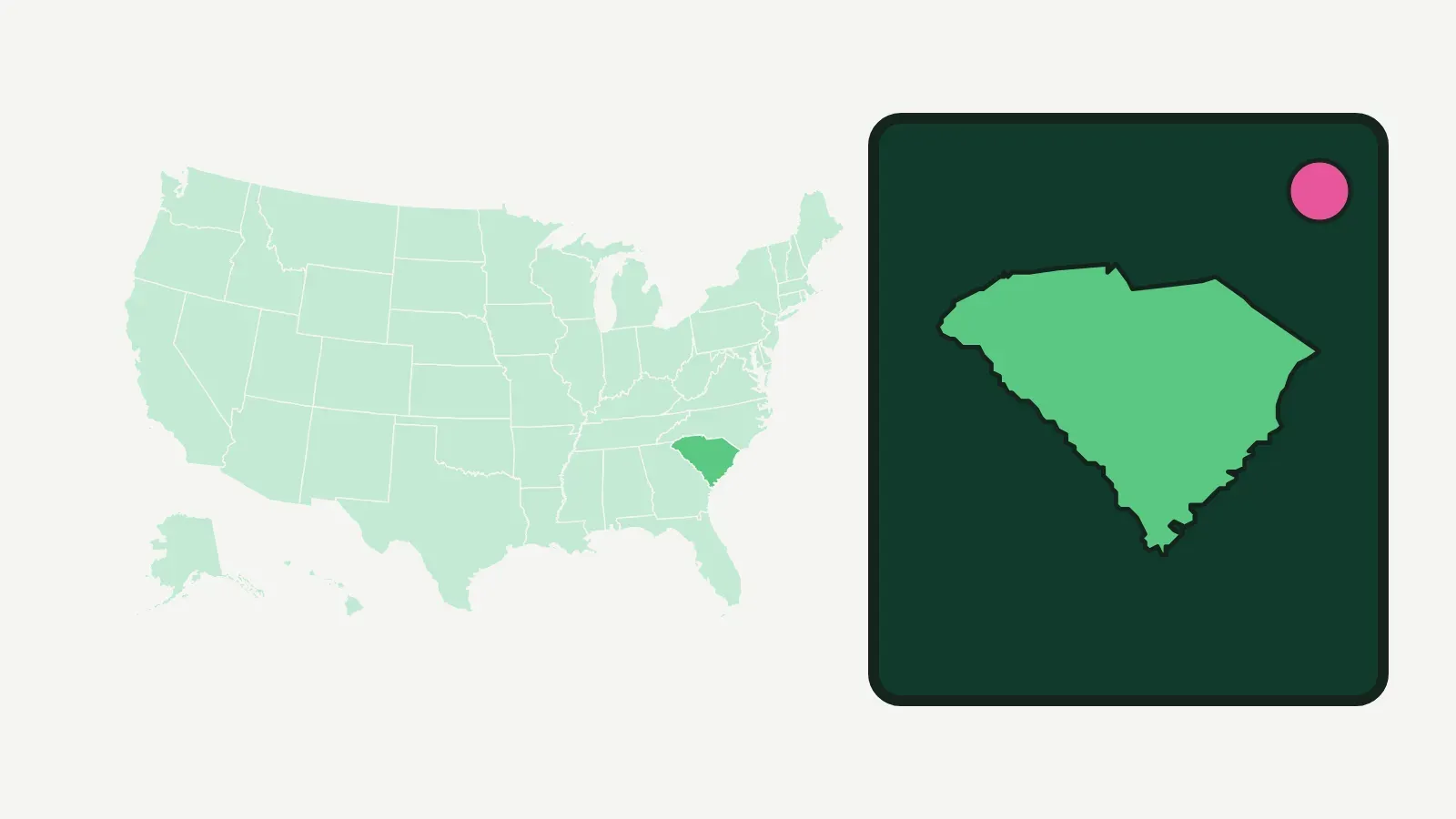
South Carolina owner households paid a median of $1,367 in property tax in 2025 on a median home value of $306,200, about 0.45% of value, which puts the state in the "low" tier on the map. A legal residence is assessed at 4% of fair market value, and owners who are 65 or older, disabled or legally blind can exempt the first $50,000 of value if they apply before July 16. You have 90 days from the assessor's notice to object in writing.
South Carolina at a glance
How the bill is built
The typical figures above come from the Census Bureau's 2025 American Community Survey: the median real estate tax paid by South Carolina homeowners divided by the median home value. It is a survey estimate for the whole state, not a tax rate, and your own bill depends on the taxing units where the home sits.
In South Carolina, the county assessor sets the fair market value, and the Department of Revenue says property tax is administered and collected by local governments with the department's help. Under the state code (section 12-43-220), a legal residence of not more than five acres that the owner occupies is taxed on an assessment equal to 4% of its fair market value. Your bill is that assessed value times the millage rates of the county, school district, municipality and any special districts. The Department of Revenue says about two-thirds of county-levied property taxes support public education. For a rough calculation, the property tax estimator lets you use the rates on your own bill.
Each county must reappraise all property once every five years (section 12-43-217). Under section 12-37-3140, the increase in a property's fair market value attributable to that periodic reappraisal is limited to 15% within a five-year period. The limit does not apply to additions or improvements, and the value is reset when there is an assessable transfer of interest, such as a sale. A buyer's first bill can therefore be higher than the seller's.
What lowers your bill
The homestead exemption (section 12-37-250) exempts the first $50,000 of the fair market value of your dwelling from county, municipal, school and special assessment real estate taxes. You qualify if you have lived in the state at least one year and you are 65 by December 31, or you are classified as totally and permanently disabled by a state or federal agency, or you are legally blind, and you hold full title or a life estate in the home.
| Item | Rule |
|---|---|
| Exempt amount | First $50,000 of fair market value |
| Taxes covered | County, municipal, school and special assessment |
| Apply by | Before July 16 of the tax year |
| Apply to | County auditor and the municipality, if the home is in one |
You can apply in person at the auditor's office or by mail with documentation of your age, disability or legal blindness, and in some cases online. A husband and wife who jointly own the home qualify if either spouse meets the age, disability or blindness rule. The Department of Revenue also lists other exemptions, including ones for military veterans. See also homestead exemptions for how relief differs across states.
Objecting to your assessment
South Carolina calls the first step a written notice of objection. When the assessor raises fair market value by $1,000 or more, or makes the first assessment on a property, the assessor sends a notice, by July 1 or as soon as practical. In a countywide reassessment year, substantially all notices must be mailed by October 1 of the implementation year.
- With a notice: you must give the assessor written notice of objection within 90 days after the assessor mails the notice. You can object to the fair market value, the assessment ratio or the assessment.
- Without a notice: you may appeal at any time, in writing to the assessor. An appeal submitted before the first penalty date applies for that tax year.
- What to include: recent sales of similar homes, photos or estimates for condition problems, and the assessor's own record of your home's size and features.
If the assessor's answer does not settle it, ask the office what the next step is; chapter 60 of Title 12 of the state code sets the later stages. The general steps are in how to appeal your property tax assessment.
Who to call
- Your value and objection: the assessor's office for the county where the home is located.
- Your homestead application and bill: the county auditor.
- Rules and exemption questions: the South Carolina Department of Revenue.
Questions people ask
How much is property tax in South Carolina?
The Census Bureau's 2025 survey puts the median at $1,367 a year, or about 0.45% of a median home value of $306,200. Your own bill depends on your assessed value and the millage rates where the home sits.
What is the South Carolina homestead exemption?
The first $50,000 of fair market value is exempt from county, municipal, school and special assessment taxes for owners who are 65 or older, totally and permanently disabled or legally blind. Apply to the county auditor before July 16.
How is a home assessed in South Carolina?
A legal residence of up to five acres that the owner occupies is assessed at 4% of fair market value. The assessed value is then multiplied by local millage rates.
How long do I have to object to my South Carolina assessment?
When the assessor mails a notice, you have 90 days to give written notice of objection. Without a notice you can appeal in writing at any time.
Sources
- U.S. Census Bureau — American Community Survey 2025 1-year, table B25103 (median real estate taxes paid)
- U.S. Census Bureau — American Community Survey 2025 1-year, table B25077 (median home value)
- South Carolina Code of Laws — Title 12, Chapter 37 (sections 12-37-250 and 12-37-3140)
- South Carolina Code of Laws — Title 12, Chapter 43 (sections 12-43-217 and 12-43-220)
- South Carolina Code of Laws — Title 12, Chapter 60 (section 12-60-2510)
- South Carolina Department of Revenue — Property
- South Carolina Department of Revenue — Property Tax Exemptions
The typical rate is the Census median tax divided by the median value, a survey estimate. Statute citations are to the Code of Laws as posted on the General Assembly website on November 20, 2026. Facts on this page were checked against these sources on November 20, 2026; confirm dates with your county auditor and assessor.
Next to read
-
Owning guide
 Appeal your property tax assessment
Check the deadline, gather sales of similar homes and file on time. A worked savings example.
-
Owning guide
 Homestead exemptions
Relief for owners who live in the home: what it saves, how to apply and what is changing.
-
Owning guide
 Escrow accounts explained
How your lender collects tax and insurance, why the payment changes and what a shortage means.