Moderate tier
Property tax in South Dakota: the typical bill, the 85% rule and the March appeal date
South Dakota taxes 85% of a home's market value. Here is how the bill is built, which relief programs exist, and where to challenge a value.
By AbodePine Editorial Team Updated 5 min read
- Typical rate
- 1.04% of home value
- Median annual bill
- $3,098
- Homeowner relief
- Freeze for 65+ or disabled
In brief
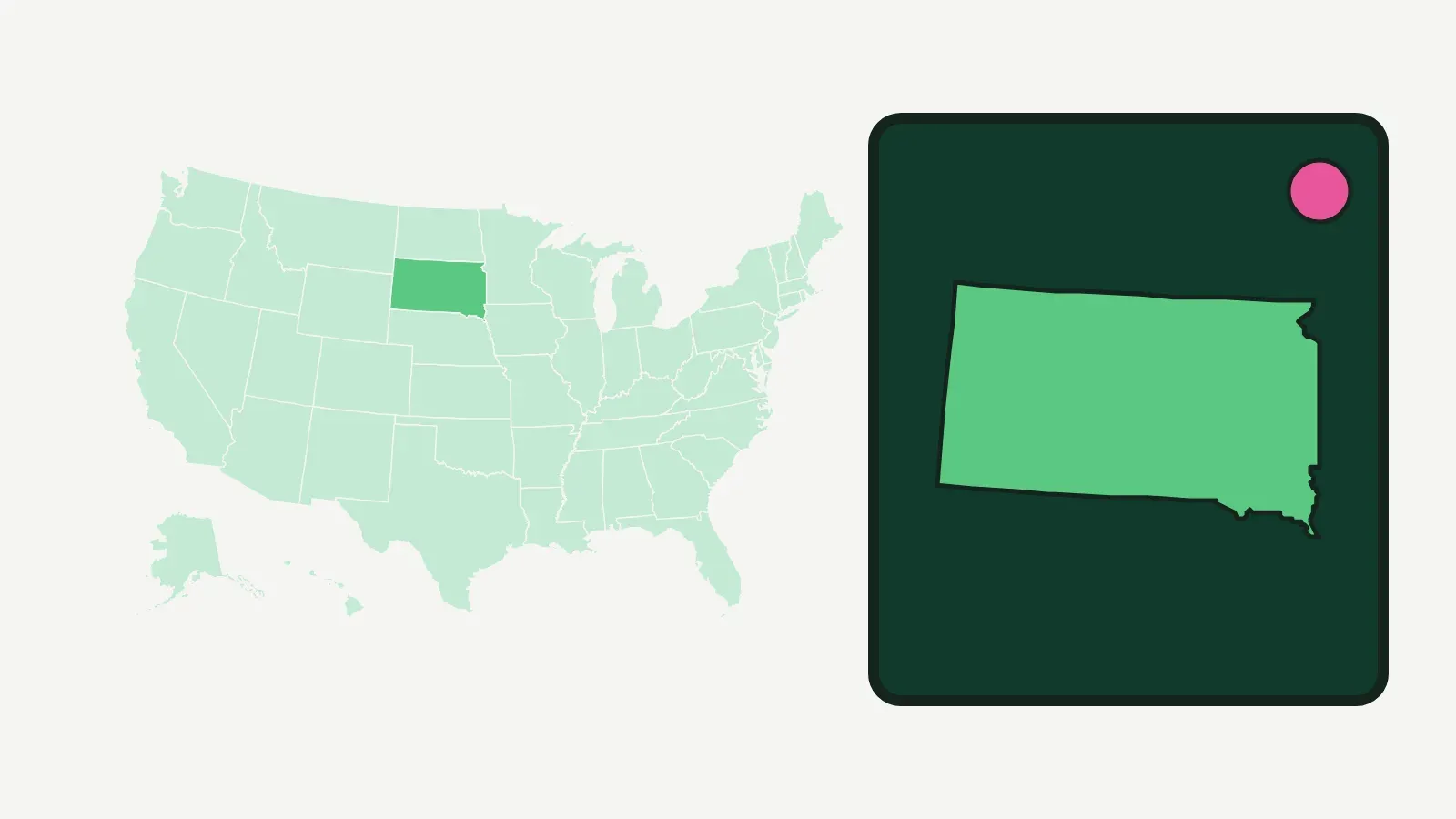
South Dakota owner households paid a median of $3,098 in property tax in 2025 on a median home value of $299,100, about 1.04% of value, which puts the state in the "moderate" tier on the map. The county director of equalization values your home at market value, and the state then equalizes that to 85% for tax purposes. Relief is aimed at owners who are 65 or older, disabled or disabled veterans, and appeals start with your local board of equalization in March.
South Dakota at a glance
How the bill is built
The typical figures above come from the Census Bureau's 2025 American Community Survey: the median real estate tax paid by South Dakota homeowners divided by the median home value. It is a survey estimate for the whole state, not a tax rate, and your own bill depends on the taxing units where the home sits.
In South Dakota, the county director of equalization is the assessor of all real property in the county. State law requires property to be assessed at market value, which the Department of Revenue defines as what the property would probably sell for on the open market. The property is then equalized to 85% for property tax purposes. The Department's own example: a home with a full and true value of $230,000 has a taxable value of $195,500.
Each taxing unit, such as a city, a school district or the county, works out a levy, expressed in dollars per thousand of taxable value. Your tax is the levy applied to your taxable value: at $10 per thousand, a home with $200,000 of taxable value owes $2,000. The state does not collect or spend property tax money. What a unit can ask for is limited by the Property Tax Reduction Act, though a unit can opt out of the limit. Use the property tax estimator with the rates on your own bill.
What lowers your bill
The Department of Revenue lists several programs, most of them for older or disabled owners. Each one has its own income, age and filing rules, so read the program page before you count on one.
| Program | Who it is for | Apply by |
|---|---|---|
| Assessment freeze | 65 or older, or disabled; income and value limits | April 1, to the county treasurer |
| Tax refund | 65 or older, or disabled; income-based | May 1 to July 1, to the Department of Revenue |
| Homestead exemption (tax deferral) | 70 or older, or a surviving spouse | April 1, to the county treasurer |
| Disabled veteran exemption | Permanently and totally disabled veteran; up to $200,000 of assessed value | November 1, to the county assessor |
The assessment freeze reduces the assessed value of the home, a garage and up to one acre. The refund program, for the application filed in 2026 on 2025 taxes, set income limits of $17,215 for a person living alone and $23,265 for a household. The "homestead exemption" here is a deferral: the taxes become a lien and are paid, with interest, when the property is sold. A person who qualifies for it cannot also take the refund.
For a general explanation of how these programs differ across states, see homestead exemptions.
Appealing your value
Start with the director of equalization's office if you think your value is above market value or out of line with similar homes. If that does not settle it, you can appeal to the local board of equalization for your township or municipality. State law says the clerk of that board must be notified no later than the Thursday before the third Monday in March, and the board meets that Monday. For the 2027 cycle that is a notice by Thursday, March 11 and a meeting on Monday, March 15.
The appeal can cover the property's total value or its classification. You can file it yourself or through an attorney or agent, and a mailed notice counts as timely by its postmark. A county board of equalization, made up of the county commissioners, sits annually on the second Tuesday in April and may stay in session no longer than three weeks. Ask the director of equalization how to take a case to that board, because the notice rules for that step are not covered here.
The Department of Revenue publishes a Property Owner Appeal Process Guide. The general steps and evidence are in how to appeal your property tax assessment.
Who to call
- Your value and assessment notice: the director of equalization in the county where the home is located.
- Your bill: the county treasurer.
- Levies and rules: the South Dakota Department of Revenue, Property Tax Division, whose Property Tax Transparency Portal includes an explainer tool and multiple years of property tax data.
Questions people ask
How much is property tax in South Dakota?
The Census Bureau's 2025 survey puts the median at $3,098 a year, or about 1.04% of a median home value of $299,100. Your own bill depends on your value and the taxing units where the home sits.
How is property assessed in South Dakota?
The county director of equalization values property at market value, and the value is then equalized to 85% for property tax purposes. A $230,000 home has a taxable value of $195,500 in the Department of Revenue's example.
Is there a senior property tax freeze in South Dakota?
Yes, an assessment freeze for owners who are 65 or older or disabled, with income and property value limits. You apply each year to your county treasurer by April 1.
How do I appeal my South Dakota assessment?
Appeal to your township or municipal board of equalization by notifying its clerk by the Thursday before the third Monday in March. A further appeal can go to the county board of equalization, which meets the second Tuesday in April.
Sources
- U.S. Census Bureau — American Community Survey 2025 1-year, table B25103 (median real estate taxes paid)
- U.S. Census Bureau — American Community Survey 2025 1-year, table B25077 (median home value)
- South Dakota Department of Revenue — Property Tax
- South Dakota Department of Revenue — Property Tax Relief Programs
- South Dakota Legislature — SDCL 10-11-13, local boards of equalization
- South Dakota Legislature — SDCL 10-11-16, appeal to the local board of equalization
- South Dakota Legislature — SDCL 10-11-25, county board of equalization
The typical rate is the Census median tax divided by the median value, a survey estimate. Relief figures are the ones the Department of Revenue posted for the 2026 application year. The 2027 appeal dates are worked out from the statute's "third Monday in March" rule. Facts on this page were checked against these sources on November 20, 2026; confirm dates and amounts with your county director of equalization.
Next to read
-
Owning guide
 Appeal your property tax assessment
Check the deadline, gather sales of similar homes and file on time. A worked savings example.
-
Owning guide
 Homestead exemptions
Relief for owners who live in the home: what it saves, how to apply and what is changing.
-
Owning guide
 Escrow accounts explained
How your lender collects tax and insurance, why the payment changes and what a shortage means.