Low tier
Property tax in Tennessee: the typical bill, the 25% assessment and the June appeal start
Tennessee counts 25% of a home's appraised value as its assessed value, and the county assessor, not the tax collector, sets that value. Here is how the bill is built and how to challenge it.
By AbodePine Editorial Team Updated 5 min read
- Typical rate
- 0.46% of home value
- Median annual bill
- $1,558
- Homeowner relief
- Income-tested relief
In brief
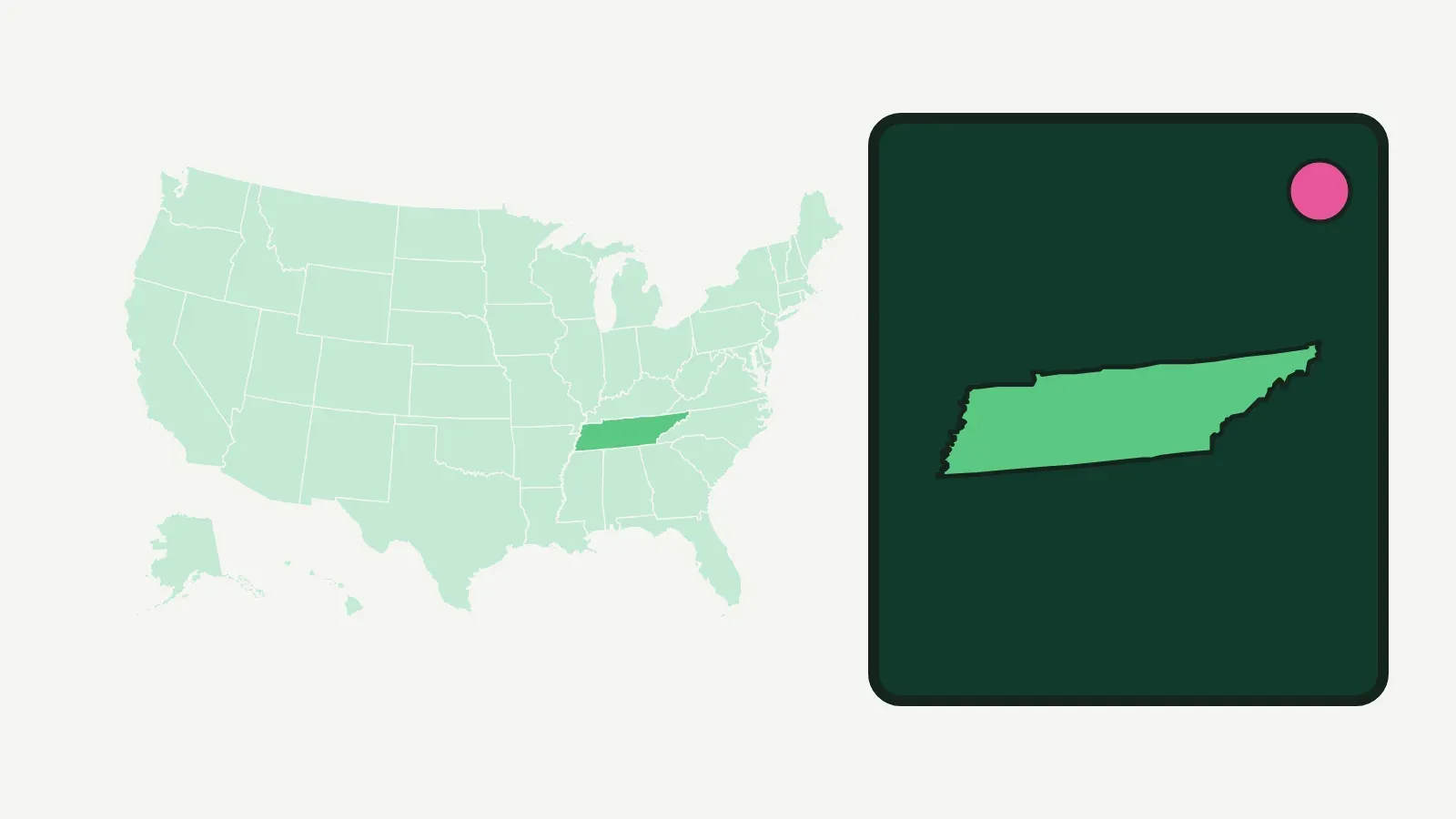
Tennessee owner households paid a median of $1,558 in property tax in 2025 on a median home value of $341,200, about 0.46% of value, which puts the state in the "low" tier on the map. Residential property is assessed at 25% of its appraised value. Relief is income-tested: a state program for low-income older and disabled owners and disabled veterans, plus a local-option freeze for owners 65 or older. Appeals go first to your county board of equalization, which begins meeting on June 1.
Tennessee at a glance
How the bill is built
The typical figures above come from the Census Bureau's 2025 American Community Survey: the median real estate tax paid by Tennessee homeowners divided by the median home value. It is a survey estimate for the whole state, not a tax rate, and your own bill depends on the county and city where the home sits.
In Tennessee the assessment and the tax are two separate jobs. The county assessor of property appraises the home and applies a statutory percentage to get the assessed value; for residential property that percentage is 25%, so a home appraised at $100,000 has an assessed value of $25,000. The county commission and city governing bodies then set the tax rates, and the county trustee or a city collecting official collects the tax.
Appraisals are reset in periodic reappraisal programs on a 4-, 5- or 6-year cycle. Between reappraisals the assessor's value generally stays the same unless the property itself changes, such as a new addition or a demolition. The assessor must send an assessment change notice when the value or classification changes. The assessment date is January 1, and the Comptroller's schedule has change notices mailed by May 20. Current-year taxes are due on the first Monday in October. The property tax estimator lets you try your own county rate.
What lowers your bill
The Tennessee Comptroller describes two programs for homeowners. Neither is a flat homestead exemption; both depend on income.
- Property tax relief: a state program for low-income elderly and disabled homeowners and for disabled veteran homeowners or their surviving spouses. It is funded by state appropriations, and applications go through your county trustee or city collecting official.
- Property tax freeze: a local option for owners 65 or older. The tax on your principal residence is frozen at the amount owed in the first year you qualify. Only counties and cities that adopt the program offer it, you apply every year, and your income must be under the county limit. For tax year 2026, a county that adopts the local-option limit uses $63,470.
The relief amounts and income limits are in the Comptroller's annual brochure, which this page does not reproduce. For how these programs fit alongside exemptions in other states, see homestead exemptions.
Appealing your value
You can appeal if the value is too high, if another owner's value is too low, or if the property is wrongly classified. The amount of the tax is not a valid basis for an appeal. The Comptroller lists the steps in order.
- Talk to the assessor: an informal discussion first.
- County board of equalization: it generally begins meeting on June 1, or May 1 in Shelby County, and your county assessor's office gives the current year's filing deadline. An assessment generally must be appealed here to keep your right to appeal further.
- State Board of Equalization: file by August 1 of the tax year or within 45 days of the date the county board's notice was sent, whichever is later. You file online.
- Chancery Court: the last step the Comptroller lists.
The general steps and the kind of evidence that helps are in how to appeal your property tax assessment.
Who to call
- Your value, change notice and appeal deadline: the assessor of property for the county where the home is located.
- Your bill and relief applications: the county trustee, or the city collecting official.
- Rules: the Tennessee Comptroller of the Treasury, Division of Property Assessments, and the State Board of Equalization for appeals beyond the county.
Questions people ask
How much is property tax in Tennessee?
The Census Bureau's 2025 survey puts the median at $1,558 a year, or about 0.46% of a median home value of $341,200. Your own bill depends on your appraised value and your county and city rates.
What percentage of value is a home assessed at in Tennessee?
25% for residential property. A home appraised at $100,000 has an assessed value of $25,000, and the tax rate is applied to that figure.
Is there a property tax freeze for seniors in Tennessee?
Yes, as a local option for owners 65 or older who are under the county income limit. Only counties and cities that adopt it offer it, and you apply each year to your county trustee or city collecting official.
When do I appeal my Tennessee property assessment?
The county board of equalization generally starts meeting on June 1. Your county assessor's office can tell you the current year's deadline to file.
Sources
- U.S. Census Bureau — American Community Survey 2025 1-year, table B25103 (median real estate taxes paid)
- U.S. Census Bureau — American Community Survey 2025 1-year, table B25077 (median home value)
- Tennessee Comptroller — Assessment vs Taxation
- Tennessee Comptroller — Assessment Schedule
- Tennessee Comptroller — Property Tax Relief
- Tennessee Comptroller — Property Tax Freeze
- Tennessee Comptroller — County Boards of Equalization
- Tennessee Comptroller — Appealing to the State Board of Equalization
The typical rate is the Census median tax divided by the median value, a survey estimate. The $63,470 freeze limit is the local-option figure the Comptroller lists for tax year 2026. Facts on this page were checked against these sources on November 20, 2026; confirm dates and amounts with your county assessor and trustee.
Next to read
-
Owning guide
 Appeal your property tax assessment
Check the deadline, gather sales of similar homes and file on time. A worked savings example.
-
Owning guide
 Homestead exemptions
Relief for owners who live in the home: what it saves, how to apply and what is changing.
-
Owning guide
 Escrow accounts explained
How your lender collects tax and insurance, why the payment changes and what a shortage means.