High tier
Property tax in Texas: the typical bill, the exemptions and the protest deadline
Texas has no state income tax, so local property tax carries a lot of the load. Here is how the bill is built, what knocks it down, and when to challenge it.
By AbodePine Editorial Team Updated 5 min read
- Typical rate
- 1.32% of home value
- Median annual bill
- $4,205
- Homeowner relief
- $140,000 school exemption
- Protest deadline
- May 15 or 30 days
In brief
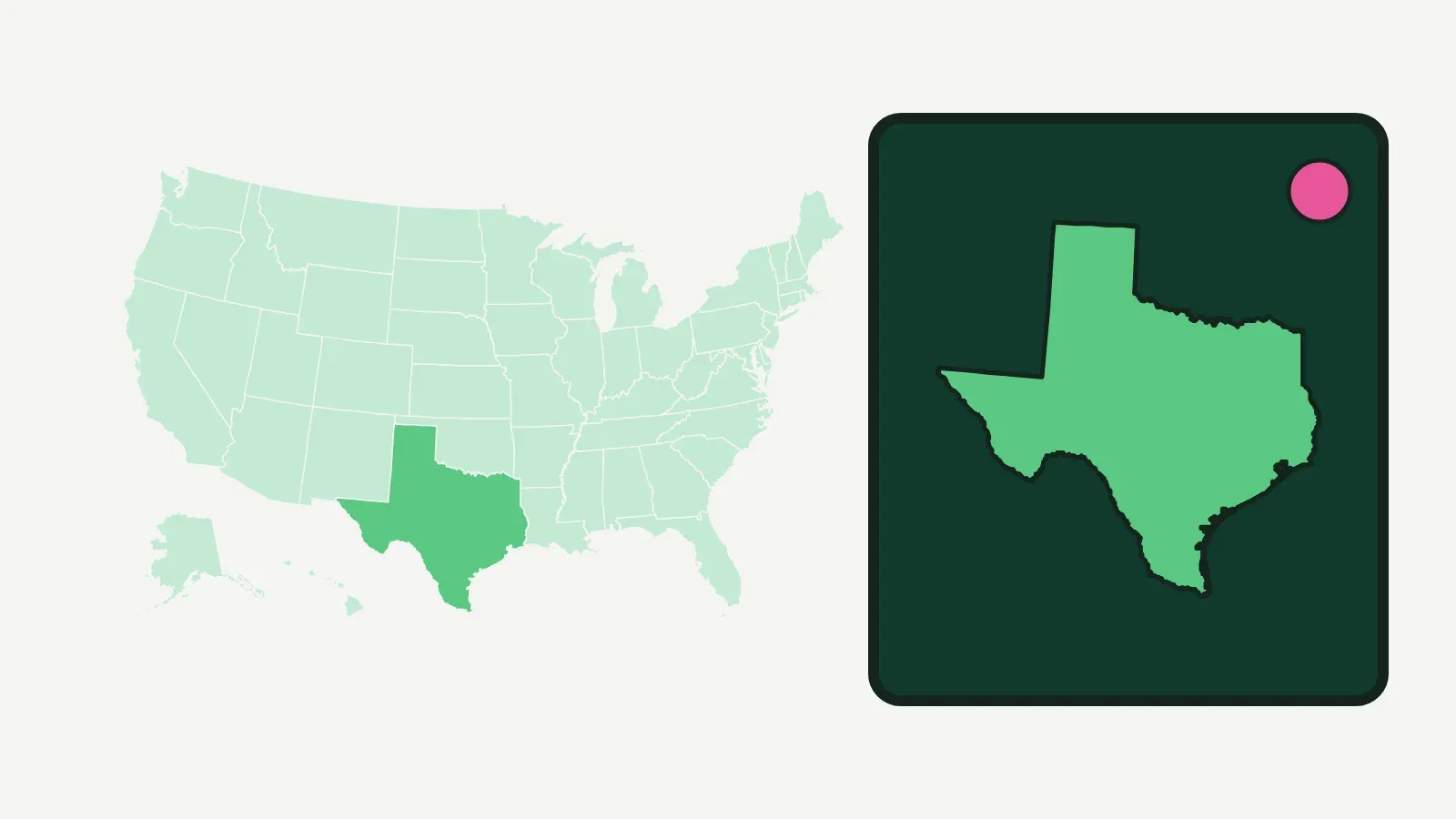
Texas owner households paid a median of $4,205 in property tax in 2025 on a median home value of $318,100, about 1.32% of value, which puts the state in the "high" tier on the map. Since the 2025 tax year the school district homestead exemption is $140,000, and homeowners 65 or older or disabled get an extra $60,000 on school taxes. Protests of the appraisal are due by May 15 or 30 days after the notice was mailed, whichever is later.
Texas at a glance
How the bill is built
The typical figures above come from the Census Bureau's 2025 American Community Survey: the median real estate tax paid by Texas homeowners divided by the median home value. It is a survey estimate for the whole state, not a tax rate, and your own bill depends on where the home sits.
In Texas, a county appraisal district sets the value of each property every year as of January 1. Local taxing units then set their own rates: usually a school district, the county and, inside city limits, the city, plus special districts such as hospital or community college districts. Your bill is each unit's rate applied to your taxable value, and the sum is what you owe. That is why two similar homes a few miles apart can have very different bills, and why a state average cannot predict yours. The property tax estimator lets you swap in the rate from your own bill.
What lowers your bill
Texas voters approved two amendments on November 4, 2025 that apply to the 2025 tax year. The homestead exemption from school district taxes rose from $100,000 to $140,000 of a home's value. Homeowners who are 65 or older, or who are disabled, get an additional $60,000 school-tax exemption, up from $10,000, for $200,000 in total.
| Homeowner | Exemption from school taxes |
|---|---|
| Any homeowner who lives in the home | $140,000 of value |
| 65 or older, or disabled (additional) | $60,000 of value, $200,000 in total |
A legislative analysis of the bill that raised the exemption estimated about $363 a year in savings at the statewide average school tax rate of $0.9086 per $100 of value in 2024: $40,000 more exempt value times that rate. Your savings depend on your own school district's rate.
A second limit protects homesteads from fast value growth. Once you have claimed the homestead exemption in the preceding and current year, the property's appraised value cannot rise more than 10% a year (Tax Code Section 23.23), apart from the value of new improvements. The appraisal district can still raise the market value; the cap limits the value your tax is based on. See also homestead exemptions.
Protesting your appraisal
If you think the district's value is too high, you can protest to the county's appraisal review board (ARB). The usual deadline is May 15 or 30 days after the notice of appraised value was mailed, whichever is later. Check the notice, which also lists how to ask for an informal meeting before a formal hearing.
- Where to start: your appraisal district's website lists your notice, your value and how to file online.
- What to bring: recent sales of similar homes nearby, photos or repair estimates for condition problems, and the district's own records of your home's size and features.
- If you lose: the Comptroller's office describes further appeals to the State Office of Administrative Hearings or binding arbitration, depending on the property.
The general steps, evidence and tips are in how to appeal your property tax assessment.
Who to call
- Your value and bill: the appraisal district for the county where the home is located; the county or district tax office sends the bill.
- Rules and forms: the Texas Comptroller of Public Accounts, Property Tax Assistance Division.
Questions people ask
How much is property tax in Texas?
The Census Bureau's 2025 survey puts the median at $4,205 a year, or about 1.32% of a median home value of $318,100. Your own bill depends on your appraised value and the taxing units where the home sits.
What is the Texas homestead exemption in 2025?
$140,000 of value is exempt from school district taxes for a homeowner who lives in the home. Homeowners 65 or older or disabled get an additional $60,000 on school taxes. You must apply with your appraisal district.
When is the deadline to protest my Texas appraisal?
Usually May 15 or 30 days after the district mailed your notice of appraised value, whichever is later. Read the date on your own notice.
Is there a cap on how much my value can go up?
For a homestead, the appraised value generally cannot rise more than 10% a year once you have claimed the exemption in the prior and current year, not counting new improvements. Market value can rise faster.
Sources
- U.S. Census Bureau — American Community Survey 2025 1-year, table B25103 (median real estate taxes paid)
- U.S. Census Bureau — American Community Survey 2025 1-year, table B25077 (median home value)
- Texas Comptroller — Appraisal protests and appeals
- Texas Comptroller — Appraisal and tax limitations
- Texas Legislature — S.B. 4 bill analysis, 89th Legislature (homestead exemption to $140,000)
- Texas Legislature — S.J.R. 85, 89th Legislature (additional exemption to $60,000)
The typical rate is the Census median tax divided by the median value, a survey estimate. Exemption amounts are for the 2025 tax year, after the November 4, 2025 election. Facts on this page were checked against these sources on November 20, 2026; confirm the current year's amounts and deadline with your appraisal district.
Next to read
-
Owning guide
 Appeal your property tax assessment
Check the deadline, gather sales of similar homes and file on time. A worked savings example.
-
Owning guide
 Homestead exemptions
Relief for owners who live in the home: what it saves, how to apply and what is changing.
-
Owning guide
 Escrow accounts explained
How your lender collects tax and insurance, why the payment changes and what a shortage means.