Low tier
Property tax in Utah: the typical bill, the 45% residential exemption and the September 15 appeal date
Utah taxes a primary home on 55% of its market value and a second home on all of it. Here is how the bill is built, who gets relief, and when to appeal.
By AbodePine Editorial Team Updated 5 min read
- Typical rate
- 0.50% of home value
- Median annual bill
- $2,738
- Homeowner relief
- 45% primary-home exemption
In brief
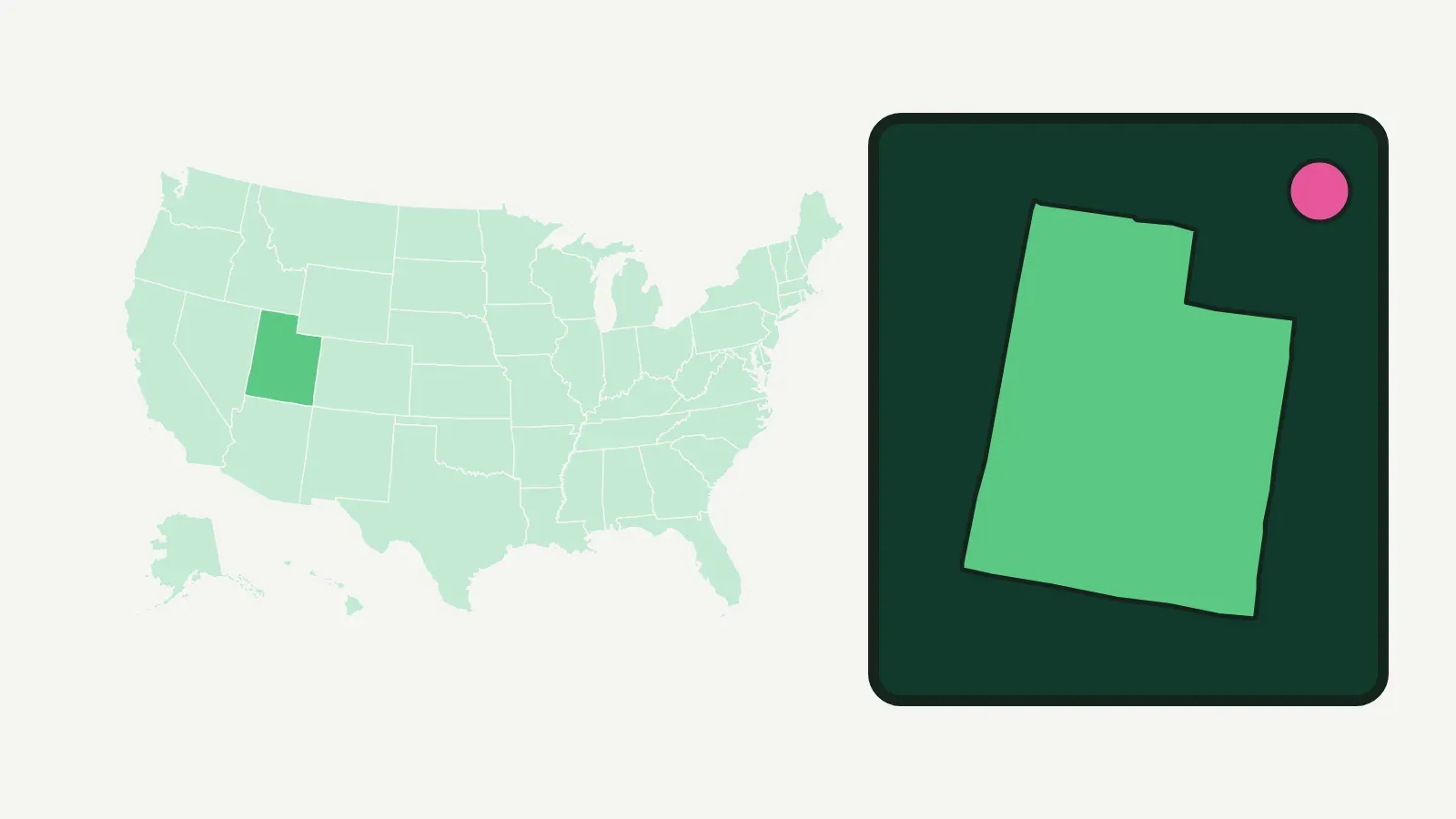
Utah owner households paid a median of $2,738 in property tax in 2025 on a median home value of $543,400, about 0.50% of value, which puts the state in the "low" tier on the map. A primary residence gets a 45% exemption on its market value, so only 55% is taxed. To dispute your value, file with your county board of equalization, generally by September 15.
Utah at a glance
How the bill is built
The typical figures above come from the Census Bureau's 2025 American Community Survey: the median real estate tax paid by Utah homeowners divided by the median home value. It is a survey estimate for the whole state, not a tax rate, and your own bill depends on the taxing entities where the home sits.
In Utah, the county assessor appraises residential property at 100% of its fair market value as of January 1 of each tax year. The Tax Commission says the county mails the initial valuation notice no later than July 22. Part of that value may be exempt, and what remains is the taxable value. The county auditor applies the tax rates and serves as clerk of the county board of equalization, and the treasurer collects the tax. Utah has 29 counties, and each runs this process for homes inside it.
The state's Tax Commission oversees the process and the certified tax rate system, but the county is where you look up a value, a bill or an exemption. The property tax estimator lets you try the rate from your own bill.
What lowers your bill
Utah law (Utah Code Ann. Section 59-2-103) gives a primary residential exemption of 45% of market value. That cuts the taxable value of an eligible primary home to 55% of its market value. The home must be occupied as a primary domicile for at least 183 consecutive days in a calendar year, by the owner or by a full-time tenant, and only one primary residential exemption is allowed per household. A second home or an unoccupied home is taxed at 100% of market value.
| Home | Taxable value |
|---|---|
| Primary residence (45% exempt) | $275,000 |
| Second home or unoccupied home | $500,000 |
Utah also has income-based help. The Tax Commission's Publication 36 (revised 09/26) says homeowners can apply to their county by September 1. Several of its programs are worth a look.
- Low-income abatement: for owner-occupied homes where 2025 household income was under $44,221, up to $1,412 of tax can be abated based on income, plus an additional credit equal to the tax on 20 percent of the home's fair market value. Age, ownership and residency tests apply.
- Senior deferral: owners at least 75 with 2025 household income no higher than $88,442 can defer taxes on a single-family primary residence, with interest, if other conditions are met.
- Disabled veterans: an exemption of up to $535,459 of taxable value of a residence for a veteran with at least a 10 percent service-connected disability, depending on the disability rating.
See homestead exemptions for how these programs compare with other states.
Appealing your value
You dispute a value by filing an appeal with the county board of equalization in the county where the home is located. The Tax Commission says the deadline is generally September 15 for each tax year, and you must provide some evidence that supports a lower value. The board issues a written decision.
If you disagree with that decision, you can appeal to the Utah State Tax Commission by filing Form TC-194 with the county auditor within 30 days of the date on the county board's decision. The county auditor forwards the record to the Commission's Appeals Unit. At the hearing, the evidence should show the property's market value as of the January 1 lien date, and it should reach the Commission and the county ten business days before the hearing.
The general steps and the kind of evidence that helps are in how to appeal your property tax assessment.
Who to call
- Your value, notice and exemption: the county assessor where the home is located. The Tax Commission keeps a list of county websites.
- Your bill and relief applications: the county auditor or treasurer. Publication 36 lists a phone number for each county.
- Rules and forms: the Utah State Tax Commission, Property Tax Division.
Questions people ask
How much is property tax in Utah?
The Census Bureau's 2025 survey puts the median at $2,738 a year, or about 0.50% of a median home value of $543,400. Your own bill depends on your market value, the exemption and the taxing entities where the home sits.
What is the Utah primary residential exemption?
A 45% exemption on the market value of a home you occupy as your primary residence for at least 183 consecutive days a year. Only 55% of the value is taxed.
When is the deadline to appeal my Utah property value?
Generally September 15 of the tax year, filed with the county board of equalization. The county's initial valuation notice is mailed by July 22.
Does the 45% exemption transfer when I buy a home?
No. The Tax Commission says a change in ownership requires a new Form TC-473A filed with the county board of equalization, and that rule applies beginning January 1, 2027.
Sources
- U.S. Census Bureau — American Community Survey 2025 1-year, table B25103 (median real estate taxes paid)
- U.S. Census Bureau — American Community Survey 2025 1-year, table B25077 (median home value)
- Utah State Tax Commission — Residential Property
- Utah State Tax Commission — Primary Residential Exemption
- Utah State Tax Commission — Appeals of Locally Assessed Property
- Utah State Tax Commission — Publication 36, Property Tax Abatement, Deferral and Exemption Programs
- Utah Legislature — S.B. 238 Property Tax Adjustments (2026), enrolled copy
The typical rate is the Census median tax divided by the median value, a survey estimate. Relief amounts are from Publication 36 (revised 09/26) and are based on 2025 income. The 2027 filing rule is from the Tax Commission page and the enrolled text of S.B. 238, which takes effect May 6, 2026 with the exemption-application section starting January 1, 2027. The $500,000 table is an arithmetic example, not a typical home. Facts on this page were checked against these sources on November 20, 2026; confirm dates and amounts with your county.
Next to read
-
Owning guide
 Appeal your property tax assessment
Check the deadline, gather sales of similar homes and file on time. A worked savings example.
-
Owning guide
 Homestead exemptions
Relief for owners who live in the home: what it saves, how to apply and what is changing.
-
Owning guide
 Escrow accounts explained
How your lender collects tax and insurance, why the payment changes and what a shortage means.