Highest tier
Property tax in Vermont: the typical bill, the homestead declaration and the 14-day appeal step
Vermont towns assess homes and bill the tax, while the state sets the education tax rate. Here is how the bill is built, who gets a credit, and how to contest a value.
By AbodePine Editorial Team Updated 5 min read
- Typical rate
- 1.51% of home value
- Median annual bill
- $5,418
- Homeowner relief
- Up to $8,000 credit
In brief
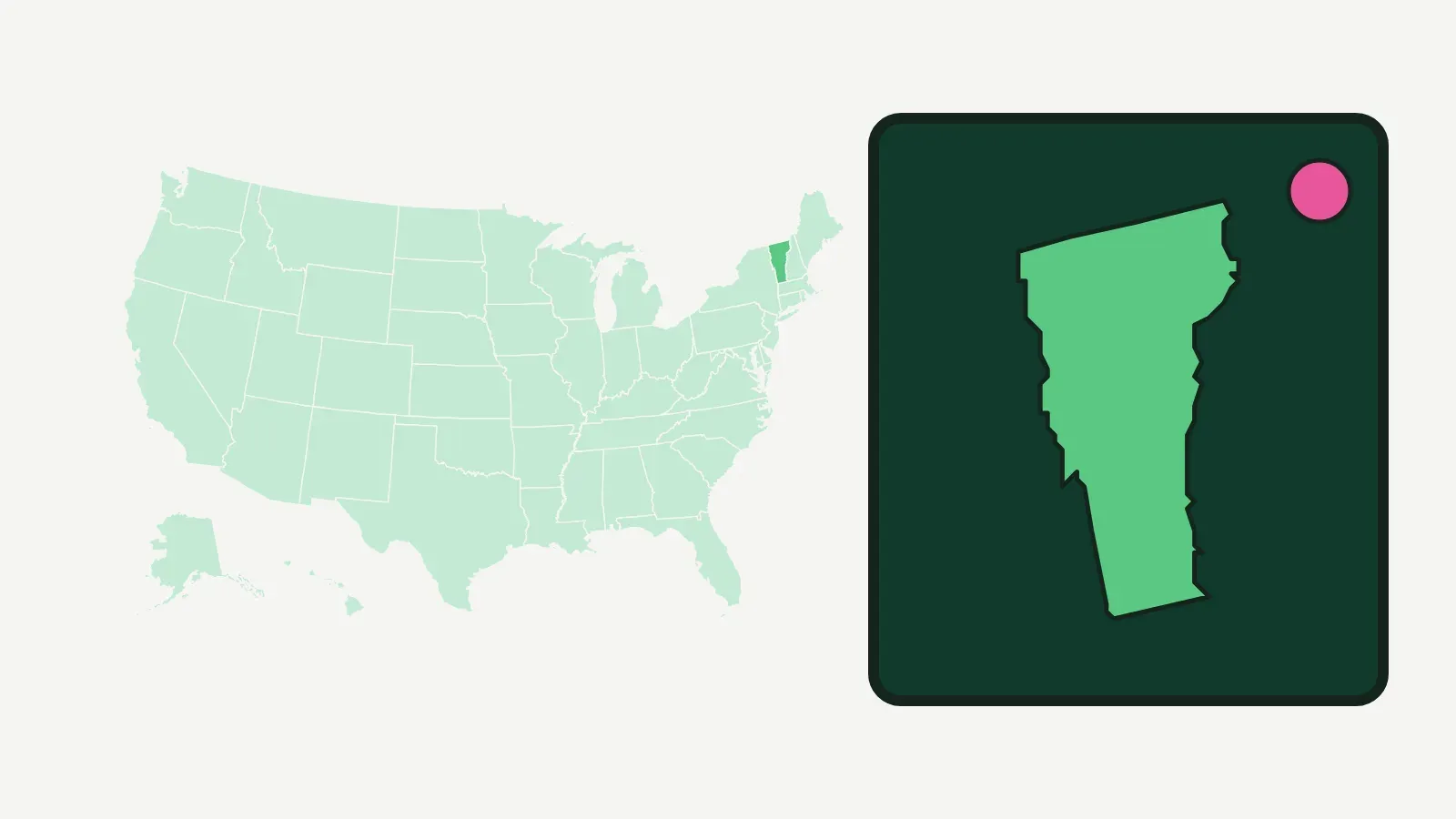
Vermont owner households paid a median of $5,418 in property tax in 2025 on a median home value of $359,800, about 1.51% of value, which puts the state in the "highest" tier on the map. Declaring your home as a homestead sets the education tax rate you pay, and owners with household income of $115,400 or less can claim a property tax credit of up to $8,000 for 2026. A challenge to a value moves from your town's listers to the Board of Civil Authority, with 14 days to appeal after the listers' decision.
Vermont at a glance
How the bill is built
The typical figures above come from the Census Bureau's 2025 American Community Survey: the median real estate tax paid by Vermont homeowners divided by the median home value. It is a survey estimate for the whole state, not a tax rate, and your own bill depends on the town and school district where the home sits.
In Vermont, property taxes are administered by the town. The Department of Taxes explains that an assessment has two parts, the building value and the land value, and that the tax funds local programs such as schools, fire stations and municipal government. You pay the town directly, and the Department cannot take your payment or tell you what you owe.
Your bill has an education property tax and a municipal tax. A Vermont homestead is taxed at the homestead education property tax rate, and nonhomestead property, such as a second home, camp or summer cottage, is taxed at a different education rate. The bill shows both rates, and a property can be partly homestead and partly nonhomestead if a part of it is rented or used for business. The property tax estimator lets you try the rates on your own bill.
What lowers your bill
Start with the homestead declaration. Vermont residents file it every year, on Form HS-122, if they own the Vermont property as their principal residence on April 1 and expect to live in it. For 2026 it was due April 15, 2026. A declaration filed later is still classified as a homestead but the town may charge a penalty, and one filed after October 15, 2026 is classified as nonhomestead. The due date is generally April 15 each year.
The property tax credit is a second step, filed on the same form with Schedule HI-144, household income. To qualify you must have been domiciled in Vermont all year, own and occupy the home on April 1, not be claimed as a dependent, and have household income under the limit.
| Item | Amount |
|---|---|
| Maximum credit | $8,000 |
| Of which: state education tax portion | Up to $5,600 |
| Of which: municipal tax portion | Up to $2,400 |
| Household income limit (2025 income) | $115,400 |
The credit appears as a state payment on your 2026/2027 property tax bill. The Department of Taxes also lists a fact sheet on property tax assistance for veterans. See homestead exemptions for how these programs compare with other states.
Appealing your value
A challenge starts locally. You take your concern to your town's listers, and ask the town clerk or listers for the grievance dates because they are set locally. If you disagree with the listers' final decision, state law gives you 14 days after the date of the notice to appeal in writing to the Board of Civil Authority by filing with the town clerk. The appeal must briefly set out your grounds.
- Hearing and inspection: a committee of at least three board members must inspect the property, interior and exterior. If you refuse after notice, the appeal is treated as withdrawn.
- Decision: the board certifies its decision in writing, with reasons, and the town clerk notifies you by certified mail.
- Next level: within 30 days after the board's decision, you can appeal to the Director of Property Valuation and Review or to the Superior Court. The entry fee for an appeal to the Director is $70, and the Director can waive or reduce it for hardship.
These appeal sections of the Vermont statutes are marked repealed effective January 1, 2031, by 2025 Act 170, section 34. We did not find replacement provisions, so the process may change in the coming years; ask your town clerk what applies. The general steps are in how to appeal your property tax assessment.
Who to call
- Your value, bill and appeal dates: the town clerk and the listers' office in the town where the home is located.
- Homestead declaration and property tax credit: the Vermont Department of Taxes, through its myVTax online system or Form HS-122 by mail.
Questions people ask
How much is property tax in Vermont?
The Census Bureau's 2025 survey puts the median at $5,418 a year, or about 1.51% of a median home value of $359,800. Your own bill depends on your town's value and the education and municipal rates.
What is the Vermont homestead declaration?
A yearly filing, on Form HS-122, that tells the state your Vermont property is your principal residence. It decides whether you pay the homestead or the nonhomestead education tax rate. It is generally due April 15.
How much is the Vermont property tax credit?
For the 2026 claim the maximum is $8,000, made up of up to $5,600 for the state education tax and up to $2,400 for the municipal tax. Household income must be $115,400 or less.
How do I appeal my Vermont property assessment?
Raise it with your town's listers first. After their final decision you have 14 days to appeal in writing to the Board of Civil Authority through the town clerk.
Sources
- U.S. Census Bureau — American Community Survey 2025 1-year, table B25103 (median real estate taxes paid)
- U.S. Census Bureau — American Community Survey 2025 1-year, table B25077 (median home value)
- Vermont Department of Taxes — Property
- Vermont Department of Taxes — Property Tax Credit
- Vermont Department of Taxes — Form HS-122 Instructions, 2026 Homestead Declaration and Property Tax Credit
- Vermont General Assembly — 32 V.S.A. § 4404, appeals from listers as to grand list
- Vermont General Assembly — 32 V.S.A. § 4461, time and manner of appeal
The typical rate is the Census median tax divided by the median value, a survey estimate. Credit amounts and the income limit are for the 2026 claim; the Department of Taxes' table lists $115,400 on its 2025 row without naming the claim year, so check it against the current form. The Vermont Statutes Online copy is unofficial. Facts on this page were checked against these sources on November 20, 2026; confirm dates and amounts with your town and the Department of Taxes.
Next to read
-
Owning guide
 Appeal your property tax assessment
Check the deadline, gather sales of similar homes and file on time. A worked savings example.
-
Owning guide
 Homestead exemptions
Relief for owners who live in the home: what it saves, how to apply and what is changing.
-
Owning guide
 Escrow accounts explained
How your lender collects tax and insurance, why the payment changes and what a shortage means.