Moderate tier
Property tax in Virginia: the typical bill, local relief and how to appeal an assessment
Virginia real estate tax is a local tax, so the value, the rate, the relief and the appeal deadline all depend on where the home sits. Here is what the state's law sets.
By AbodePine Editorial Team Updated 5 min read
- Typical rate
- 0.71% of home value
- Median annual bill
- $3,003
- Homeowner relief
- Local 65+/disabled relief
In brief
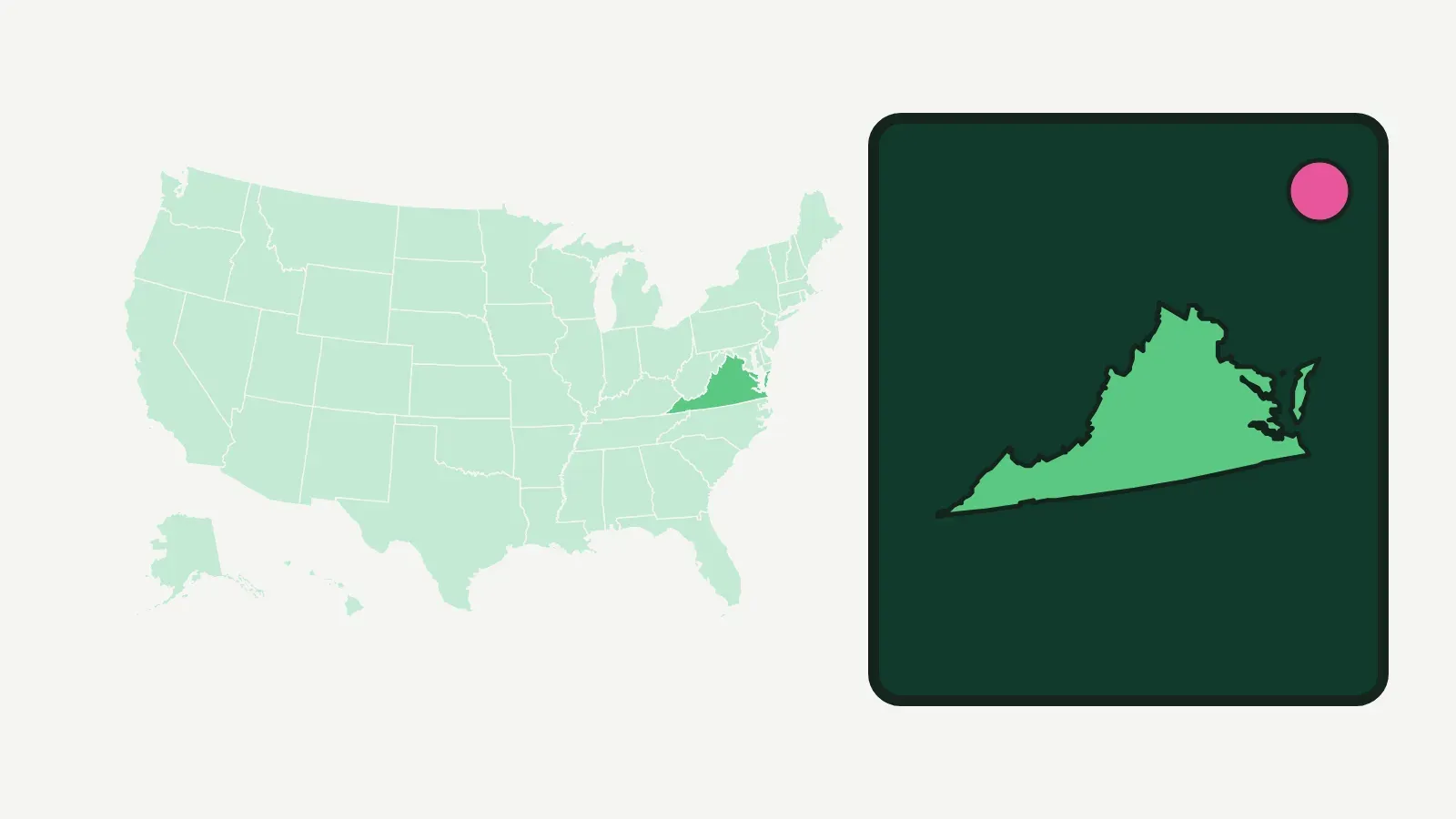
Virginia owner households paid a median of $3,003 in property tax in 2025 on a median home value of $422,600, about 0.71% of value, which puts the state in the "moderate" tier on the map. Localities value homes at fair market value, and each one chooses whether to offer relief to owners 65 or older or disabled. The state requires an exemption for the home of a veteran with a 100% permanent and total service-connected disability. Appeal deadlines are set by your locality and printed on your assessment notice.
Virginia at a glance
How the bill is built
The typical figures above come from the Census Bureau's 2025 American Community Survey: the median real estate tax paid by Virginia homeowners divided by the median home value. It is a survey estimate for the whole state, not a tax rate, and your own bill depends on the county, city or town where the home sits.
In Virginia, a local assessing officer, usually the commissioner of the revenue, assesses real estate, and the real estate tax is a local tax under the "Local Taxes" part of the state tax code. When a board of equalization reviews a value, it measures fair market value as of January 1 of the tax year, unless the locality has adopted July 1 as its tax day. Because the tax is local, two homes of similar value in different places can have very different bills. The property tax estimator lets you try the rate from your own bill.
What lowers your bill
The state sets few exemptions and leaves most of the relief to localities.
- Owners 65 or older, or disabled: a locality's governing body may, by ordinance, exempt or defer tax on a home that is the owner's sole dwelling, if the owner is at least 65 or, if the ordinance says so, permanently and totally disabled. The ordinance sets the conditions and the amount, so ask your locality what it offers.
- Disabled veterans: a veteran rated 100% service-connected, permanent and total by the U.S. Department of Veterans Affairs is exempt on the dwelling that is the principal residence and up to one acre of land. A surviving spouse who does not remarry can keep it, including after a move within Virginia.
The Department of Veterans Services also hears appeals from a denied disabled veteran application, but only on eligibility facts, not on a dispute over assessed value. See homestead exemptions for how these programs compare with other states.
Appealing your assessment
Begin with the local assessing officer, who can look at your concern. If it is not resolved, you can apply to the local board of equalization. Boards are appointed by the circuit court in the year after a general reassessment or an annual or biennial assessment, or a locality may have a permanent board. Your locality sets the date for applications by ordinance. By law that date cannot be earlier than 30 days after the date the assessing officer sets to hear objections, and it must be clearly stated on the notice of assessment.
- What the board hears: complaints that your assessment is above fair market value or is not uniform with similar properties, plus errors in acreage.
- The burden: the assessor's value is presumed correct, and you must show by a preponderance of the evidence that it is too high or not uniform.
- Records: for a home in a building with fewer than four residential units, you can ask in writing for the assessor's records on how the value was set, and the assessor must provide them within 15 days.
- If you lose: a taxpayer aggrieved by a board order may apply to the circuit court.
A separate route covers errors. For an erroneous assessment of real estate, if the error was made by the commissioner of the revenue or is a factual error made by others during a general reassessment, you may apply to the commissioner within three years of the last day of the tax year, or one year from the date of the assessment, whichever is later. The general steps are in how to appeal your property tax assessment.
Who to call
- Your value, relief application and appeal deadline: the commissioner of the revenue, or the real estate assessor's office, for the county or city where the home is located.
- Your bill: the local treasurer.
- Disabled veteran exemption questions: the Virginia Department of Veterans Services publishes guidelines for the exemption.
Questions people ask
How much is property tax in Virginia?
The Census Bureau's 2025 survey puts the median at $3,003 a year, or about 0.71% of a median home value of $422,600. Your own bill depends on your locality's assessment and its rate.
Is there a senior property tax exemption in Virginia?
Each locality decides. State law lets a governing body exempt or defer tax for owners 65 or older, and for permanently and totally disabled owners if its ordinance says so. Ask your commissioner of the revenue.
Do disabled veterans pay property tax in Virginia?
A veteran rated 100% service-connected, permanent and total, who lives in the home as a principal residence, is exempt on the dwelling and up to one acre. You apply to your local commissioner of the revenue.
When is the deadline to appeal my Virginia assessment?
Your locality sets it by ordinance and prints it on the notice of assessment. It cannot be earlier than 30 days after the assessor's hearing date for objections.
Sources
- U.S. Census Bureau — American Community Survey 2025 1-year, table B25103 (median real estate taxes paid)
- U.S. Census Bureau — American Community Survey 2025 1-year, table B25077 (median home value)
- Code of Virginia — Title 58.1, Chapter 32, Article 14: Boards of Equalization
- Code of Virginia — § 58.1-3210, exemption or deferral of taxes for certain elderly individuals and individuals with disabilities
- Code of Virginia — § 58.1-3980, application to commissioner of the revenue for correction
- Virginia Department of Veterans Services — Tax Exemptions
The typical rate is the Census median tax divided by the median value, a survey estimate. The appeal date and elderly and disabled relief are set locally, so check your locality. Facts on this page were checked against these sources on November 20, 2026; confirm dates and amounts with your commissioner of the revenue.
Next to read
-
Owning guide
 Appeal your property tax assessment
Check the deadline, gather sales of similar homes and file on time. A worked savings example.
-
Owning guide
 Homestead exemptions
Relief for owners who live in the home: what it saves, how to apply and what is changing.
-
Owning guide
 Escrow accounts explained
How your lender collects tax and insurance, why the payment changes and what a shortage means.