Moderate tier
Property tax in Washington: the typical bill, the 1% levy limit and the July 1 appeal date
Washington has no statewide rate for homes. County assessors set the value, local districts and the state set levies, and relief depends on age, disability and income.
By AbodePine Editorial Team Updated 5 min read
- Typical rate
- 0.81% of home value
- Median annual bill
- $4,911
- Homeowner relief
- Senior/disabled exemption
In brief
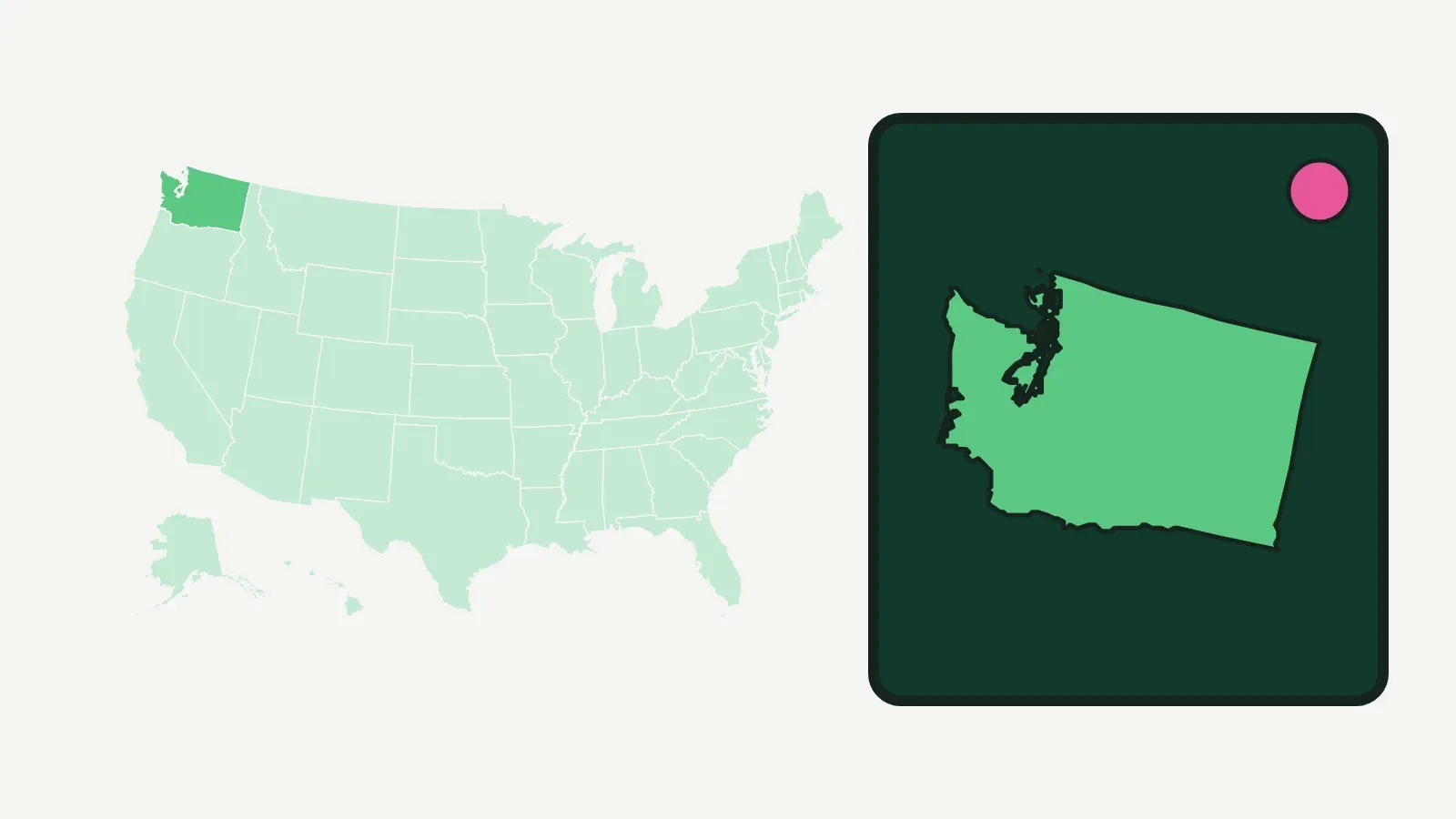
Washington owner households paid a median of $4,911 in property tax in 2025 on a median home value of $605,600, about 0.81% of value, which puts the state in the "moderate" tier on the map. The state's main relief for homeowners is an income-based exemption for people 61 or older or with a disability, plus deferrals. To dispute a valuation, you petition the county board of equalization, generally by July 1 or 30 days after the notice, whichever is later.
Washington at a glance
How the bill is built
The typical figures above come from the Census Bureau's 2025 American Community Survey: the median real estate tax paid by Washington homeowners divided by the median home value. It is a survey estimate for the whole state, not a tax rate, and your own bill depends on the taxing districts where the home sits.
The Department of Revenue oversees property tax, but it does not collect it. Your county assessor values the property, and the county treasurer collects the tax. State law requires assessors to appraise property at 100% of its true and fair market value. Local services such as fire protection, libraries, parks and public schools are paid from levies: the amount of money each district, such as a city, a school district or the state school levy, is allowed to collect.
A levy becomes a rate when the district divides it by the total value of its property. The 1% levy limit caps how fast a taxing district's total regular levy can grow, generally 1% a year plus the value of new construction. It does not cap your own assessed value or your own bill. If the district's total value rises faster than its levy, the rate falls; a home whose value rose faster than the district average can still see a larger bill. Voter-approved levies, such as school bonds, are generally not subject to the 1% limit.
The Department of Revenue says the state school levy returns to a single levy starting with the 2027 tax year, at $2.075355 per $1,000 of market value. The property tax estimator lets you swap in the rates from your own bill.
What lowers your bill
The Department of Revenue lists an exemption for senior citizens and people with disabilities. You qualify if, as of December 31 of the year before the taxes are due, you are 61 or older, retired from work because of a disability, or a veteran with a combined service-connected rating of 80% or higher or a total disability rating. You must own and live in the home, and your combined disposable income (the program's income measure) must be at or below your county's Income Threshold 3. The county assessor administers it, and the benefit depends on your income, your home's value and the local levy rates.
Under a 2026 law (ESSB 6162, effective June 11, 2026), the exemption levels change for taxes levied for collection in 2027. For 2026 and earlier, the Department of Revenue lists Income Threshold 1 as exempt on the greater of $60,000 or 60% of the home's valuation, and Income Threshold 2 as the greater of $50,000 or 35%, capped at $70,000 of valuation. The 2027 levels are:
| Income level | Exempt from local regular property taxes |
|---|---|
| Income Threshold 1 | Greater of $80,000 or 80% of the home's valuation |
| Income Threshold 2 | Greater of $70,000 or 45% of valuation, up to $200,000 of valuation |
| Income Threshold 3 | None (still exempt from the state school levy and local excess levies) |
Every level is exempt from the state school levy and local excess levies on a qualified primary residence. The same law raises the income thresholds, effective August 1, 2026, and replaces the itemized medical expense deduction in the income calculation with a $7,500 standard deduction per applicant, plus $7,500 for a spouse or domestic partner. Each county has its own threshold figures, which the Department of Revenue publishes in a county table.
The state also lists deferrals, which postpone the tax instead of reducing it. Homeowners 60 or older, or retired because of a disability, can defer current and past-due property taxes at 5% simple interest, repaid when the home is sold, the owner dies, or it stops being the primary residence. A separate limited-income deferral has no age test but requires combined disposable income of $57,000 or less, five years of ownership, and an application by September 1. See also homestead exemptions.
Appealing your valuation
If you think the assessor's value is too high, you can petition the county board of equalization in the county where the property is. By statute (RCW 84.40.038), the deadline is the later of July 1 of the year of the assessment or 30 days after the notice was mailed or sent electronically. A county's legislative authority can also adopt its own time limit, so read your notice.
- Forms: the petition must be on forms prescribed or approved by the Department of Revenue and be fully completed; the board cannot consider nonconforming petitions.
- Late filing: the board may waive a missed deadline only if you file within a reasonable time and show good cause, such as serious illness or a documented mail delay. Its waiver decision is final.
- What to bring: recent sales of similar homes nearby, photos or repair estimates for condition problems, and the assessor's own record of your home.
The general steps, evidence and tips are in how to appeal your property tax assessment.
Who to call
- Your value, exemption and deferral: the assessor's office for the county where the home is located.
- Your bill and payment: the county treasurer.
- Rules and forms: the Washington Department of Revenue, Property Tax Division, which lists the programs and county income thresholds.
Questions people ask
How much is property tax in Washington?
The Census Bureau's 2025 survey puts the median at $4,911 a year, or about 0.81% of a median home value of $605,600. Your own bill depends on your assessed value and the taxing districts where the home sits.
What does the 1% levy limit mean for my bill?
It limits how fast a taxing district's total levy can grow, generally 1% a year plus new construction. It does not cap your own bill, which depends on how your home's value changed compared with the rest of the district.
Who qualifies for the Washington senior and disability property tax exemption?
Homeowners who are 61 or older, retired because of a disability, or veterans with a qualifying disability rating, who live in the home and have income at or below the county's Income Threshold 3. Apply with your county assessor.
When do I have to appeal my Washington property valuation?
The later of July 1 or 30 days after the assessor's notice, under RCW 84.40.038. Counties can set their own time limit, so check your notice.
Sources
- U.S. Census Bureau — American Community Survey 2025 1-year, table B25103 (median real estate taxes paid)
- U.S. Census Bureau — American Community Survey 2025 1-year, table B25077 (median home value)
- Washington Department of Revenue — Property tax
- Washington Department of Revenue — Changes to property tax relief programs and state school levy
- Washington Department of Revenue — Property tax exemptions and deferrals
- Washington Department of Revenue — How the 1% property tax levy limit works
- Washington Legislature — RCW 84.40.038, Petition to county board of equalization
The typical rate is the Census median tax divided by the median value, a survey estimate. The exemption levels and state school levy rate are those the Department of Revenue lists for taxes due in 2027, under a law effective June 11, 2026; earlier-year levels differ, so ask your county assessor which apply to your bill. Facts on this page were checked against these sources on November 20, 2026; confirm current amounts and deadlines with your county.
Next to read
-
Owning guide
 Appeal your property tax assessment
Check the deadline, gather sales of similar homes and file on time. A worked savings example.
-
Owning guide
 Homestead exemptions
Relief for owners who live in the home: what it saves, how to apply and what is changing.
-
Owning guide
 Escrow accounts explained
How your lender collects tax and insurance, why the payment changes and what a shortage means.