Low tier
Property tax in West Virginia: the typical bill, the 60% assessment and the February protest window
West Virginia taxes homes on 60% of their value, and the homestead exemption is limited to owners 65 or older or permanently disabled. Here is how the bill works and when to protest.
By AbodePine Editorial Team Updated 5 min read
- Typical rate
- 0.51% of home value
- Median annual bill
- $904
- Homeowner relief
- $20,000 homestead (65+)
In brief
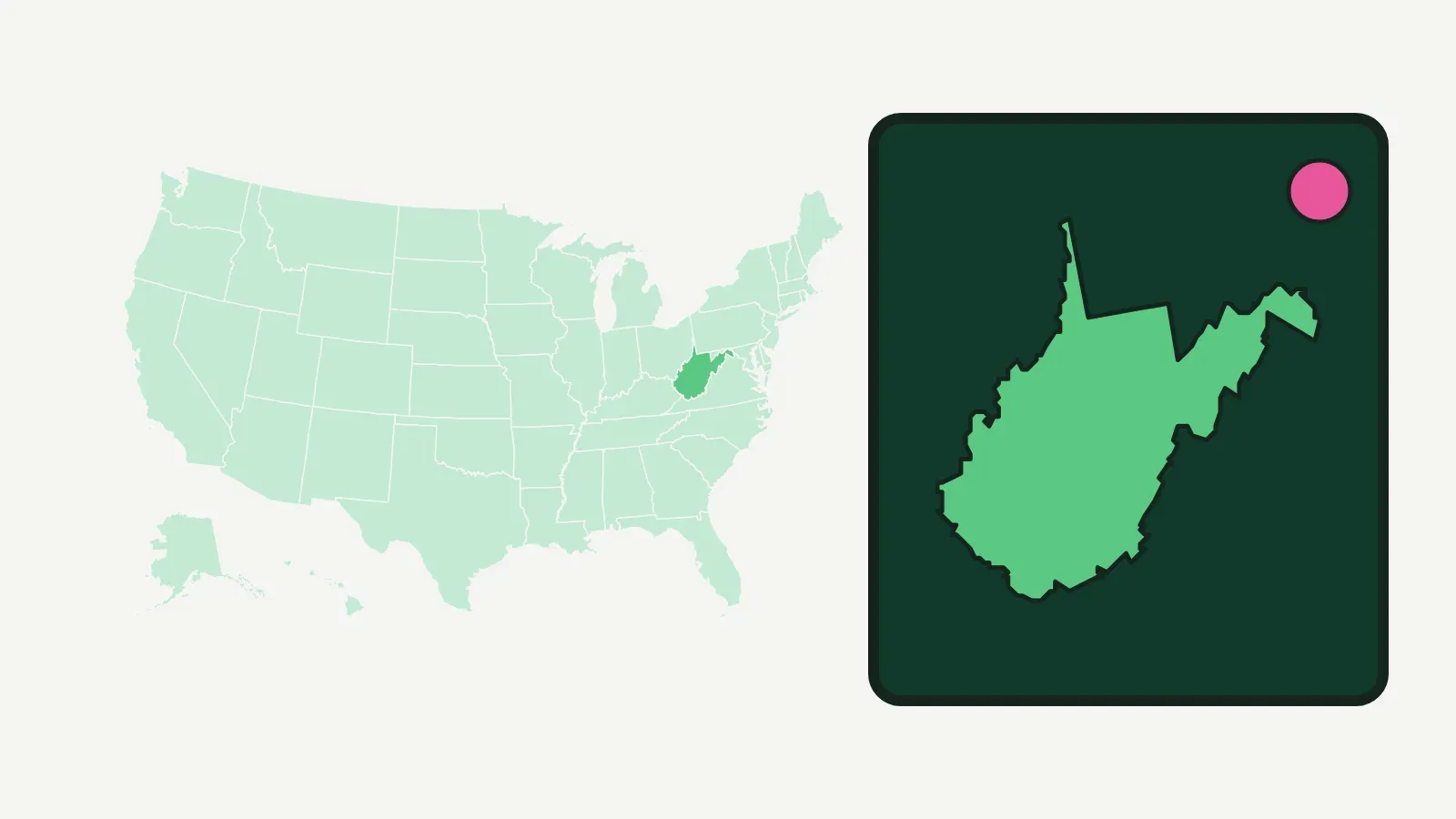
West Virginia owner households paid a median of $904 in property tax in 2025 on a median home value of $176,300, about 0.51% of value, which puts the state in the "low" tier on the map. Homes are assessed at 60% of their value, and owners 65 or older or permanently and totally disabled can exempt the first $20,000 of assessed value. To protest a value, you go to the county commission sitting as the board of equalization and review, which meets in February.
West Virginia at a glance
How the bill is built
The typical figures above come from the Census Bureau's 2025 American Community Survey: the median real estate tax paid by West Virginia homeowners divided by the median home value. It is a survey estimate for the whole state, not a tax rate, and your own bill depends on the taxing units where the home sits.
State law sets the assessment date at July 1 of the year before the tax year, and property is assessed at 60% of its "true and actual value," the price it would sell for if voluntarily offered by the owner (W. Va. Code section 11-3-1). The county assessor does the valuing. The State Tax Department says owner-occupied homes used only as residences are Class II property. Property taxes are levied by county boards of education, county commissions, municipalities and the State, and county sheriffs send the bills on or after July 15.
The Tax Department's rate page lists maximum regular levy rates for each class, in cents per $100 of assessed value. For Class II they are 0.50 for the State, 28.60 for the county, 45.90 for schools and 25.00 for municipalities, 100.00 in all. These are caps, not the rates in effect. Voters can approve excess or bond levies that go above them, so ask your county for the levy that applies to your address.
| Step | Amount |
|---|---|
| Assessed value, 60% of $200,000 | $120,000 |
| Maximum regular levy, 100 cents per $100 | 1.00% of assessed value |
| Tax before any exemption or excess levy | $1,200 |
That is an example of the arithmetic, not a rate for any county. The property tax estimator lets you try the rate from your own bill.
What lowers your bill
West Virginia's homestead exemption (W. Va. Code article 11-6B) exempts the first $20,000 of assessed value of a homestead. It is for owners who are 65 or older, or who are certified permanently and totally disabled, and who use and occupy the home exclusively as a residence. Owners generally must have been West Virginia residents for the two consecutive calendar years before the tax year, and an owner who receives a similar exemption in another state does not qualify.
Because homes are assessed at 60%, $20,000 of assessed value corresponds to about $33,300 of market value. At the maximum regular rates in the example above, the exemption would be worth up to $200 a year. Your own savings depend on your levy.
The exemption attaches to the home you occupy on the July 1 assessment date and applies to the following tax year. If the property is transferred, it ends on the next July 1 unless the new owner qualifies. A disability claim needs documentation, such as a physician's certification or Social Security or VA certification. See also homestead exemptions.
Protesting your assessment
The Tax Department says owners protest to the county commission sitting as a board of equalization and review. The board begins meeting February 1, may adjourn after February 15 once its work is done, and must adjourn no later than February 28. Protests must be filed before the year's taxes are due, so call the county commission or the assessor early in January to ask how that county takes protests.
- Where to start: the county assessor's office, which holds your property record and valuation.
- What to bring: recent sales of similar homes nearby, photos or repair estimates for condition problems, and the assessor's record of your home's size and features.
- Tax Commissioner rulings: a request goes through the county assessor, and the Tax Commissioner must issue a ruling by the end of February.
The general steps, evidence and tips are in how to appeal your property tax assessment.
Who to call
- Your value and exemption: the assessor's office for the county where the home is located.
- Your bill: the county sheriff's office, which issues the tax bills.
- Rules and forms: the West Virginia State Tax Department's property tax pages.
Questions people ask
How much is property tax in West Virginia?
The Census Bureau's 2025 survey puts the median at $904 a year, or about 0.51% of a median home value of $176,300. Your own bill depends on your assessed value and the levies where the home sits.
What percent of value is a West Virginia home assessed at?
60% of its true and actual value, as of July 1 of the year before the tax year, under W. Va. Code section 11-3-1.
How does the West Virginia homestead exemption work?
It exempts the first $20,000 of assessed value for an owner who is 65 or older or permanently and totally disabled and lives in the home. File with your county assessor by December 1 after the July 1 assessment date.
When can I protest my West Virginia property value?
In February, when the county commission sits as the board of equalization and review. It begins meeting February 1 and must adjourn by February 28.
Sources
- U.S. Census Bureau — American Community Survey 2025 1-year, table B25103 (median real estate taxes paid)
- U.S. Census Bureau — American Community Survey 2025 1-year, table B25077 (median home value)
- West Virginia State Tax Department — Property Tax
- West Virginia State Tax Department — Property Tax Rates
- West Virginia State Tax Department — Property Tax Classifications
- West Virginia Legislature — W. Va. Code section 11-3-1 (assessment at 60% of true and actual value)
- West Virginia Legislature — W. Va. Code sections 11-6B-3 and 11-6B-4 (homestead exemption and claim)
The typical rate is the Census median tax divided by the median value, a survey estimate. The levy rates quoted are the maximum regular rates on the Tax Department's rate page, which does not state a tax year; actual rates vary by taxing unit. Facts on this page were checked against these sources on November 20, 2026; confirm current amounts and dates with your county assessor.
Next to read
-
Owning guide
 Appeal your property tax assessment
Check the deadline, gather sales of similar homes and file on time. A worked savings example.
-
Owning guide
 Homestead exemptions
Relief for owners who live in the home: what it saves, how to apply and what is changing.
-
Owning guide
 Escrow accounts explained
How your lender collects tax and insurance, why the payment changes and what a shortage means.