Low tier
Property tax in Wyoming: the typical bill, the 25% homeowner exemption and the 30-day appeal window
Wyoming taxes homes on 9.5% of market value, and voters just turned down a 50% exemption initiative. Here is how the bill is built and what to confirm with your county.
By AbodePine Editorial Team Updated 5 min read
- Typical rate
- 0.56% of home value
- Median annual bill
- $1,987
- Homeowner relief
- 25% homeowner exemption
In brief
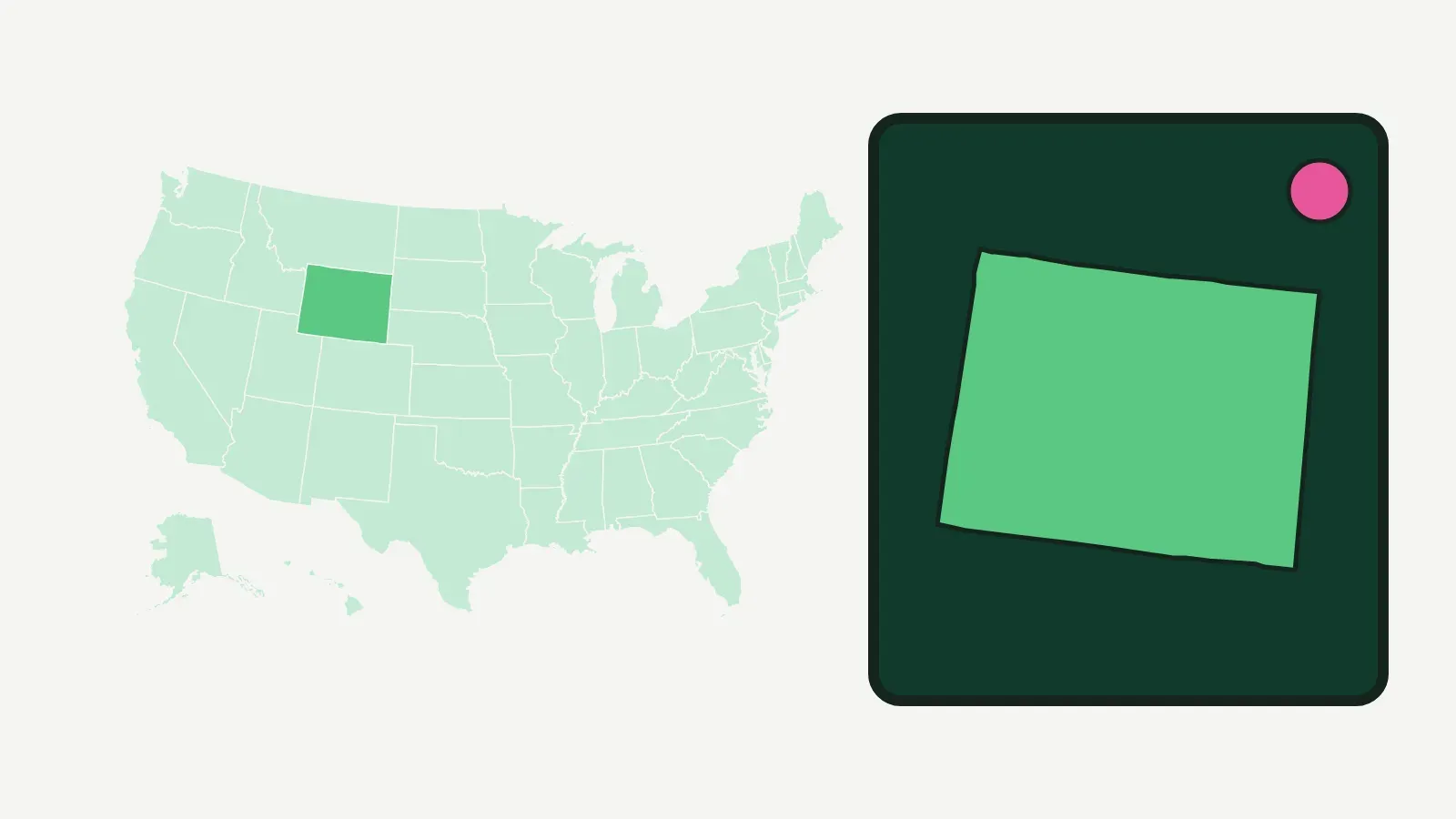
Wyoming owner households paid a median of $1,987 in property tax in 2025 on a median home value of $357,300, about 0.56% of value, which puts the state in the "low" tier on the map. Homes are taxed on 9.5% of market value, and state law gives an owner-occupied home a 25% homeowner exemption on the first $1,000,000 of value. To dispute a value, you file with the county assessor within 30 days of the assessment notice.
Wyoming at a glance
How the bill is built
The typical figures above come from the Census Bureau's 2025 American Community Survey: the median real estate tax paid by Wyoming homeowners divided by the median home value. It is a survey estimate for the whole state, not a tax rate, and your own bill depends on the taxing units where the home sits.
In Wyoming, county assessors value residential property as of January 1 of each tax year, and the state Property Tax Division oversees the process across all 23 counties. The taxable value is 9.5% of market value: the Department of Revenue's example is a $100,000 home with a taxable value of $9,500. You multiply that by the total mill levy, where one mill is $1 of tax per $1,000 of taxable value. At 68 mills, the Department's own example, $9,500 comes to $646.00. Half is due by November 10 and the other half by May 10 of the following year.
Assessors must update values every year and review each property's characteristics in detail at least once every six years. The mill levy is the sum of the rates of the local units that tax your address, which is why two homes of the same value in different places can have different bills. The property tax estimator lets you try the rate from your own bill.
What lowers your bill
Under Enrolled Act 60 of 2025 (Senate File 69), a homeowner's exemption removes 25% from the value of a single-family home and its associated land, applied to the first $1,000,000 of fair market value. The act says it first applies to the tax year beginning January 1, 2025. From tax year 2026 the owner must actually live in the home at least eight months of the year, with an exception for active-duty service members whose service prevents it if the home is their legal domicile.
| Step | Without exemption | With 25% exemption |
|---|---|---|
| Taxable value (9.5% of $400,000) | $38,000 | $28,500 |
| Tax at 68 mills | $2,584 | $1,938 |
The Department also lists a long-term homeowner exemption for owners 65 or older, or whose spouse is, who have paid Wyoming residential property taxes for at least 25 years, not necessarily in a row. For tax year 2027 it removes 50% of the fair market value of the primary residence and improved land, up to 35 acres, applied to the first $3,000,000 of value. See also homestead exemptions.
Appealing your value
If you think the assessor's value is too high, you appeal to the County Board of Equalization. File with the county assessor where the property is located within 30 days of the date of the assessment notice. The appeal must address market value, not the tax rate, and must include evidence of your estimated market value.
- What to bring: recent sales of similar homes nearby, photos or repair estimates for condition problems, and the assessor's record of your home.
- If you disagree with the county decision: you can appeal to the State Board of Equalization within 30 days of the date the county's decision was entered or mailed, as shown by a legal postmark, using whichever is later.
The Department of Revenue's page does not list specific forms or hearing procedures, so ask your county assessor. The general steps, evidence and tips are in how to appeal your property tax assessment.
Who to call
- Your value, exemption and appeal: the county assessor's office for the county where the home is located.
- Rules and the exemption affidavit: the Wyoming Department of Revenue, Property Tax Division.
Questions people ask
How much is property tax in Wyoming?
The Census Bureau's 2025 survey puts the median at $1,987 a year, or about 0.56% of a median home value of $357,300. Your own bill depends on your market value and the mill levy where the home sits.
How is Wyoming residential property taxed?
The taxable value is 9.5% of the market value as of January 1. You multiply it by the total mill levy, and half the bill is due by November 10 and half by May 10.
How do I get the Wyoming homeowner exemption?
Complete the Wyoming Residential Owner-Occupied Affidavit online. Your county assessor reviews it. From tax year 2026 you must live in the home at least eight months of the year.
How long do I have to appeal my Wyoming property value?
File with your county assessor within 30 days of the date on your assessment notice, for the County Board of Equalization. The appeal must be about market value, not the tax rate.
Sources
- U.S. Census Bureau — American Community Survey 2025 1-year, table B25103 (median real estate taxes paid)
- U.S. Census Bureau — American Community Survey 2025 1-year, table B25077 (median home value)
- Wyoming Department of Revenue — Residential property valuation and appeals
- Wyoming Department of Revenue — Residential Owner-Occupied Affidavit (homeowner and long-term homeowner exemptions)
- Wyoming Legislature — Enrolled Act 60 (Senate File 69), 2025 session
- Wyoming Legislative Service Office — Property tax memo to the Joint Revenue Interim Committee, June 2026
The typical rate is the Census median tax divided by the median value, a survey estimate. The 68-mill figure is the Department of Revenue's own arithmetic example, not any county's rate. The Proposition 1 result on this page comes from news reports (Cowboy State Daily and WyoFile, November 3-4, 2026), not from the official canvass. Facts on this page were checked against these sources on November 20, 2026; confirm current rules and deadlines with your county assessor.
Next to read
-
Owning guide
 Appeal your property tax assessment
Check the deadline, gather sales of similar homes and file on time. A worked savings example.
-
Owning guide
 Homestead exemptions
Relief for owners who live in the home: what it saves, how to apply and what is changing.
-
Owning guide
 Escrow accounts explained
How your lender collects tax and insurance, why the payment changes and what a shortage means.